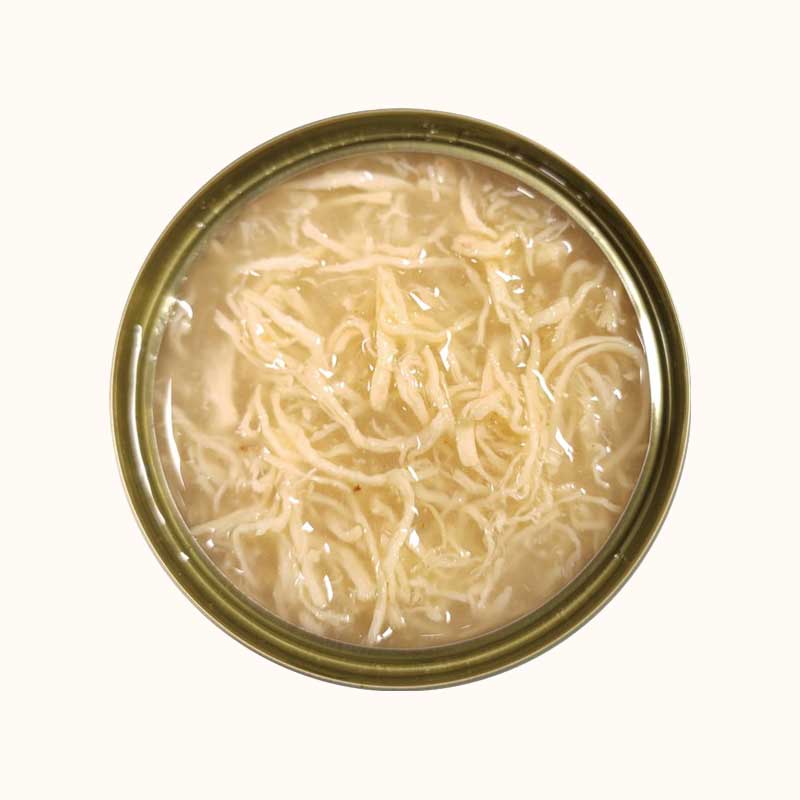
Cat food in gravy vs jelly is more than a texture preference. For private label buyers, the choice can affect formula development, piece size, liquid phase, visual presentation, filling behavior, packaging, palatability, and the way consumers understand the product on shelf.
Gravy-based wet food generally surrounds meat pieces with a fluid or semi-fluid sauce, while jelly-based food holds pieces in a softer set matrix. Both can work well in pouches, cans, or trays, but they create different eating experiences and different technical requirements.
This guide compares cat food in gravy vs jelly from a B2B product-development perspective. It focuses on texture, solid-to-liquid balance, ingredient systems, packaging, nutritional role, sample evaluation, and how private label buyers can decide which format fits their target market.
Table of Contents
What Is the Main Difference Between Cat Food in Gravy vs Jelly?
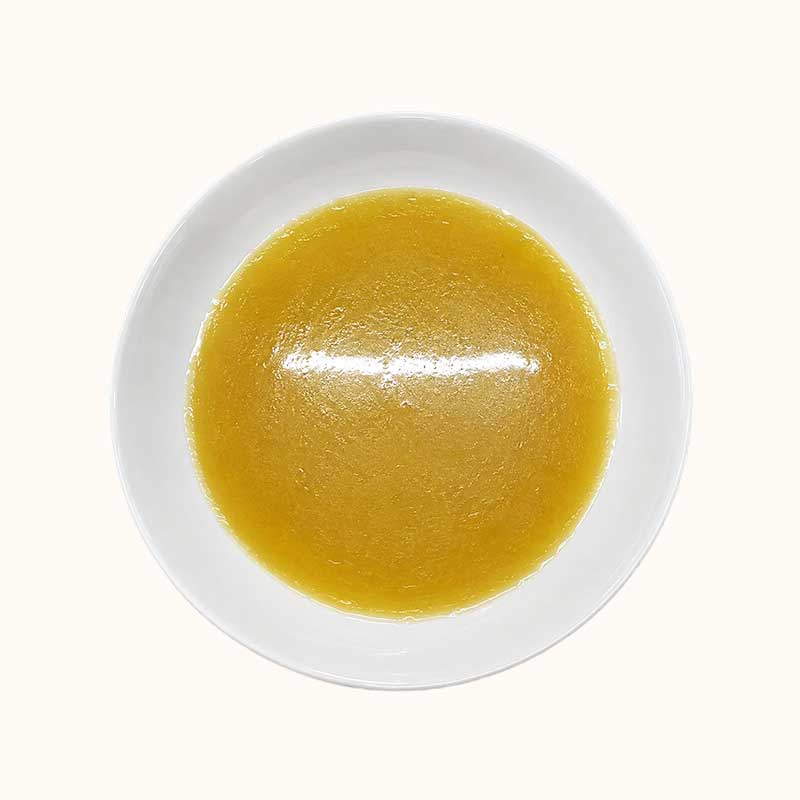
The clearest difference is the physical structure of the liquid phase.
Gravy is usually more fluid. It coats or surrounds meat pieces and can range from thin broth-like sauce to a thicker, spoonable consistency. Jelly forms a more structured gel around the meat pieces. When the pack is opened, jelly tends to hold its shape more clearly than gravy.
That difference changes the eating experience. Some cats prefer licking sauce around the pieces, while others may respond better to a firmer jelly texture. Consumer preference is individual, so neither texture should be described as universally better.
| Feature | Gravy | Jelly |
|---|---|---|
| Liquid phase | Fluid or semi-fluid sauce | Soft set gel |
| Visual presentation | Pieces visibly coated in sauce | Pieces suspended or enclosed in gel |
| Serving behavior | Flows more easily when poured | Holds shape more strongly |
| Texture positioning | Saucy, moist, rich | Clean-cut, structured, soft-set |
| Buyer focus | Viscosity and solid-liquid ratio | Gel strength and piece suspension |
Why Cat Food in Gravy Is Popular in Wet Food Ranges
In a cat food in gravy vs jelly comparison, gravy is usually the more fluid option and is often selected when brands want a visibly saucy product.
Gravy is familiar to many consumers because it creates a visibly moist meal and allows meat pieces to move freely in the package. It can help a brand communicate richness, softness, and sauce coverage without moving to a full pâté or mousse format.
PetProOEM’s current حزمة وجبة التيلة explicitly describes tender meat with rich gravy and customizable textures. The broader wet cat food category also lists meat sauce and meat with gravy among its available texture directions.
For private label buyers, gravy can be useful when the goal is to keep visible meat pieces while adding a more fluid eating experience.
Why Jelly Creates a Different Product Experience
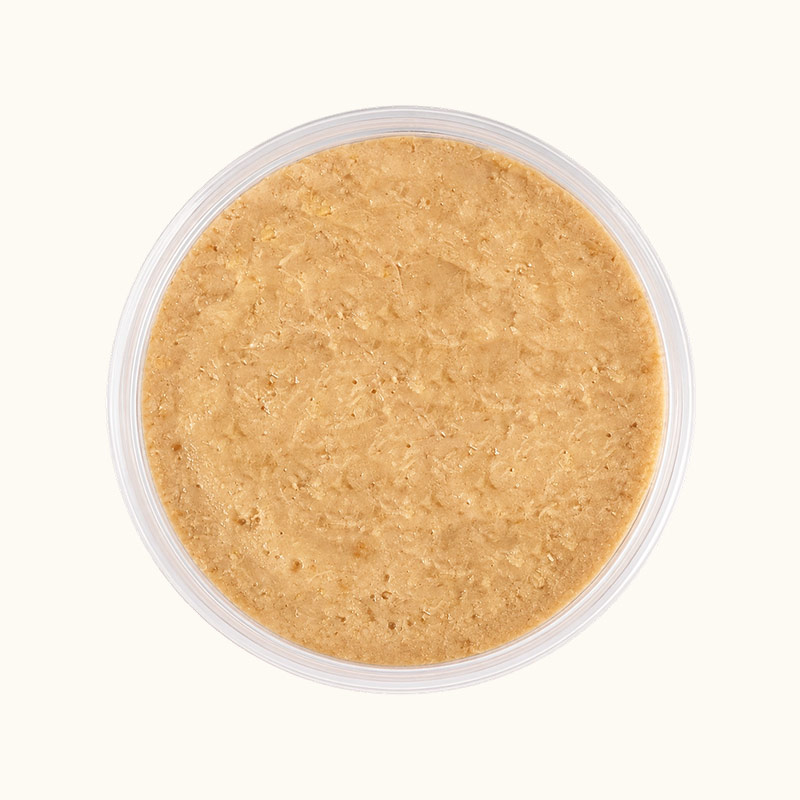
On the jelly side of cat food in gravy vs jelly, the key difference is the soft set structure that holds the meat pieces more firmly in place.
Jelly-based wet food creates a more defined structure around the meat pieces. The gel can hold solids in place and produce a firmer appearance when the product is removed from the package.
Search results show that jelly is a recognized wet-food format in the market, often used with chunks, slices, or shreds. The distinction from gravy is mainly structural: jelly sets around the pieces, while gravy remains more fluid. Buyers can compare this general texture distinction with current jelly-based wet food guidance.
For a private label buyer, jelly can support a cleaner visual presentation and a more consistent piece distribution when the gel system is properly developed.
However, PetProOEM’s current wet-food category publicly confirms gravy-related textures, while jelly is not listed as a currently confirmed standard format. A buyer interested in jelly should therefore treat it as a development request to confirm rather than an assumed existing SKU.
Compare Solid-to-Liquid Ratio Before Choosing the Texture
Solid-to-liquid ratio is one of the most practical ways to compare cat food in gravy vs jelly during private label development.
A useful cat food in gravy vs jelly comparison should include the ratio of solid meat pieces to sauce or gel.
Two products can both be described as “chunks in gravy” but look very different if one contains a high proportion of meat pieces and the other contains much more liquid. The same applies to jelly.
Private label buyers should define:
- target meat-piece percentage;
- target sauce or gel percentage;
- acceptable variation;
- piece size;
- piece shape;
- visual appearance after opening.
This makes sample comparisons more meaningful and prevents suppliers from interpreting “rich gravy” or “lots of jelly” differently.
Piece Size Changes the Eating Experience
Piece size is another practical control point in cat food in gravy vs jelly because it changes coating, suspension, mouthfeel, and serving appearance.
Piece size is one of the most important variables in cat food in gravy vs jelly development.
Smaller pieces create more surface area and can become more fully coated in gravy or jelly. Larger chunks create stronger visual meat presence but may be less suitable for cats that prefer softer or smaller textures.
Buyers should specify approximate dimensions and acceptable variation. If the product uses shredded meat instead of cubes, the strand length and thickness should also be reviewed.
The final piece size should work with the selected filling line and package opening.
Gravy Viscosity Should Be Measured, Not Described Vaguely
For cat food in gravy vs jelly, viscosity helps define where a gravy sits between a thin broth and a much thicker sauce.
Words such as “thick,” “rich,” and “smooth” are useful for marketing, but they are not precise enough for production.
For gravy-based wet food, buyers should discuss viscosity with the supplier. The sauce should be thick enough to coat the meat pieces but fluid enough to fill consistently and create the intended consumer experience.
A very thin gravy can appear watery. A very thick gravy can begin to behave more like a gel or paste. The target depends on formulation, temperature, filling process, and package format.
For private label control, use an approved sample plus a written viscosity or process specification where the supplier can provide one.
Jelly Requires Control of Gel Strength
Gel strength is the equivalent control point on the jelly side of cat food in gravy vs jelly.
Jelly is more dependent on gel formation. The matrix must be strong enough to hold structure but soft enough to remain easy to eat.
Gel strength can be influenced by gelling agents, minerals, pH, heating, cooling, protein interactions, and other formula variables. A jelly that is too weak may collapse into sauce. A jelly that is too firm may create an undesirable eating texture.
If a buyer requests jelly, the supplier should confirm the actual gelling system, sample performance, and whether the formula remains stable after retort or other thermal processing.
Ingredient Systems May Differ Between Gravy and Jelly
The functional ingredient system is another important variable in cat food in gravy vs jelly because thickening and gelling may require different formulation approaches.
The texture difference between cat food in gravy vs jelly may require different functional ingredients.
Gravy can use starches, gums, proteins, or other thickening systems depending on the recipe. Jelly may rely more heavily on gelling systems that create a stable set structure.
Private label buyers should not assume that a clean-label claim remains valid after changing texture. If a brand wants zero starch, zero gum, or another ingredient restriction, the supplier needs to confirm whether the requested gravy or jelly can still be produced with the target texture.
PetProOEM’s wet-food category currently states that zero-gum and zero-starch options are available for selected formulas. That should be treated as a customization direction, not a claim that every gravy product uses no gums or starches.
Nutritional Role Is Independent of Texture
A private label cat food in gravy vs jelly decision should therefore be made separately from the complete-versus-complementary nutrition decision.
One of the most important rules in cat food in gravy vs jelly sourcing is that texture does not determine whether the product is complete or complementary.
A gravy-based product can be nutritionally complete or complementary. A jelly-based product can also be complete or complementary.
The buyer should confirm:
- nutritional role;
- target life stage;
- nutritional adequacy basis;
- ingredient list;
- analysis;
- feeding instructions.
Do not describe jelly as a treat or gravy as a complete meal solely because of the texture.
Do Not Assume Gravy or Jelly Is More Nutritious
A cat food in gravy vs jelly comparison should never use texture alone as a shortcut for nutritional quality.
Consumers sometimes assume that one texture is healthier than another, but nutrition depends on the full formula.
A gravy product can contain excellent ingredients or a less sophisticated formulation. A jelly product can also vary widely. The liquid or gel phase alone does not reveal the total nutrient profile.
Private label buyers should compare formula, nutritional role, ingredient list, analysis, and feeding instructions rather than using texture as a proxy for quality.
Palatability Depends on More Than Sauce Type
Palatability testing is especially useful in cat food in gravy vs jelly development because individual cats can respond very differently to texture.
Texture can influence acceptance, but palatability depends on multiple factors including aroma, protein source, fat, temperature, piece size, sauce composition, and the individual cat.
Research on pet-food palatability shows that wet food format and sensory characteristics can influence feeding response, but there is no universal preference for every cat. A peer-reviewed review of palatability drivers in cats and dogs discusses how food format and sensory properties influence acceptance.
For a brand, the best approach is to test both candidate textures with the intended consumer group if possible, rather than assuming that gravy or jelly will always perform better.
Packaging Format Can Affect Texture Presentation
Packaging can make the visual difference in cat food in gravy vs jelly more or less obvious when the consumer opens and serves the product.
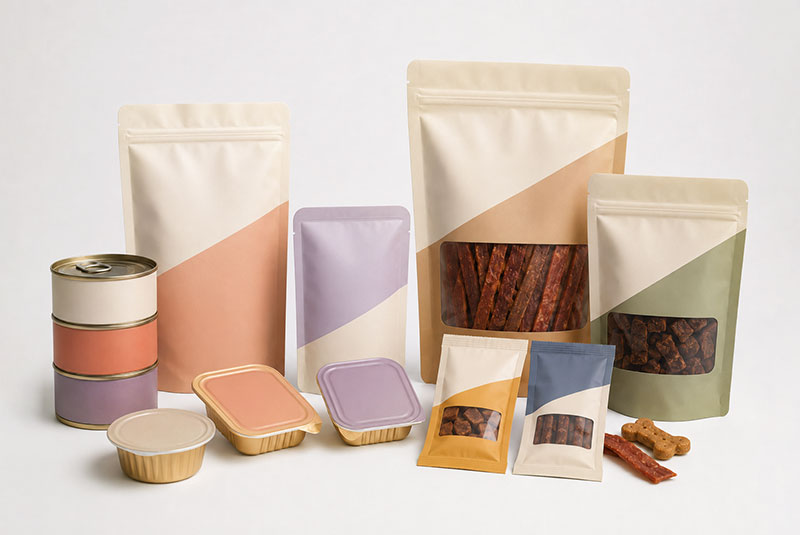
Pouches, cans, and trays can all support gravy or jelly formats, but each package creates a different opening and serving experience.
Pouches make it easy to squeeze sauce around the pieces but can leave product behind in folds. Cans allow consumers to spoon or pour the contents but may present a denser mass. Trays can provide a wide opening that shows the product structure clearly.
When comparing cat food in gravy vs jelly, buyers should consider how the texture looks when removed from the final package, not only how it looks in a laboratory cup.
Thermal Processing Can Change Final Texture
Wet pet food is commonly thermally processed in sealed packaging to achieve shelf stability. Heat can change protein structure, starch behavior, viscosity, gel formation, color, and piece firmness.
Academic literature describes retort processing as a common preservation method for wet pet foods. The same peer-reviewed review of wet pet food describes heat processing of sealed wet-food formats.
This means that the pre-retort mixture is not always a good predictor of the final consumer texture. Buyers should evaluate the finished, processed sample rather than approving only a kitchen-scale prototype.
Use a Texture-Specific Sample Evaluation Sheet
A controlled sample sheet makes cat food in gravy vs jelly comparisons much more useful than relying on general impressions.
| Evaluation Item | Gravy | Jelly |
|---|---|---|
| Liquid phase | Flow, coating, viscosity | Set, gel strength, clean break |
| Meat distribution | Suspension and coating | Suspension inside gel |
| Piece integrity | Breakage during filling/retort | Piece stability inside gel |
| Serving | Pourability and residue | Release from package and structure |
| Appearance | Sauce color and clarity | Gel clarity and firmness |
Use the same package size and net weight when comparing candidate formulas.
Think About How Consumers Actually Feed the Product
Real feeding behavior can reveal issues that a laboratory-only cat food in gravy vs jelly comparison may miss.
Some cats lick the sauce or jelly and leave the solid pieces behind. This behavior matters because a nutritionally complete product may not deliver its intended nutrient profile if the cat consistently consumes only one phase.
Veterinary and animal-welfare sources note that cats may selectively consume the liquid portion, sometimes because of texture preference and sometimes because chewing solid pieces is uncomfortable. Cats Protection discusses this feeding behavior and possible reasons.
For product development, this supports testing piece size and texture together rather than treating the sauce as a separate flavor element.
Gravy May Suit Brands Wanting a Saucy Visual Position
From a merchandising perspective, cat food in gravy vs jelly can also communicate two different visual identities on shelf.
Gravy can be effective when a brand wants visible sauce, softer presentation, and strong aroma release when the package is opened.
It can also support more dramatic front-of-pack photography because the sauce creates shine and movement around the pieces.
For a private label range, gravy may fit everyday meal positioning, premium meat-chunk positioning, or complementary topper formats depending on the formula.
Jelly May Suit Brands Wanting a Cleaner Structured Appearance
On the structured end of cat food in gravy vs jelly, jelly can create a more defined portion shape after opening.
Jelly can create a more stable visual structure. Pieces may appear more evenly suspended, and the product may release from the package as a more defined portion.
This can be useful for brands that want a cleaner cut appearance or a more structured single-serve format.
However, the private label buyer should confirm that the supplier can produce the desired jelly texture consistently before using it in product planning.
Private Label Buyers Should Confirm Texture Feasibility Early
For PetProOEM buyers, the cat food in gravy vs jelly decision currently requires an important feasibility check because gravy is publicly confirmed while jelly is not listed as a standard texture.
PetProOEM currently confirms gravy-related wet-food textures on its website. Jelly is not currently listed as a standard public texture option.
Therefore, a buyer interested in jelly should ask:
- Can jelly be produced on the intended line?
- Which gelling system is available?
- Can the target formula support the texture?
- Which package formats are compatible?
- Does the change require a new sample?
- Does the change affect nutritional analysis?
- Does the change affect shelf-life validation?
This is a better approach than assuming that any gravy formula can simply be converted into jelly.
How to Choose Between Cat Food in Gravy vs Jelly
For most private label buyers, the decision should be based on the target consumer experience and production feasibility.
Choose gravy when the brand wants:
- a more fluid, saucy presentation;
- visible coating around meat pieces;
- a soft serving experience;
- strong aroma release;
- flexibility in sauce thickness.
Consider jelly when the brand wants:
- a more structured presentation;
- meat pieces held in a soft set matrix;
- a cleaner portion shape;
- clear separation from gravy-based SKUs;
- a firmer sensory experience.
Neither format is inherently superior. The better choice is the one that fits the formula, market, package, and consumer preference.
Private Label RFQ Questions for Gravy or Jelly Wet Food
A strong RFQ should make the cat food in gravy vs jelly preference explicit instead of leaving texture for the supplier to interpret.
- Is the product complete or complementary?
- Which protein source will be used?
- What meat-piece size is required?
- What solid-to-liquid ratio is targeted?
- Should the liquid phase be gravy or jelly?
- What viscosity or gel strength is expected?
- Which thickener or gelling system is used?
- Are zero-starch or zero-gum requirements important?
- Which package format is preferred?
- What net weight is required?
- Does the texture remain stable after retort?
- What sample and shelf-life validation are required?
Buyers can review PetProOEM’s gravy-based Staple Meal Package and send a product-development brief with the desired protein, piece size, texture, package, and target market.
Common Cat Food in Gravy vs Jelly Mistakes
Most cat food in gravy vs jelly sourcing errors come from treating texture as a simple flavor choice rather than a formulation and process decision.
The first mistake is treating gravy and jelly as purely visual differences.
The second is assuming that jelly is automatically healthier or gravy is automatically more palatable.
The third is changing texture without reviewing the functional ingredients required.
The fourth is ignoring solid-to-liquid ratio.
The fifth is approving texture before the product has completed the intended thermal process.
The sixth is assuming the supplier currently offers jelly simply because it offers gravy.
The seventh is using texture as evidence of complete nutrition.
Conclusion
The best way to compare cat food in gravy vs jelly is to treat texture as a technical product decision. Gravy offers a more fluid sauce around meat pieces, while jelly creates a softer set structure that holds the pieces in place.
For private label buyers, the right choice depends on solid-to-liquid ratio, piece size, formula, functional ingredients, packaging, retort behavior, nutritional role, and consumer preference. PetProOEM currently confirms meat-with-gravy options publicly, while jelly should be treated as a customization request that needs feasibility confirmation.
A controlled sample and written specification are the best way to ensure the final product delivers the texture the brand intends.
FAQ
What is the difference between cat food in gravy and jelly?
Gravy is a more fluid sauce that surrounds or coats meat pieces. Jelly forms a softer set gel that holds the pieces in a more structured matrix.
Is gravy or jelly better for cats?
Neither is universally better. Preference depends on the individual cat, while nutritional quality depends on the full formula rather than the texture alone.
Can complete cat food be made in both gravy and jelly?
Yes. Nutritional completeness depends on the formula and adequacy basis, not on whether the product uses gravy or jelly.
Does PetProOEM currently offer jelly cat food?
The current public wet-food pages confirm gravy-related textures, but jelly is not listed as a standard confirmed option. Buyers should request feasibility confirmation for a jelly project.
What should private label buyers confirm before choosing gravy or jelly?
Confirm the nutritional role, protein source, piece size, solid-to-liquid ratio, thickener or gelling system, package format, retort stability, sample performance, and target-market requirements.