A strong wet cat food OEM project begins with a request for quotation that is specific enough for a supplier to understand the product, packaging, target market, and documentation requirements without guessing. A short message such as “I need private label cat food” may start a conversation, but it is rarely enough to generate a comparable quotation.
For brand owners, importers, distributors, and retailers, the RFQ is where commercial ideas become production requirements. Nutritional role, texture, protein source, net weight, packaging format, artwork, expected quantity, destination market, sample scope, quality expectations, and compliance documents should all be addressed before the project moves too far.
This guide explains how to prepare a practical wet cat food OEM RFQ that helps suppliers respond with fewer assumptions. It also provides a copyable structure that buyers can use when requesting samples or comparing manufacturing proposals.
Table of Contents
Why a Wet Cat Food OEM RFQ Needs More Than a Product Name
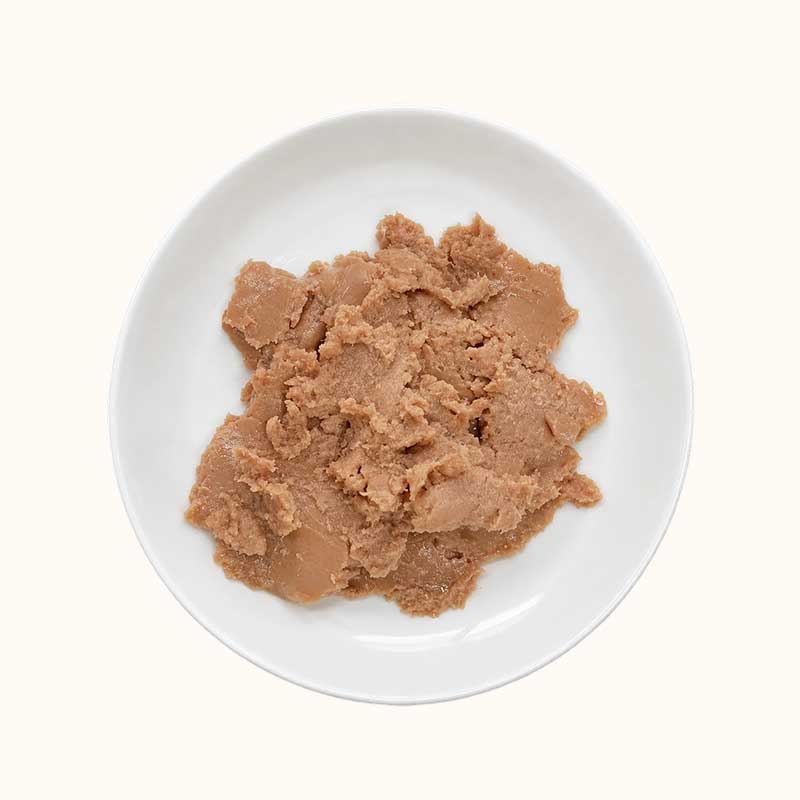
The phrase “wet cat food” covers many different products. A wet cat food OEM supplier may offer pouches, cans, cups, broths, mousse, meat chunks, shredded meat, lickable products, or complementary treats. Each format can require a different formula, filling process, packaging material, net weight, sterilization approach, and production setup.
PetProOEM’s current wet cat food range includes pouches, canned foods, cups, lickable products, and other high-moisture formats. That variety is useful, but it also means buyers should avoid sending a generic request.
A useful RFQ should answer at least four basic questions:
- What type of product do you want?
- Who will buy or consume it?
- What must be customized?
- Which requirements are fixed and which are flexible?
If those points are unclear, two suppliers may quote completely different projects while appearing to answer the same inquiry.
Define Whether the Product Is Complete or Complementary
The first technical decision in a wet cat food OEM RFQ should be the intended nutritional role. Is the product designed to serve as a complete daily diet, or is it a complementary food, topper, treat, broth, or snack?
This choice affects formulation, label wording, feeding instructions, nutritional documentation, and life-stage positioning. A package format does not determine nutritional adequacy. A pouch can contain either a complete or complementary product, and the same is true for cans and cups.
For U.S.-market projects, the U.S. Food and Drug Administration explains that a product labeled “complete and balanced” should have an appropriate nutritional adequacy basis. Buyers can review the FDA’s complete and balanced pet food guidance.
For European projects, buyers should review the applicable rules for complete and complementary feed, including Regulation (EC) No 767/2009 through EUR-Lex.
In a wet cat food OEM RFQ, state the intended nutritional role explicitly instead of assuming the supplier will infer it from the product name.
Specify the Target Cat and Life Stage
A wet cat food OEM formula for adult maintenance may not be equivalent to a formula intended for kittens, growth, reproduction, or another defined life stage.
State whether the target product is for kittens, adult cats, senior cats, or a broader life-stage claim that requires specific nutritional support. Avoid using “all ages” simply because it sounds commercially flexible.
If the product is complementary, clarify whether it is intended as a daily topper, occasional treat, hydration-focused snack, or another limited-use product. The supplier should understand both the consumer profile and the feeding role before recommending a formula.
Choose the Texture Before You Ask for Samples
Texture is one of the most visible variables in wet cat food OEM development. Buyers should describe the desired eating experience rather than using a broad term such as “wet food.”
Possible directions include:
- smooth pâté;
- mousse;
- pudding-like texture;
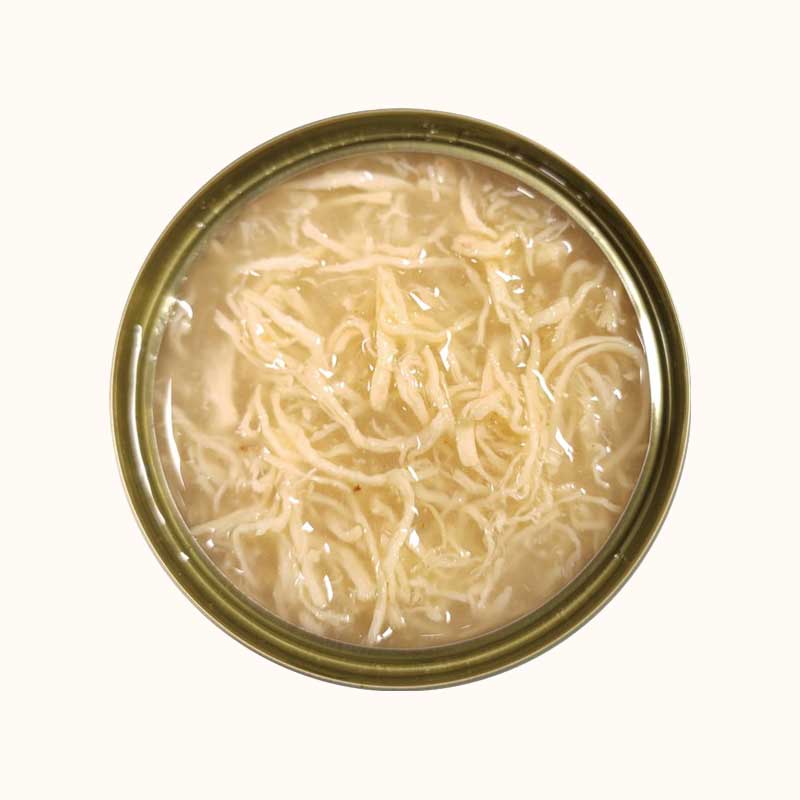
- shredded meat in broth;
- chunks in gravy;
- chunks in jelly;
- meat puree;
- lickable paste;
- broth or soup style.
PetProOEM’s current wet cat food pages show several of these directions. For example, the Stapelmehlpaket describes meat with gravy and customizable textures, while the Grundnahrungsmittel für Kunststoffbecher lists pudding, mousse, and milkshake-style textures.
For a wet cat food OEM project, ask whether texture changes require formula changes, different filling conditions, or new samples.
Define Protein Source and Ingredient Requirements
A supplier cannot quote a wet cat food OEM project accurately if the protein direction is unknown. State the preferred primary protein, acceptable alternatives, ingredients to include, and ingredients to avoid.
Common commercial directions may include chicken, duck, beef, tuna, salmon, or combinations. The exact choice should reflect product positioning, target market, formulation feasibility, and labeling requirements.
If the product must avoid certain ingredients, write those restrictions clearly. Examples may include soy, selected grains, specific animal proteins, artificial colors, or particular preservatives. Do not assume that “premium” or “natural” automatically means the supplier will exclude those ingredients.
For claims such as grain free, single protein, limited ingredient, preservative free, or high meat, the formula must be reviewed against the final ingredient list. These claims should not be approved before the formula is fixed.
Ask for the Nutritional Specification, Not Just a Marketing Description
A good wet cat food OEM RFQ separates nutritional specifications from marketing language.
Ask which analytical values or nutritional targets apply to the proposed formula. Depending on the market and product role, the relevant information may include crude protein, crude fat, crude fibre, moisture, ash, taurine, energy information, vitamins, minerals, or other required nutrients.
Do not use a short guaranteed analysis panel as proof that a food is nutritionally complete. A complete diet requires a broader nutritional basis than a few headline values.
If you are comparing formulas with different moisture contents, consider whether a dry-matter comparison is needed for internal evaluation. As-fed values can look very different simply because one product contains more water.
Choose the Packaging Format and Net Weight Together
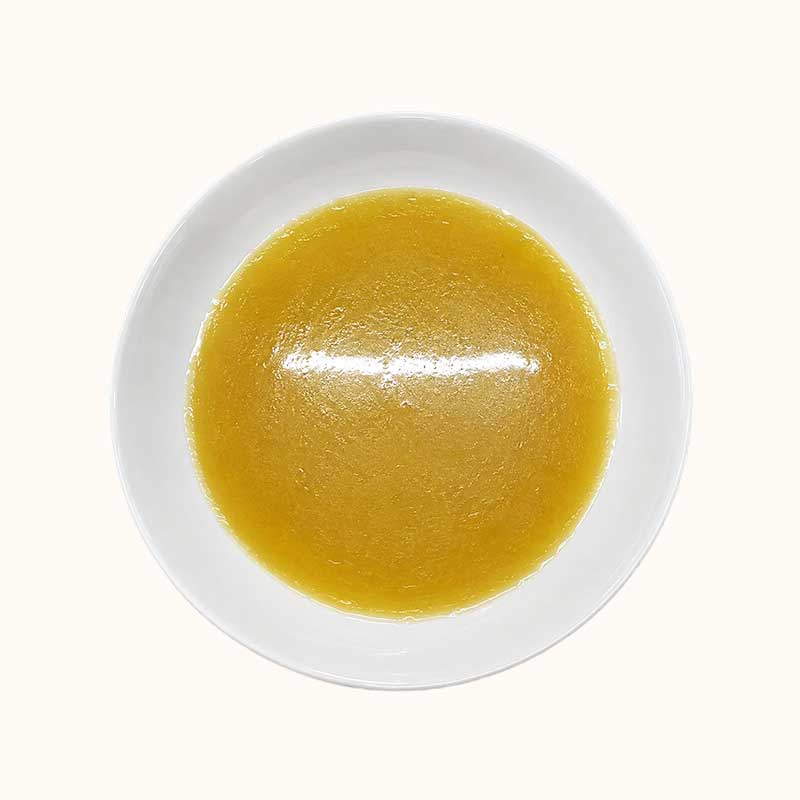
Packaging format and net weight are connected decisions in wet cat food OEM sourcing. A pouch, can, or cup may support different filling sizes, visual positioning, case packing, and retail use.
PetProOEM’s current Staple Meal Package lists 50–120 g as recommended specifications. That should be treated as a published recommendation for the current product direction, not as proof that every weight within or outside that range is automatically available for every formula.
The Canned Staple Food page currently lists recommended 85 g and 170 g formats, while the Plastic Cup page lists 50–55 g. Buyers should confirm final feasibility for the exact product.
| RFQ Packaging Field | What to Specify |
|---|---|
| Primary format | Pouch, can, cup, tray, tube, spout pouch, or other approved format |
| Net weight | Target grams per unit and acceptable alternatives |
| Pack structure | Supplier-recommended or buyer-specified material where applicable |
| Opening style | Tear notch, easy-open lid, peel seal, or other required feature |
| Retail unit | Single unit, multipack, assorted flavors, sleeve, box, or display |
| Outer packing | Units per carton, carton marks, pallet or shipment requirement |
For a wet cat food OEM RFQ, do not finalize artwork before the package dimensions and print area are confirmed.
Describe the Product Appearance the Buyer Expects
Wet cat food is highly visual. Buyers often care about color, meat visibility, gravy ratio, chunk size, smoothness, sauce consistency, and overall appearance.
These preferences should be included in the wet cat food OEM brief. A reference photo can help, but it should not replace a written description.
For chunk products, specify approximate piece size and whether irregular natural variation is acceptable. For shredded products, define the expected strand appearance. For mousse or pâté, describe firmness, smoothness, and whether visible inclusions are acceptable.
If visible meat is part of the commercial positioning, ask whether the proposed process and package format can reproduce that appearance consistently.
State the Intended Market Before Asking for a Final Quote
A wet cat food OEM quotation should include the destination market because labeling, documentation, facility requirements, import procedures, and product registration can vary.
Tell the supplier the country or region where the product will be sold, the expected importer, and the intended channel such as pet specialty, supermarket, e-commerce, distributor, or cross-border retail.
For U.S. projects, animal food manufacturing and import requirements may involve FDA-related obligations depending on the supply chain. For European projects, feed rules, labeling, additives, and importer responsibilities should be reviewed against applicable EU requirements.
Do not ask simply whether the supplier is “export qualified.” Send the specific compliance questions that matter for your market.
Define the Required Label and Artwork Information
Artwork can become a bottleneck in wet cat food OEM projects when design begins before technical data is confirmed.
Before final artwork approval, buyers should confirm:
- product name;
- complete or complementary designation;
- life-stage statement;
- ingredient list;
- analytical information;
- feeding directions;
- storage instructions;
- net content;
- manufacturer, importer, or distributor information as required;
- barcode;
- country-specific statements;
- claims and their supporting evidence.
PetProOEM’s OEM and ODM services describe customization of formulas, product specifications, labels, packaging, and outer cartons. The final artwork should be linked to the approved formula and package specification so that old technical information is not printed on a revised product.
Request the Right Type of Sample
Not every wet cat food OEM project needs the same sampling route.
If the buyer is evaluating an existing formula and package format, a stock sample may be enough for initial screening. If the formula, texture, protein source, functional ingredient, or package is being changed, a customized sample may be necessary before commercial approval.
The RFQ should state what the buyer expects from the sample:
- formula identity;
- texture and appearance;
- odor and palatability evaluation;
- net weight;
- package seal quality;
- label mock-up where needed;
- analytical or nutritional information;
- storage and shelf-life basis;
- sample code and version.
Every wet cat food OEM sample should be traceable to a formula version. Avoid approving “the second sample” or “the latest pouch” without a code.
Ask How Shelf Life Is Supported
Shelf life is a major commercial requirement in wet cat food OEM programs, but buyers should not accept a shelf-life number without understanding the basis behind it.
Ask how the proposed shelf life is established. Is it based on historical production data, packaging validation, process validation, stability testing, laboratory evaluation, or another documented basis?
If the formula, package material, filling condition, seal structure, or process changes, ask whether the original shelf-life basis still applies.
Do not copy the shelf life from another SKU simply because both products are wet cat food.
Include Quality Control and Production Requirements in the RFQ
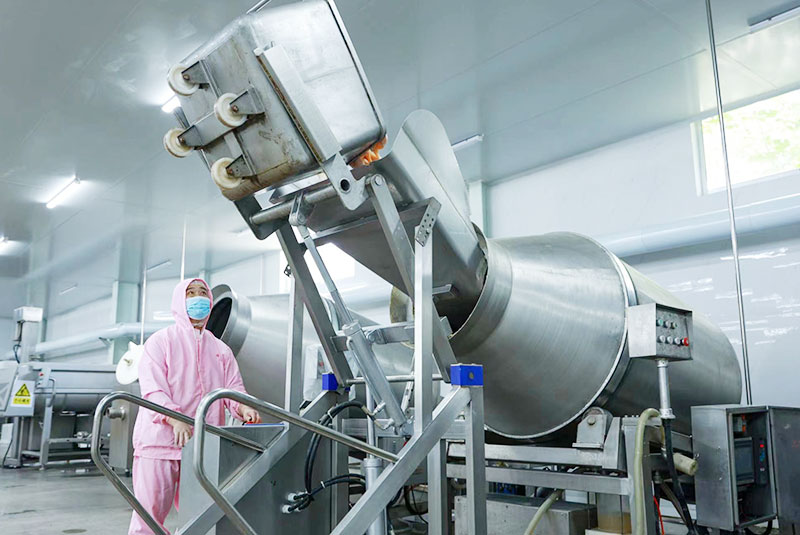
A wet cat food OEM quotation should reflect the quality scope, not only the recipe and packaging.
Ask the supplier what controls apply to:
- incoming raw materials;
- ingredient identity;
- formula batching;
- fill weight;
- seal integrity;
- thermal process or other preservation step;
- finished-product appearance;
- microbiological checks where applicable;
- label and carton verification;
- lot coding and traceability;
- retained samples.
If third-party inspection or laboratory testing is required, include it in the wet cat food OEM RFQ before commercial terms are finalized.
Ask for Documents by Category
Instead of requesting “all certificates,” divide the wet cat food OEM documentation into practical categories.
| Document Category | Examples to Confirm |
|---|---|
| Product | Specification sheet, ingredient list, analysis, nutritional statement |
| Facility | Relevant registrations or certifications applicable to the project |
| Batch | Lot records, COA, microbiological or other agreed test results |
| Packaging | Material specification, artwork approval, migration or material documentation where required |
| Shipment | Commercial invoice, packing list, origin or health-related documents where applicable |
| Market compliance | Documents required by importer, retailer, marketplace, or authority |
Ask the supplier which documents already exist, which are issued per production batch, and which require additional testing or external certification.
Provide Quantity as a Planning Range
Even when a buyer is not ready to commit to a final volume, a wet cat food OEM supplier needs a realistic quantity range to recommend the right production and packaging route.
Do not invent a quantity merely to get a reply. Instead, provide a first-order estimate and a reasonable forecast if available. Explain whether the order is a market test, retailer launch, distributor trial, or established-volume program.
Different packaging types, printed materials, carton configurations, and formulas may have different production constraints. Because of this, the supplier should confirm the applicable minimums for the exact project rather than the buyer assuming that one MOQ applies to every SKU.
Use One RFQ Format When Comparing Multiple Suppliers
If you are comparing wet cat food OEM suppliers, send the same product brief to each company. Otherwise, you may receive quotations that cannot be compared fairly.
Keep the nutritional role, texture, formula direction, protein source, package type, net weight, artwork scope, quantity, destination, testing, and document requirements consistent.
Then ask suppliers to identify assumptions and exclusions. If one supplier quotes a standard formula while another quotes custom development, that difference should be visible in the proposal rather than discovered later.
Copyable Wet Cat Food OEM RFQ Template
The following structure can be copied into an inquiry email or sourcing form:
- Company and market: brand/importer/distributor name and destination country.
- Product role: complete food, complementary food, topper, treat, broth, or other.
- Target cat: kitten, adult, senior, or another defined life stage.
- Texture: mousse, pâté, shredded meat, chunks in gravy, jelly, broth, puree, or other.
- Protein source: preferred main protein and acceptable alternatives.
- Ingredient requirements: required ingredients and ingredients to avoid.
- Nutritional requirements: target standard, analysis, or adequacy basis.
- Package format: pouch, can, cup, tray, tube, spout pouch, or other.
- Net weight: target grams per unit and flexible alternatives.
- Retail configuration: single units, multipack, assorted flavors, display box, or other.
- Artwork: logo, languages, barcode, claims, importer information.
- Sample requirement: stock sample or customized sample, number of versions, approval criteria.
- Testing: product, batch, retailer, or market-specific requirements.
- Documents: specification, ingredient list, analysis, facility, batch, and shipment documents.
- Order range: estimated first order and expected follow-up volume.
- Destination: port, city, Incoterm requirement, or logistics basis.
Buyers can use PetProOEM’s current Stapelmehlpaket as one product reference, then send the RFQ with the exact formula, texture, package, and market requirements.
Common Wet Cat Food OEM RFQ Mistakes
The first mistake is asking for “wet cat food” without defining whether the product is complete or complementary.
The second is specifying only the flavor and ignoring texture, nutritional role, and package format.
The third is asking for a final quotation before package size and print requirements are known.
The fourth is approving marketing claims before the formula and supporting documentation are finalized.
The fifth is assuming that a recommended product specification is a fixed production capability for every formula.
The sixth is using another product’s shelf life, feeding instructions, or analysis without confirming that the information applies to the selected SKU.
The seventh is comparing supplier quotations with different assumptions.
The eighth is discussing documents only after production begins.
Conclusion
A useful wet cat food OEM RFQ gives the supplier enough information to quote a real project rather than an idea. Define the nutritional role, life stage, texture, protein source, ingredient restrictions, packaging, net weight, artwork, target market, samples, testing, documents, quantity range, and destination.
The goal is not to make the first inquiry unnecessarily complicated. It is to remove the assumptions that create expensive revisions later. A clear RFQ also makes supplier proposals easier to compare and helps the buyer move from sample evaluation to production with a controlled specification.
If you are planning a private label wet cat food line, review PetProOEM’s wet cat food products and send your product brief with your target market, formula direction, texture, packaging, and expected quantity.
FAQ
What should I include in a wet cat food OEM RFQ?
Include the nutritional role, target life stage, texture, protein source, ingredient requirements, package format, net weight, artwork scope, expected quantity, destination, sample requirements, testing, and required documents.
Should I ask for a complete or complementary wet cat food formula?
That depends on the intended product role. If the food is intended as the sole daily diet, discuss a complete formula and the nutritional adequacy basis. If it is a topper, treat, broth, or supplemental product, a complementary formula may be more appropriate.
Can I request custom pouch sizes for wet cat food OEM projects?
Packaging and net-weight customization may be possible depending on the product, filling line, pouch material, and production setup. Treat published sizes as starting points and confirm feasibility for the exact formula and order configuration.
Do I need a custom sample before placing an order?
If you are using an existing formula and package, a stock sample may be enough for initial evaluation. If the formula, texture, flavor, net weight, or packaging changes, a customized sample is usually more useful for approval.
How can I compare wet cat food OEM quotations fairly?
Send the same RFQ to each supplier and normalize the formula, texture, packaging, quantity, destination, testing, and documentation scope. Ask each supplier to state assumptions and exclusions in writing.