Launching private label wet cat food is not just a branding exercise. A first order has to connect formula, nutritional role, texture, package format, label content, sample approval, production controls, and market documentation into one traceable specification.
For importers, distributors, retailers, and pet brands, the challenge is that wet cat food can look similar while serving very different nutritional and commercial roles. A pouch may contain a complete daily diet, a complementary food, a topper, or a treat. A can may contain chunks in gravy, shredded meat, mousse, or pâté. A cup may be positioned for single-serve convenience, but the package itself does not establish whether the food is nutritionally complete.
This private label wet cat food checklist is designed for buyers preparing their first order. It focuses on the decisions that should be made before mass production: nutritional role, life stage, formula, texture, packaging, sample approval, claims, artwork, documentation, quality control, and shipment readiness.
Table of Contents
Define the Product Role Before Choosing the Package
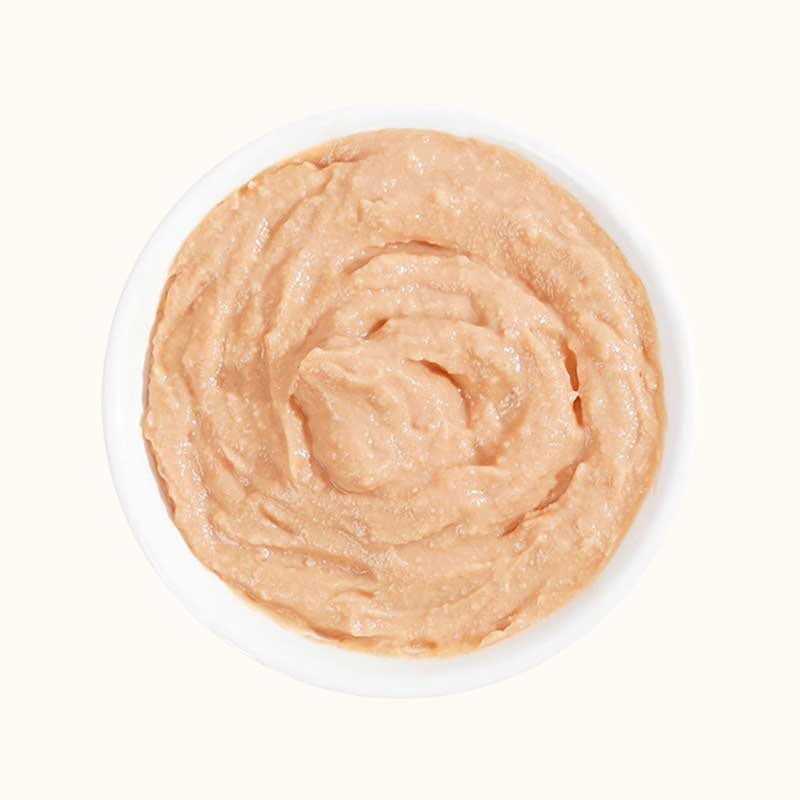
The first step in a private label wet cat food project is to define what the product is intended to be. Buyers should decide whether the product will be a complete food, complementary food, topper, snack, lickable treat, broth, soup, or another clearly defined feeding format.
This choice affects almost every later decision. A complete food usually requires a nutritional adequacy basis for the stated life stage. A complementary product may be intentionally designed for limited feeding and can offer more flexibility in texture or serving occasion.
PetProOEM’s current wet cat food range includes canned foods, pouches, plastic cups, lickable formats, soups, and other high-moisture products. Buyers should treat those categories as starting points and confirm the nutritional role of the exact formula selected.
Confirm the Target Life Stage
A private label wet cat food formula should be linked to the cat population it is designed for. Adult maintenance, kitten growth, reproduction, and broader life-stage positioning can involve different nutritional expectations.
Do not approve “for all ages” or “all life stages” simply because it creates a broad marketing message. The claim should be supported by the actual nutritional basis of the formula.
For U.S.-market projects, buyers can review the U.S. Food and Drug Administration’s guidance on complete and balanced pet food. For European projects, the applicable feed classification and labeling requirements should be reviewed through official sources such as EUR-Lex.
Life stage should be recorded in the product specification, not added later as a marketing phrase.
Choose the Product Format and Texture Together
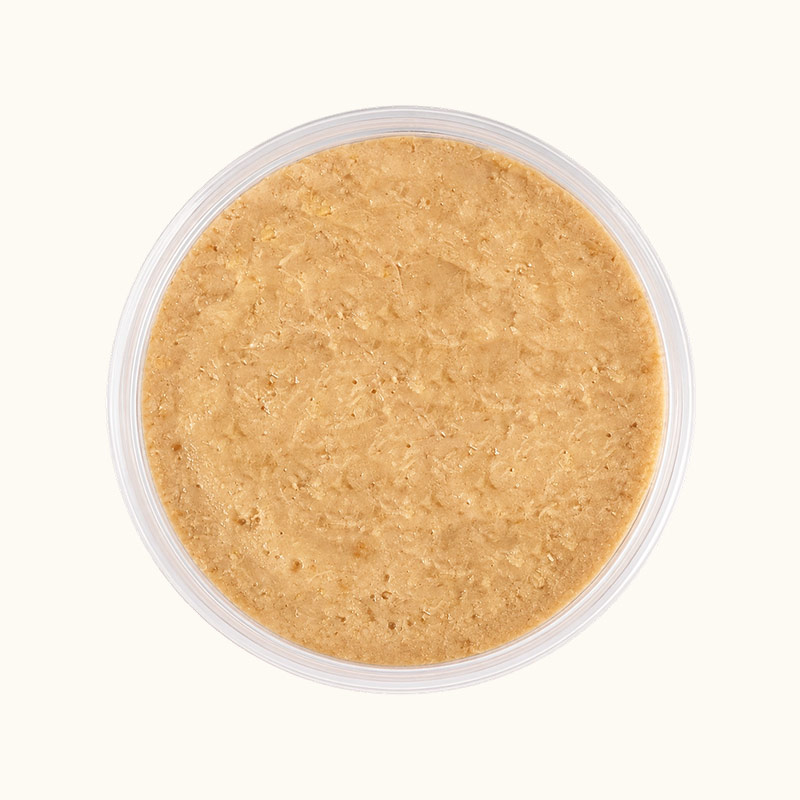
Texture is a major part of private label wet cat food positioning. It affects how the food looks in the package, how cats consume it, how the product is filled, and how the brand communicates the eating experience.
Common formats may include:
- mousse;
- pâté;
- pudding-like texture;
- meat puree;
- shredded meat in broth;
- chunks in gravy;
- chunks in jelly;
- lickable paste;
- soup or broth style.
PetProOEM’s current Grundnahrungsmittel in Dosen page describes meat cubes, meat puree, and mousse formats, while the Grundnahrungsmittel für Kunststoffbecher page describes pudding, mousse, and milkshake-style textures.
For a first private label wet cat food order, select one texture direction per SKU and approve it using a coded physical sample.
Review the Complete Ingredient List
Buyers should never approve a private label wet cat food product based only on a flavor name such as chicken, tuna, salmon, duck, or beef.
The complete ingredient list should be reviewed before label approval. Ask which ingredients are used for protein, texture, moisture management, palatability, vitamin and mineral supplementation, functional positioning, and processing.
If the brand wants to avoid selected ingredients, those restrictions should be written into the specification. Examples may include certain grains, soy, specific animal proteins, colors, preservatives, or other ingredients.
Claims such as grain free, single protein, limited ingredient, no added preservative, or high meat should only be used when the final formula supports them. The ingredient list, not the product photo, determines whether the claim is accurate.
Separate Nutritional Evidence From Marketing Language
A strong private label wet cat food project keeps nutritional evidence separate from marketing language.
Marketing may emphasize visible meat, smooth texture, high moisture, palatability, or a particular protein source. Nutritional evidence should address the actual feeding role, analysis, life stage, and adequacy basis where applicable.
Do not treat crude protein alone as proof of complete nutrition. Likewise, high moisture does not automatically prove a urinary-health benefit. Claims about digestion, urinary support, immunity, coat health, or other physiological effects require appropriate evidence and market-specific review.
If the food is intended as a complete diet, ask which nutritional framework supports that use. If it is complementary, make sure the package does not imply that it can replace the entire daily ration.
Choose the Package Format Based on Use and Production Feasibility
Package format is a commercial and technical decision in private label wet cat food sourcing.
Current PetProOEM product pages show pouches, cans, cups, tubes, and other formats. The Canned Staple Food page currently lists recommended 85 g and 170 g specifications. The Plastic Cup page lists recommended 50–55 g cups. Other pouch products may use different recommended sizes.
These published values should be treated as reference specifications for the relevant product, not as universal production capabilities for every formula.
| Packaging Decision | Buyer Should Confirm |
|---|---|
| Primary format | Pouch, can, cup, tube, tray, or other available format |
| Net weight | Target grams per unit and feasible alternatives |
| Opening method | Tear notch, easy-open lid, peel seal, or other feature |
| Retail configuration | Single unit, multipack, assorted flavors, display box |
| Print method | Printed film, label, sleeve, can label, or other format |
| Outer packing | Units per carton, carton dimensions, shipping marks |
Approve a Traceable Sample
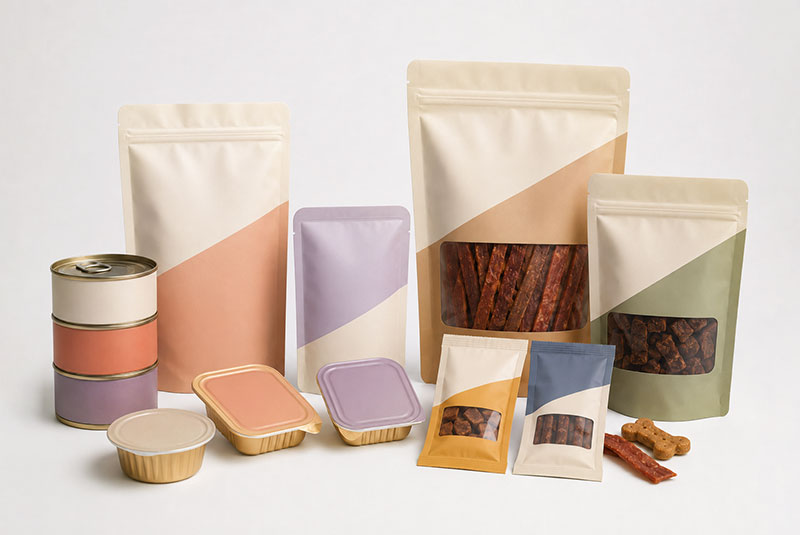
Sample approval is one of the most important steps in a private label wet cat food project. The approved sample should represent the formula, texture, appearance, packaging direction, and nutritional role that will move into production.
Every sample should have a code or version number. Record the formula version, production date where available, package type, net weight, texture, protein source, and any customized features.
During review, evaluate:
- package condition;
- seal integrity;
- net content;
- appearance;
- aroma;
- texture;
- meat visibility;
- gravy or jelly consistency;
- portion size;
- label or mock-up accuracy;
- supporting product documents.
A photograph alone should not replace a physical approval sample for private label wet cat food.
Ask for a Written Product Specification
The approved sample should be supported by a written specification. Physical samples can change during storage, and verbal approvals are difficult to audit later.
A private label wet cat food specification can include:
- product name;
- nutritional role;
- target species and life stage;
- formula reference;
- ingredient list;
- texture;
- appearance description;
- analytical targets;
- net weight;
- package format;
- artwork version;
- shelf-life basis;
- storage instructions;
- quality checks;
- sample code.
This specification becomes the reference point for production, inspection, and future repeat orders.
Build the Label After Formula Approval
Artwork should come after the product definition, not before it. A common mistake in private label wet cat food projects is designing the package around marketing language before the final formula and nutritional role are confirmed.
The label should reflect the exact approved SKU. Buyers should verify the product name, ingredients, analysis, life-stage wording, feeding instructions, net content, storage statement, barcode, importer information, and required destination-market declarations.
PetProOEM’s OEM and ODM services state that formulas, labels, packaging, outer cartons, specifications, and product combinations can be customized. Buyers should ensure that every customized artwork version remains linked to the approved product specification.
Keep Claims Conservative Until Evidence Is Confirmed
Claims can improve the positioning of private label wet cat food, but they should be based on evidence.
Potential claims that deserve careful review include:
- complete and balanced;
- all life stages;
- grain free;
- high meat;
- single protein;
- no preservatives;
- digestive support;
- urinary support;
- immune support;
- skin and coat support;
- hydration support.
Some of these are compositional claims, while others may imply physiological or health effects. The evidence standard may therefore differ.
For first-order development, factual product descriptions are often safer than broad functional claims until the buyer has reviewed the relevant formula and documents.
Confirm Shelf Life for the Exact Formula and Package
Shelf life should not be copied from another wet food SKU. In private label wet cat food, shelf stability can depend on formula, processing, fill weight, package material, seal quality, storage conditions, and other variables.
Ask how the proposed shelf life is supported. The basis may include historical production experience, process validation, packaging validation, stability data, laboratory testing, or another documented method.
If the buyer changes the formula or packaging structure, ask whether the original shelf-life basis still applies.
Define Production and Quality Control Checkpoints
A first private label wet cat food order should have a product-specific quality plan.
Possible checkpoints include:
| Quality Area | Example Check |
|---|---|
| Raw materials | Ingredient identity and approved supplier controls |
| Formula | Correct batching and formula version |
| Filling | Net weight and appearance |
| Sealing | Seal integrity and package defects |
| Processing | Applicable thermal or preservation process records |
| Finished product | Appearance, analysis, microbiology where required |
| Label | Correct artwork, barcode, date code, lot code |
| Carton | Quantity, markings, case condition |
Quality control should be tied to the actual SKU instead of relying only on a generic “strict inspection” statement.
Identify the Required Documents Before Production
Document requirements for private label wet cat food can vary by destination market, importer, retailer, marketplace, and product role.
Buyers should separate documents into categories:
- Product documents: specification, ingredient list, analysis, nutritional statement.
- Facility documents: applicable registrations or certifications.
- Batch documents: COA, microbiological tests, lot records where agreed.
- Packaging documents: material specification or migration information where required.
- Shipment documents: invoice, packing list, origin or health-related documents where applicable.
- Market documents: importer, retailer, marketplace, or authority requirements.
Do not wait until the goods are packed to discover that a required document was never included in the project scope.
Clarify Quantity, MOQ, and Production Planning by SKU

Minimum-order requirements in private label wet cat food projects can depend on the formula, packaging type, print method, package size, carton configuration, and production line.
A buyer should therefore avoid assuming that one MOQ applies to every product.
When requesting a first order, provide a realistic quantity estimate and forecast range. Ask which part of the project creates the minimum: the food production, printed packaging, cans, cups, labels, cartons, or another component.
This helps the buyer understand which elements can be adjusted if the initial trial quantity is limited.
Run a Pre-Production Approval Before Mass Production
Before the first private label wet cat food production run, complete a final pre-production check.
Confirm:
- final formula code;
- final ingredient list;
- nutritional role;
- life stage;
- sample code;
- texture;
- package format;
- net weight;
- artwork file version;
- barcode;
- carton marks;
- quality plan;
- testing requirements;
- documents;
- shipment terms.
Any unresolved item should be marked clearly rather than left to production interpretation.
Inspect the First Order Against the Approved Specification
Inspection should compare the finished private label wet cat food with the approved specification and artwork, not with a general catalog description.
Check retail units for visible damage, print quality, seal condition, lot code, net content, label version, and carton configuration. Where product testing is part of the quality plan, make sure the tested samples are traceable to the actual production lot.
If third-party inspection is required, define the scope before shipment. The inspector should know which defects are critical, major, and minor and which specification controls the decision.
Private Label Wet Cat Food First Order Checklist
The following checklist can be used before approving a purchase order:
- Product role: complete, complementary, topper, treat, broth, or other.
- Life stage: kitten, adult, senior, growth/reproduction, or other supported positioning.
- Protein source: main protein and acceptable alternatives.
- Ingredient restrictions: ingredients required or excluded.
- Texture: mousse, pâté, chunks, shredded meat, gravy, jelly, broth, puree, or another format.
- Analysis: required nutrient and analytical information.
- Package: pouch, can, cup, tube, tray, or another confirmed format.
- Net weight: target unit size.
- Artwork: final version, language, barcode, claims, importer information.
- Sample: approved code and specification.
- Shelf life: documented basis for the exact SKU.
- Quality control: production, package, finished-product, and inspection checkpoints.
- Documents: product, facility, batch, packaging, shipment, and market requirements.
- Quantity: first order and forecast range.
- Shipment: destination, packing configuration, and agreed terms.
Buyers can review PetProOEM’s Grundnahrungsmittel in Dosen as one reference format and then send a private label wet cat food brief with the exact nutritional, texture, package, and market requirements.
Common First-Order Mistakes
The first mistake is choosing packaging before deciding whether the food is complete or complementary.
The second is approving a flavor name without reviewing the full formula.
The third is treating a commercial name such as “staple food” as proof of nutritional adequacy.
The fourth is using one product’s recommended package size as a universal specification.
The fifth is designing artwork before the formula and label data are finalized.
The sixth is copying shelf life or feeding instructions from another SKU.
The seventh is waiting until shipment to confirm import or retailer documents.
The eighth is comparing supplier offers that use different formulas, package formats, testing scopes, or document assumptions.
Conclusion
A successful private label wet cat food launch depends on controlling the details that connect the formula to the final package. Define the nutritional role, life stage, ingredients, texture, package format, net weight, claims, sample, artwork, shelf life, quality checks, and required documents before the first production run.
The most important discipline is traceability. The final label should match the final formula. The approved sample should match the written specification. The test documents should match the production SKU. The shipment should match the purchase order.
If you are developing a new wet food line, review PetProOEM’s wet cat food category and send your sourcing brief with the intended feeding role, target market, formula direction, texture, packaging, and first-order requirements.
FAQ
What should I confirm before placing a private label wet cat food order?
Confirm the nutritional role, life stage, formula, full ingredient list, texture, analysis, package format, net weight, approved sample, artwork, shelf-life basis, quality controls, documentation, quantity, and destination.
Can private label wet cat food be customized?
Depending on the product and production feasibility, customization can include formula, protein source, texture, package size, labels, artwork, outer cartons, and product combinations. Confirm the scope for the exact SKU before sampling.
Does canned or pouched wet cat food automatically count as complete food?
No. Package format does not determine nutritional adequacy. A pouch, can, cup, or tray can contain either complete or complementary cat food depending on the formula and supporting nutritional basis.
Should I approve artwork before the formula is final?
No. Final artwork should follow formula approval so that the ingredient list, analysis, nutritional role, feeding instructions, claims, and package information match the actual product.
What is the best way to control the first production order?
Use a coded approved sample, written product specification, final artwork version, agreed quality plan, required document list, and pre-production checklist. Inspect the finished goods against those approved references.