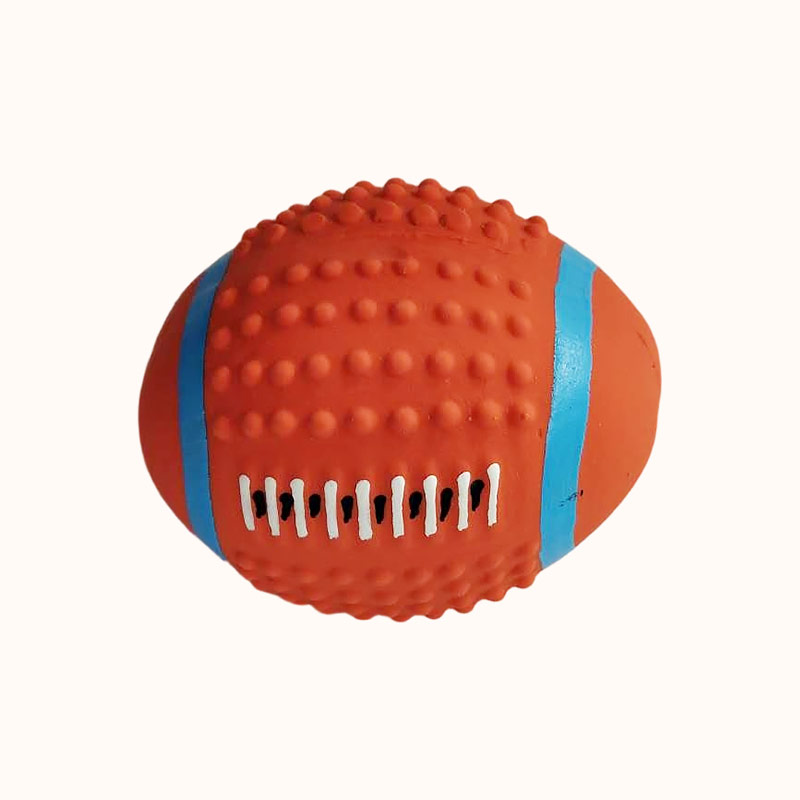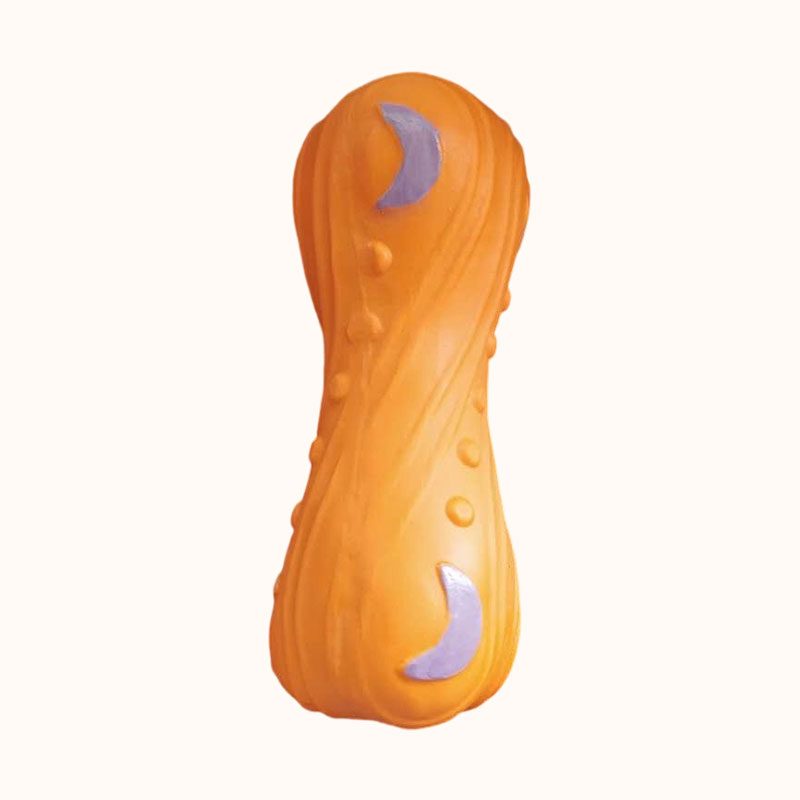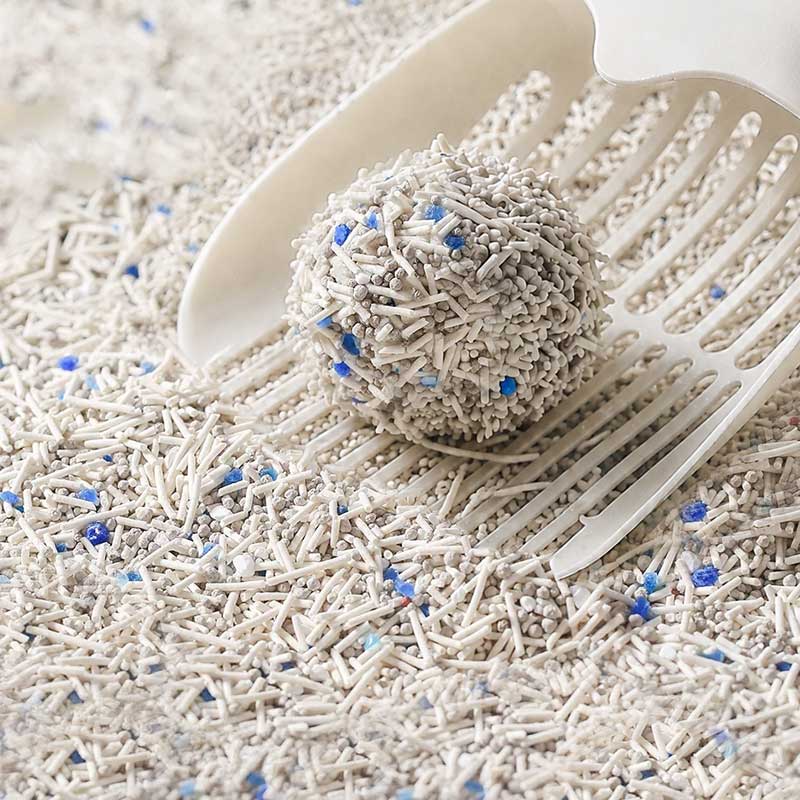
Dog chew toys and fetch toys can look similar in product photos, but they are designed around different types of interaction. For private label buyers, that distinction matters because intended use influences material choice, dimensions, wall thickness, weight, construction, testing, packaging, and the claims that can reasonably appear on the final product page.
A molded ball may be suitable for chasing and retrieving, but that does not automatically mean it should be positioned for extended chewing. A thick bone-shaped toy may support supervised chew play, but its shape alone does not prove that it is suitable for repeated high-impact fetch. Buyers who treat all molded toys as interchangeable risk choosing the wrong material or making claims the product was never designed to support.
This guide compares dog chew toys with fetch toys from a B2B sourcing perspective. It explains how to define intended use, evaluate material and construction, select size, review samples, plan testing, and build a private label assortment without turning appearance into an unsupported performance promise.
Table of Contents
What Makes Dog Chew Toys Different From Fetch Toys?
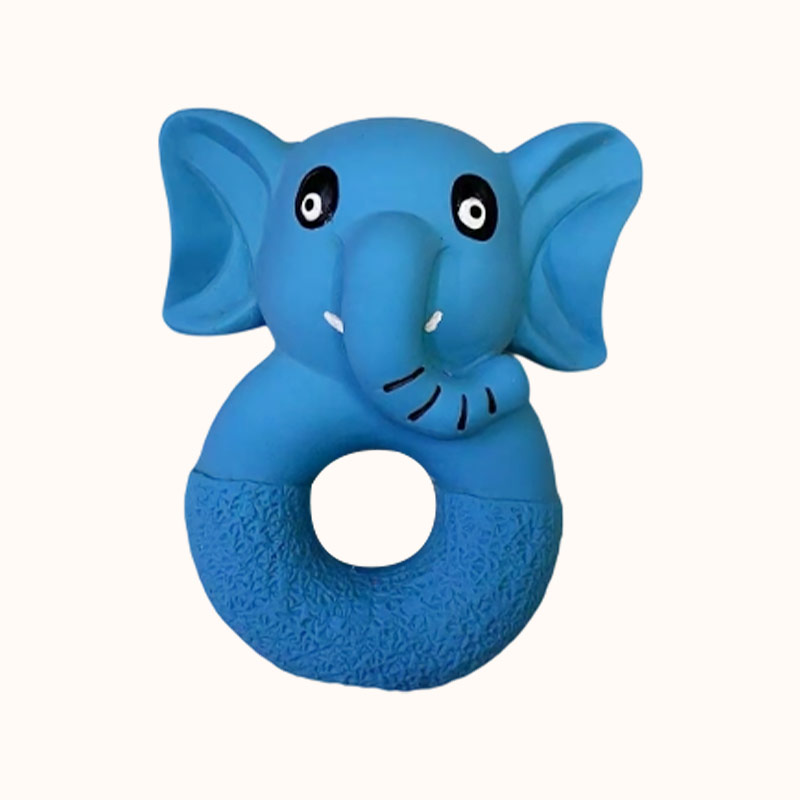
The most important difference is the primary interaction the product is intended to support.
Dog chew toys are generally designed for biting, gnawing, holding, compressing, and repeated mouth contact. Buyers therefore need to pay close attention to material hardness, tear behavior, wall thickness, molded transitions, protruding details, surface texture, and the way the toy changes under repeated chewing.
Fetch toys are usually selected for throwing, rolling, chasing, retrieving, and carrying. Their specification may place more emphasis on size, weight, aerodynamic shape, rolling behavior, bounce, visibility, and whether the dog can pick up and carry the toy comfortably.
Some toys can support both play patterns, but buyers should verify that mixed-use positioning rather than assuming it.
| Product Position | Main Interaction | Key Buyer Checks |
|---|---|---|
| Chew toy | Biting, gnawing, holding | Material, hardness, tear points, dimensions, deformation, supervision |
| Fetch toy | Throwing, rolling, chasing, retrieving | Size, weight, shape, carryability, bounce or float only if tested |
| Dual-use toy | Chew + retrieve | Evidence that the construction supports both intended uses |
Why Intended Use Should Be Written Into the Product Brief
One of the most useful things a private label buyer can add to a product specification is an “intended use” field.
Instead of requesting “a durable ball,” write whether the product is intended primarily for supervised chewing, toss-and-retrieve play, rolling, indoor interaction, outdoor play, or another defined use. This makes supplier recommendations more relevant and helps the testing plan focus on the right risks.
PetProOEM’s current pet toy category includes molded balls, football shapes, rings, dumbbells, character toys, and textured forms. Those shapes can support different product-positioning directions, but the exact function should still be confirmed at SKU level.
For dog chew toys, the brief should state whether the brand expects light supervised chewing, regular chewing, or another specific use case. Avoid terms such as “aggressive chewer proof” unless a defined test and product evidence support the wording.
Material Choice Matters More for Dog Chew Toys
Material is central to the performance of dog chew toys. The same shape can behave very differently depending on whether it is made from latex, TPR, rubber, or another polymer or elastomer.
PetProOEM’s current pet toy category references natural latex and TPR material directions. Buyers should request the exact material specification for the selected SKU rather than assuming every molded toy uses the same compound.
Important material questions include:
- What is the exact material or material family?
- What hardness or flexibility range applies?
- Is the toy solid, hollow, or thin-walled?
- Which pigments and additives are used?
- Is a squeaker or internal component present?
- Does the material specification change by color?
- Which test reports apply to this exact material and SKU?
For fetch products, material still matters, but the buyer may also prioritize weight, resilience, bounce, visibility, or outdoor handling. Those characteristics should be verified individually rather than assumed from the material name.
Hardness Is Not the Same as Durability
Private label buyers often assume that harder dog chew toys must be more durable. In practice, excessive hardness can create a different risk profile.
A toy can resist deformation while still being unsuitable for a dog’s teeth. Veterinary guidance commonly warns that very hard chew items may contribute to dental fractures. The American Kennel Club advises buyers and owners to consider size, material, durability, and the individual dog’s chewing behavior when selecting toys. Its dog toy selection guidance is useful background for consumer-facing safety decisions.
For sourcing, the practical lesson is that durability should be evaluated through relevant mechanical tests and controlled sample use—not through hardness alone.
Ask the supplier how hardness is measured, whether the selected hardness is adjustable, and whether changing hardness alters chemical composition, molding behavior, or testing requirements.
Fetch Toys Need the Right Size and Weight
Fetch toys are handled dynamically. A product that is too heavy may be uncomfortable to throw or retrieve. A product that is too small can create swallowing or choking concerns. A toy that is too large may be difficult for the intended dog to carry.
When evaluating a fetch-oriented ball or football shape, record:
- overall diameter or dimensions;
- finished weight;
- surface texture;
- solid or hollow construction;
- opening dimensions if any;
- recommended dog-size range;
- bounce only if tested;
- float behavior only if tested.
PetProOEM currently presents a Textured Dog Ball Toy and a Textured Football Dog Toy. These shapes visually support movement-led positioning, but buyers should still verify the performance characteristics they intend to advertise.
Dog Chew Toys Need Close Review of Weak Points
For dog chew toys, stress often concentrates around thin transitions, molded seams, holes, protruding features, squeaker openings, and changes in wall thickness.
During sample review, examine:
- ears, tails, legs, horns, or decorative projections;
- mold parting lines;
- narrow necks or center sections;
- openings;
- plugs or closures;
- sound-component retention;
- thin-wall areas;
- texture peaks and grooves.
A bone, dumbbell, ring, or animal shape may look thick overall while still containing local weak points. The inspection should focus on the actual geometry of the SKU.
PetProOEM’s Textured Dumbbell Dog Toy illustrates why a buyer should record both the wider ends and the narrower center rather than relying only on total length.
Surface Texture Supports Positioning but Does Not Prove Dental Benefits
Many dog chew toys include ridges, bumps, grooves, nubs, or other molded textures. These features can improve grip, visual differentiation, and tactile variety.
However, a textured surface does not automatically prove that a toy cleans teeth, removes plaque, reduces tartar, massages gums, or improves oral health.
Private label buyers should distinguish factual descriptions from health-related claims. “Textured surface,” “raised ridges,” or “molded bumps” are product descriptions. “Cleans teeth” or “reduces plaque” requires stronger evidence.
This distinction is important because the product may be visually suitable for dental-style merchandising without having validated dental performance.
Do Not Assume a Ring Is a Tug Toy
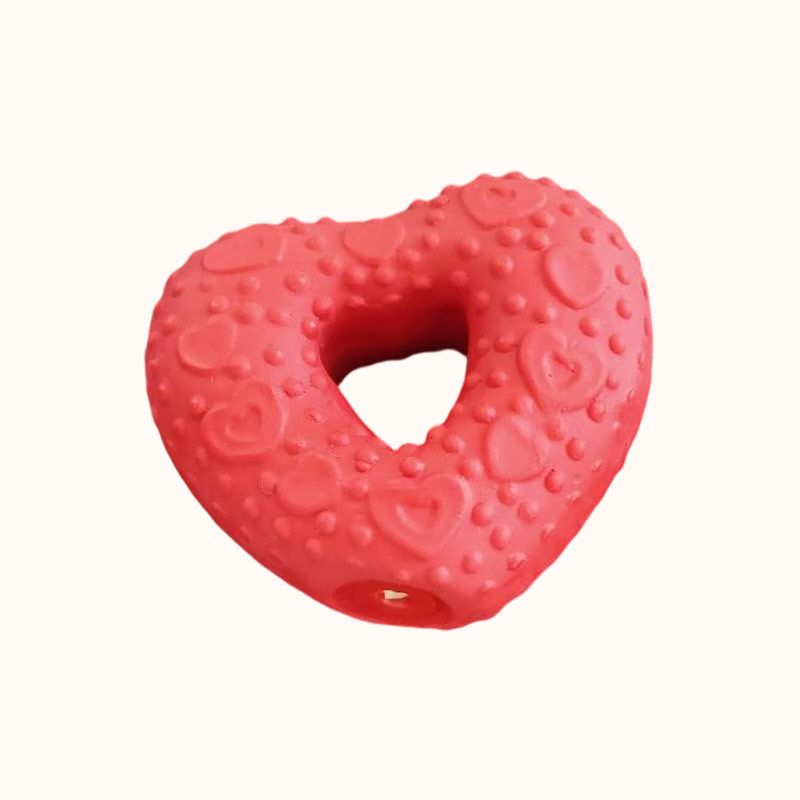
Ring-shaped toys are often associated with pulling and interactive play. But an open center does not automatically mean the toy has been designed for high-load tugging.
PetProOEM currently lists a Heart-Shaped Dog Chew Ring. For private label positioning, buyers should confirm outer dimensions, inner opening, cross-section thickness, material, and the intended use stated by the supplier.
If tug use is important, the mechanical test should reflect repeated pulling or tensile load. Without that evidence, it is safer to position the item as a ring-shaped chew or interactive toy rather than promising tug durability.
Fetch Performance Should Be Tested, Not Inferred
A ball-shaped product may roll, but that does not automatically prove consistent bounce. A lightweight toy may float, but that does not mean every color or formulation will behave the same way in water.
For fetch positioning, test the exact SKU for the characteristics you want to claim:
| Fetch Claim | What to Verify |
|---|---|
| Bounces | Drop height, surface, rebound consistency, sample variation |
| Floats | Buoyancy of the final material, size, and construction |
| Easy to carry | Dimensions, weight, surface, intended dog size |
| High visibility | Actual color contrast in intended environment |
| Durable for fetch | Impact and repeated-use method appropriate to the product |
Do not add these claims to a private label package simply because similar products in the market use them.
Chew Durability Needs a Defined Test Method
“Durable” is one of the most common claims for dog chew toys, but it becomes meaningful only when the test conditions are known.
Possible internal or laboratory evaluations may include compression, tensile loading, repeated deformation, tear resistance, component retention, or other product-specific mechanical checks.
The correct method depends on the construction. A solid molded toy may need different evaluation from a hollow squeaky toy. A ring may need different stress points from an animal character.
A useful buyer specification states the test method and acceptance result. This is more defensible than saying “indestructible,” which no practical product can guarantee for every dog.
Size Selection Is a Safety and Merchandising Decision
Both fetch toys and dog chew toys need size planning. A private label range that offers only one size may not be appropriate for every dog.
Measure:
- overall length;
- width;
- diameter;
- narrowest section;
- opening size;
- finished weight.
Package guidance should avoid implying that one toy is suitable for all dogs. Individual dogs vary in mouth size, chewing intensity, age, and behavior.
For balls in particular, swallowing and lodging risk should be considered carefully. For dog chew toys, the buyer should also consider whether damaged pieces could become accessible during use.
Supervision Language Should Match the Product
Consumer instructions are part of responsible product positioning. For both fetch and dog chew toys, private label packaging can include appropriate guidance such as selecting a suitable size, supervising play, inspecting the toy regularly, and replacing damaged products.
The exact wording should be reviewed for the target market and product. Avoid using supervision language as a substitute for appropriate product design or testing.
Supervision warnings are especially important when the product contains squeakers, openings, thinner projections, or components that could become accessible if damaged.
Testing Requirements Depend on Material, Structure, and Market
There is no single universal test package for all dog chew toys and fetch toys.
Mechanical testing should reflect the intended use and construction. Chemical testing should reflect the material, pigments, additives, components, and destination-market requirements.
For products sold in the European Union, buyers should review applicable chemical obligations through the European Chemicals Agency’s REACH information where relevant.
In the United States, ASTM F963 is a children’s toy safety standard, not a universal pet toy certification. The U.S. Consumer Product Safety Commission explains that different sections apply to different children’s toy types. Buyers can review the CPSC toy safety guidance when evaluating the meaning of referenced test methods.
If a supplier provides EN 71 or ASTM F963 test results for pet products, ask which specific sections were tested and whether the report applies to the exact SKU, color, material, and construction.
Build Separate Sample Tests for Chew and Fetch Products
A useful private label sample sheet should not evaluate all toys with the same checklist. For dog chew toys, the sample plan should reflect chewing stress rather than simply copying a fetch-toy review.
| Sample Check | Dog Chew Toys | Fetch Toys |
|---|---|---|
| Dimensions | Overall size, narrow areas, thickness | Diameter, length, carry dimensions |
| Material | Hardness, flexibility, tear behavior | Weight, resilience, surface grip |
| Construction | Weak points, seams, openings, components | Shape stability, impact areas |
| Performance | Compression, repeated deformation, component retention | Roll, bounce, float, impact only if relevant |
| Consumer fit | Chewing intensity and dog size | Carrying, chasing, dog size |
Use the exact same conditions when comparing multiple suppliers within the same toy type.
Private Label Packaging Should Make Intended Use Clear
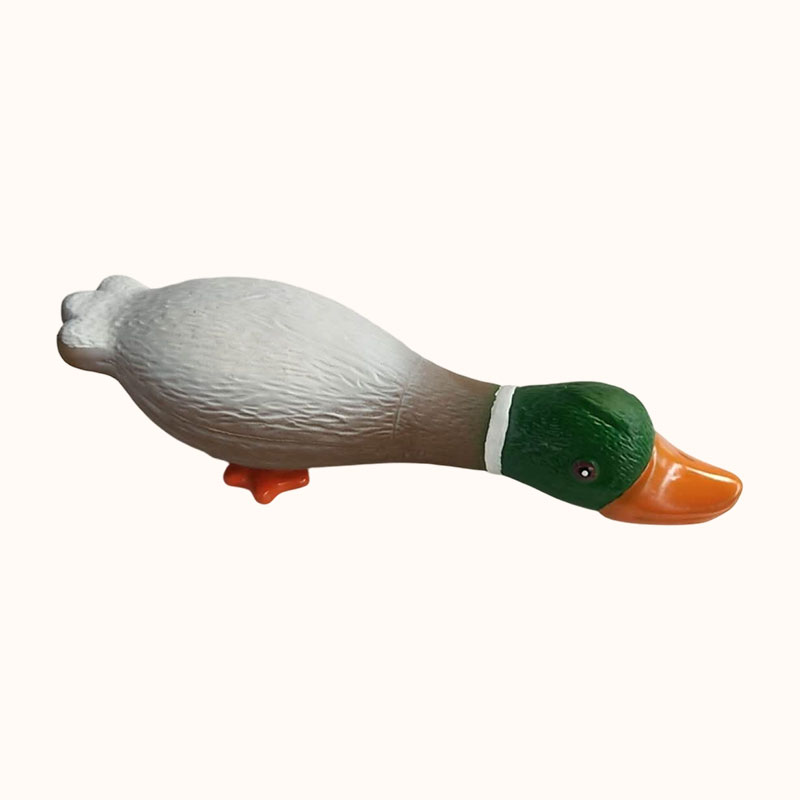
A strong private label toy range helps consumers distinguish dog chew toys from fetch toys quickly.
Packaging can use product naming, icons, short use statements, size guidance, photography, and color coding to make the range easier to understand.
For a chew-oriented product, factual wording might emphasize molded texture, material, shape, and supervised chew play. For a fetch product, packaging may emphasize shape, carry size, and verified movement characteristics.
PetProOEM’s OEM and ODM services include product specification, labels, packaging, cartons, and private label development. Buyers should confirm that every packaging claim remains consistent with the approved sample and test evidence.
Use Chew and Fetch Roles to Build a Balanced Assortment
A private label range benefits from clear product roles. Instead of launching several dog chew toys that differ only in color, brands can create a balanced assortment with distinct interaction patterns.
For example, a collection might include:
- a textured dumbbell for chew-oriented positioning;
- a thick ring as an interactive chew format;
- a ball for movement-led play;
- a football shape for a second fetch-oriented form;
- a character toy for visual merchandising.
The purpose is not to force each item into only one use. The purpose is to make sure each SKU adds a distinct commercial reason to the assortment.
Dog Chew Toys vs Fetch Toys: Buyer Decision Checklist
Before selecting a SKU, ask:
- What is the primary intended use?
- What exact material is used?
- What hardness or flexibility applies?
- Is the product solid, hollow, or multi-component?
- What dimensions and weight apply?
- Which dog-size segment is intended?
- What mechanical risks are relevant?
- Which performance claims are actually tested?
- Does the toy contain a squeaker or internal component?
- Which chemical tests apply to the final material and colors?
- What supervision or replacement guidance should appear on packaging?
- Does the test report match the exact SKU?
Buyers can review PetProOEM’s current dog toy selection and send a product brief with the intended play pattern, material, dimensions, color, packaging, target market, and testing requirements.
Common Positioning Mistakes
The first mistake is assuming that every ball is automatically suitable for fetch.
The second is assuming that every thick molded toy qualifies as a heavy-duty chew toy.
The third is using hardness as the only measure of durability.
The fourth is describing a ring as a tug toy without verifying tensile performance.
The fifth is claiming bounce or float behavior without testing the final SKU.
The sixth is using “indestructible” for dog chew toys without a realistic evidence basis.
The seventh is applying one test report to different colors, materials, sizes, or constructions without confirming coverage.
Conclusion
The difference between fetch toys and dog chew toys begins with intended use. Chew-oriented products need closer attention to material, hardness, wall thickness, tear points, deformation, and component retention. Fetch-oriented products need careful control of size, weight, carryability, impact behavior, and any verified bounce or float characteristics.
Shape can support product positioning, but it does not prove performance. A ball is not automatically a fetch toy, a ring is not automatically a tug toy, and a thick molded shape is not automatically indestructible.
For private label buyers, the strongest approach is to define intended use first, then select the material, dimensions, tests, and packaging that support that use. This makes the product easier to source, easier to explain, and easier to defend when it reaches the market.
FAQ
What is the main difference between dog chew toys and fetch toys?
Dog chew toys are primarily designed around biting, gnawing, holding, and repeated mouth contact. Fetch toys are primarily designed around throwing, chasing, retrieving, and carrying. Some products can support both uses, but that should be verified for the exact SKU.
Can a dog ball be used as a chew toy?
Possibly, but ball shape alone does not prove chew durability. Buyers should check material, wall thickness, construction, intended use, and product-specific mechanical performance before positioning a ball for extended chewing.
Are harder dog chew toys always more durable?
No. Hardness and durability are different properties. Very hard materials can also create dental concerns. Product suitability should be assessed using the actual material, construction, mechanical testing, dog size, and intended use.
Can ring toys be marketed for tugging?
Only when the product’s material and construction support tug use. If tugging is part of the product claim, buyers should evaluate tensile or repeated-load performance rather than relying on the ring shape alone.
What should private label buyers test before ordering dog toys?
Confirm material, dimensions, weight, construction, components, intended use, mechanical performance, chemical test scope, color coverage, packaging, and the traceability of reports to the final SKU.