Table of Contents
Grooved dog chew toys specification becomes a purchasing issue when two visually similar offers can describe different saleable products. For a brand considering Textured Dog Chew Toy, the useful starting point is the transitions between grooves and raised areas. The decision should end with a revision-controlled specification with agreed inspection points, rather than an approval that another reviewer cannot interpret.
This guide addresses grooved dog chew toys specification for an importer, private label buyer or category manager. It uses Textured Dog Chew Toy as the product reference and follows one defined question through specification, evidence and approval. Order quantity, lead time, final material or recipe, and destination requirements need confirmation for the actual project.
Grooved dog chew toys: the product reference
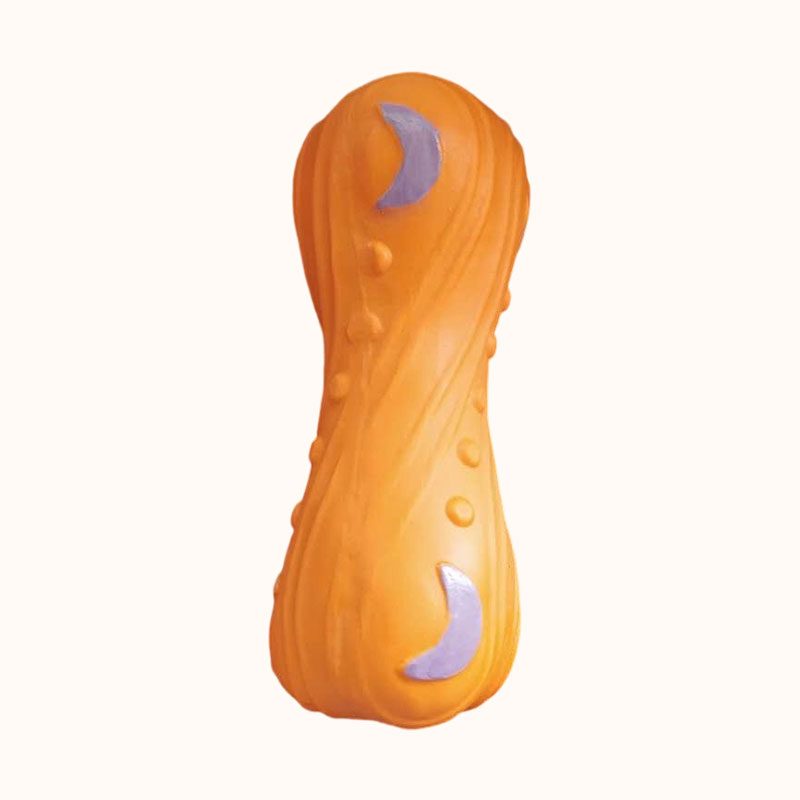
Textured Dog Chew Toy is the reference for this grooved dog chew toys specification discussion. The relevant format is an elongated toy with grooves, bumps and contrasting details. For the current inquiry, define overall length, maximum width, surface detail and material reference. The feature to keep visible in the record is the transitions between grooves and raised areas. These are review points to confirm with the supplier, rather than a declaration that a specific performance result has already been achieved.
The unresolved information includes the actual material, firmness, construction and intended play instructions. Keep that list beside the grooved dog chew toys specification decision so the purchasing team can distinguish a catalog concept from an approved product. A sample or quotation may answer some questions while leaving others open. The final record should identify exactly which version and which scope the buyer accepts.
Grooved dog chew toys specification: define the exact item being purchased
Start grooved dog chew toys specification with the version of Textured Dog Chew Toy that the quotation actually covers. Identify an elongated toy with grooves, bumps and contrasting details, the intended sales channel and the individual stock code.
An applied review starts with complete toy identity: an elongated toy with grooves, bumps and contrasting details. Review the whole outline before focusing on one detail. A character, open ring or sports shape may need several measurements to communicate the actual item that will be packed and sold. For grooved dog chew toys specification, identify the purchasing unit. The output is the final item name and revision for Textured Dog Chew Toy.
Separate measurable attributes from sales language
Replace broad descriptions with a measurement and an observation method. For Textured Dog Chew Toy, useful starting points are overall length, maximum width, surface detail and material reference.
The feature under review is the transitions between grooves and raised areas; its role here is shape-defining feature. Locate the feature that distinguishes this toy from adjacent designs. Keep that feature visible in the physical reference and the artwork so a proposed color or shape change can be evaluated explicitly. For grooved dog chew toys specification, define an observable acceptance point. The output is a feature description with a named reference for Textured Dog Chew Toy.
Grooved dog chew toys specification: specify the finished retail unit
A finished unit includes the product and its immediate packaging. Define the single-toy retail pack, proposed assortment and export carton, the identification code, declared quantity and the opening arrangement.
For this item, the measurement discussion concerns overall length, maximum width, surface detail and material reference. Use the dimensions that explain this geometry. Overall size alone can omit an opening, narrow section or projection that affects the intended-use review or the amount of space needed in the pack. For grooved dog chew toys specification, agree the measurement method. The output is units, locations and tolerances for Textured Dog Chew Toy.
Choose tolerances that reflect the use case
Discuss acceptable variation around the transitions between grooves and raised areas with the supplier and the responsible technical reviewer. An agreed target without an agreed tolerance leaves borderline samples unresolved.
The unresolved scope includes the actual material, firmness, construction and intended play instructions. Request the actual construction information for the finished toy. Appearance cannot establish a material family, internal mechanism, firmness or an advertised performance property. For grooved dog chew toys specification, list the unanswered technical questions. The output is an owner and confirmation deadline for Textured Dog Chew Toy.
Grooved dog chew toys specification: make the reference sample traceable
Attach a sample identifier, photographs and the specification revision to the approval record for Textured Dog Chew Toy. The sample should represent inspecting the complete toy and its projecting or joined features against an identified physical reference, rather than an attractive but unexplained display item.
The observation to investigate is damaged projections, inconsistent finish or decoration that differs from the approved version. Describe the condition of the affected feature and retain a complete reference. A detached or damaged detail needs a specific response connected to the intended use, rather than a general judgment about the character. For grooved dog chew toys specification, describe a deviation. The output is a decision rule for an out-of-specification observation for Textured Dog Chew Toy.
Assign ownership for unresolved details
An open issue needs an owner and a deadline. In grooved dog chew toys specification, list the actual material, firmness, construction and intended play instructions among the questions requiring confirmation before commercial commitment.
The relevant packing scope is the single-toy retail pack, proposed assortment and export carton. Distinguish a single toy from a proposed assortment. A group photograph can introduce several variants, but the pack specification still needs a piece count and the allocation of shapes and colors. For grooved dog chew toys specification, specify the complete packing level. The output is the retail-to-case count relationship for Textured Dog Chew Toy.
Grooved dog chew toys specification: compare two offers against the same document
Send the same revision to each shortlisted supplier. Ask them to identify any deviations beside the affected line rather than burying them in a general email.
The evidence request concerns the actual material declaration, finished-product specification and test evidence appropriate to the proposed use. Match any material or performance document to the item under discussion. A report about a raw material or another design may help explain the process without establishing the performance of this finished shape. For grooved dog chew toys specification, name the supporting records. The output is the evidence scope attached to the specification for Textured Dog Chew Toy.
Release the specification with a clear revision rule
Before placing the order, confirm who may approve changes to the transitions between grooves and raised areas, the single-toy retail pack, proposed assortment and export carton or the agreed evidence. Retain the superseded version so the team can explain what changed and why.
The practical comparison uses inspecting the complete toy and its projecting or joined features against an identified physical reference. Keep the actual toy available when comparing revisions. The outline, projecting features, surface condition and material reference may require separate observations even when the overall appearance remains familiar. For grooved dog chew toys specification, link the sample to the specification. The output is the final release reference for Textured Dog Chew Toy.
Compare the two approval approaches
| Decision point | Weak approval basis | Documented approval basis |
|---|---|---|
| Product identity | Name or photograph only | Textured Dog Chew Toy with format, variant and revision |
| Important feature | An unexplained preference | the transitions between grooves and raised areas recorded against an agreed reference |
| Measurements | A single unqualified number | overall length, maximum width, surface detail and material reference with units and an observation method |
| Evidence | An assurance that all items are similar | the actual material declaration, finished-product specification and test evidence appropriate to the proposed use matched to the relevant scope |
| Open questions | Assumptions treated as approval | the actual material, firmness, construction and intended play instructions listed with an owner |
| Release decision | A general instruction to proceed | a revision-controlled specification with agreed inspection points linked to the actual order |
For grooved dog chew toys specification, the stronger approach connects a requirement to an observation, then connects that observation to a decision. The table is a purchasing framework, not a report of completed tests. Where two alternatives differ, ask the supplier to identify the deviation explicitly so the final comparison remains understandable.
Related context: ASPCA position statement on dog chews and treats. The ASPCA discusses size, fragmentation and active observation during chewing. Its guidance is context for reviewing intended use, rather than certification of this toy or a guarantee of durability.
Request a product-specific review
For your grooved dog chew toys specification project, send the intended market, the reference item, expected order quantity and proposed retail pack. Include the question around the transitions between grooves and raised areas and any findings about damaged projections, inconsistent finish or decoration that differs from the approved version. A clear inquiry lets the supplier distinguish a standard option from additional development or evidence work.
Explore Pet Toys and the published OEM/ODM and packaging services. Use the form below to ask about the exact specification and sample scope. MOQ, timing, available customization and evidence need confirmation in the supplier response.
Frequently Asked Questions
What should a grooved dog chew toys specification brief include?
Identify Textured Dog Chew Toy, the intended market and selling unit. Include overall length, maximum width, surface detail and material reference, the approved reference and the unresolved questions. For grooved dog chew toys specification, the brief should lead to a revision-controlled specification with agreed inspection points that the buyer and supplier can interpret in the same way.
Can a photograph settle grooved dog chew toys specification?
A photograph can help identify the transitions between grooves and raised areas, but it cannot establish the actual material, firmness, construction and intended play instructions. Use the physical reference and the appropriate supporting records. For grooved dog chew toys specification, preserve which observations were made and which claims still require evidence.
Which evidence matters for grooved dog chew toys?
Request the actual material declaration, finished-product specification and test evidence appropriate to the proposed use. Check that its product version, method and scope answer the actual purchasing question. In grooved dog chew toys specification, a document for a different item can provide context but should not silently become approval of the current product.
How should a buyer compare revised grooved dog chew toys?
Use inspecting the complete toy and its projecting or joined features against an identified physical reference. Record the difference around the transitions between grooves and raised areas and whether it changes supervised play suitability, variant recognition and the condition of projecting features. Keep the earlier result so the grooved dog chew toys specification decision can be traced to the change that was proposed.
When is grooved dog chew toys specification ready for order approval?
Approve when the agreed scope is clear, the relevant findings are resolved and the authorized reviewer accepts the identified version. If damaged projections, inconsistent finish or decoration that differs from the approved version remains unexplained, record the open issue and the evidence still needed. A general expression of satisfaction does not define the approval boundary.