Lickable cat treat ingredients deserve closer review than the front-of-pack flavor name suggests. A tube labeled chicken, tuna, salmon, or another protein can contain much more than the named meat source. Broth, starches, gums, fibers, oils, vitamins, minerals, flavoring systems, preservatives, and other functional ingredients may all affect texture, nutrition, shelf stability, and the claims a private label brand can make.
For buyers, the key question is not simply “What flavor is this?” It is “What is the complete formula for this exact SKU, what function does each ingredient serve, and what nutritional role is the finished product designed to play?”
This guide explains how to review lickable cat treat ingredients from a sourcing perspective. It covers protein sources, broths, starches, gums, texturizers, functional nutrients, flavor naming, nutritional role, label claims, sample approval, and the documents private label buyers should request before finalizing packaging.
Table of Contents
Start With the Complete Ingredient List, Not the Flavor Name
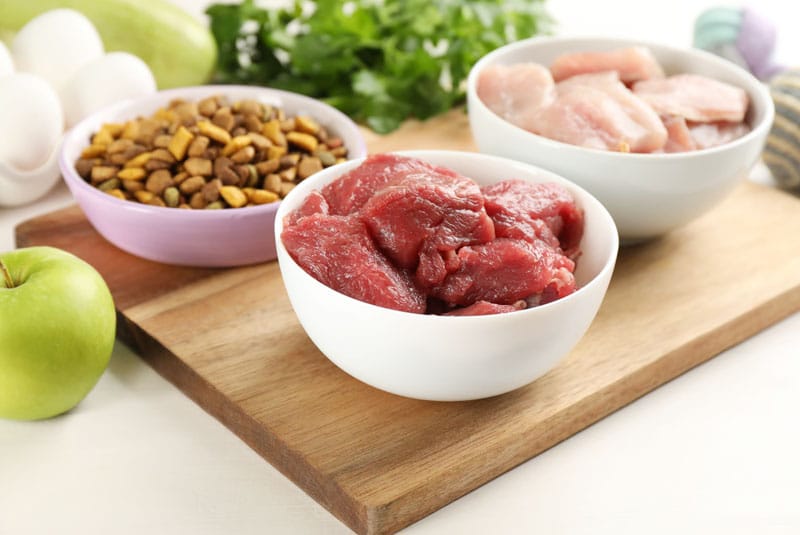
The first rule for evaluating lickable cat treat ingredients is to separate the marketing name from the full formulation.
A product called “Chicken Lickable Treat” may contain chicken, broth, starch, guar gum, vegetable ingredients, oils, vitamins, and flavoring. A “Tuna” product may use tuna plus another animal protein, broth, thickeners, or functional ingredients.
Current market examples show exactly this pattern: many lickable treats contain animal ingredients plus broth, tapioca starch, guar gum, fiber sources, oils, or supplements. Buyers can see this formulation pattern in current lickable cat treat ingredient examples.
For private label buyers, the product name should therefore never be used as a shortcut for formula review.
Confirm the Main Animal Protein Source
Protein source is usually the most visible part of a lickable treat concept.
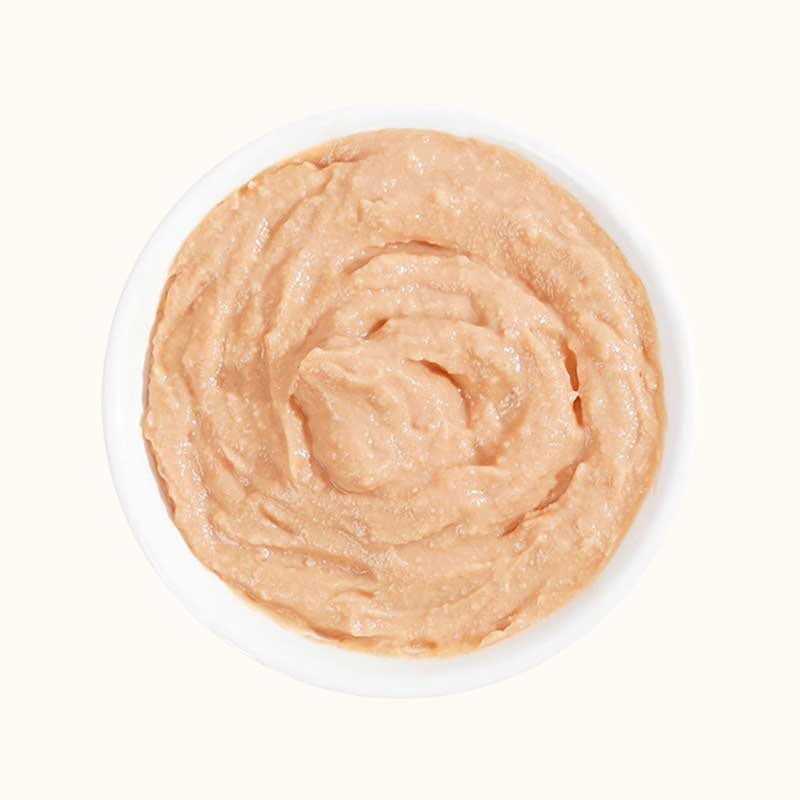
PetProOEM’s current Cat Strip page lists flavor directions including chicken, tuna, salmon, and pigeon meat. The product is described as a fluid meat puree or mousse texture in convenient single-serve tubes.
However, the page does not publish one complete ingredient list that can be applied to every flavor. For a lickable cat treat ingredients review, buyers should ask:
- What is the primary animal protein?
- Are secondary animal proteins used?
- Is broth from the same species or another species?
- Are hydrolyzed proteins or natural flavors present?
- Does the flavor name match the full animal-protein profile?
This is especially important for brands that want single-protein or limited-ingredient positioning.
Broth Can Be Both a Flavor and Texture Component
For lickable cat treat ingredients, broth should be treated as a real formulation component, not merely as a descriptive flavor cue.
Broth is common in lickable products because it contributes moisture, aroma, and fluidity.
Current lickable cat treat formulas show chicken bone broth or fish bone broth listed before the meat ingredient in some recipes. Buyers can review this structure in current ingredient and analysis examples.
For lickable cat treat ingredients, buyers should not treat “broth” as a generic ingredient. Ask which species is used, whether the broth contains added flavors or seasoning, and whether it changes the protein-source claim.
If a brand wants a chicken-only animal-protein claim, for example, fish broth may create a mismatch even if chicken is the main solid ingredient.
Starches and Gums Control Texture
The texture system is one of the most important parts of lickable cat treat ingredients because it controls flow, suspension, and mouthfeel.
Lickable treats need a texture that flows from a tube but remains cohesive enough to avoid separation.
Common functional ingredients can include:
- tapioca starch;
- potato starch;
- corn starch;
- guar gum;
- xanthan gum;
- carrageenan;
- other hydrocolloids or thickeners.
These ingredients can affect viscosity, suspension, mouthfeel, processing stability, and appearance.
Current market lickable treats frequently use tapioca starch and guar gum, as shown in published ingredient declarations.
PetProOEM’s Cat Strips page currently states “no starch filling,” but buyers should still request the signed formula for the exact SKU before using a starch-free claim across the range. A category-level statement is not a substitute for SKU-level formulation evidence.
No Starch and No Gum Are Different Claims
When reviewing lickable cat treat ingredients, buyers should verify no-starch and no-gum claims separately.
Private label buyers should keep formulation claims separate.
A product can be starch free but still contain guar gum or another hydrocolloid. It can be gum free but still contain starch. It can contain neither and rely on protein structure or another texturizing system.
For lickable cat treat ingredients, ask the supplier to identify each thickener and stabilizer explicitly.
| Claim | Buyer Should Verify |
|---|---|
| No starch | No starch-based thickener or filler in the final formula |
| No gum | No guar, xanthan, carrageenan, or other gum system |
| No added thickener | Texture achieved without separately added thickening ingredient |
| Single protein | Only one animal protein source across meat, broth, flavor, and additives |
Fiber Sources May Affect Texture and Nutrition
Fiber-containing components are another area where lickable cat treat ingredients can influence both texture and marketing language.
Some lickable products include pumpkin, sweet potato, inulin, vegetables, or other fiber-containing ingredients.
These ingredients can influence viscosity, stool characteristics, palatability, and product positioning. However, the presence of fiber does not automatically justify a digestive-health claim.
For private label lickable cat treat ingredients, distinguish between:
- ingredient presence;
- analytical fiber value;
- formulation purpose;
- supported health claim.
A formula containing pumpkin can truthfully list pumpkin. Claims about digestive support may require additional evidence and market-specific review.
Oils and Fat Sources Need Clear Identification
Oil identity matters in lickable cat treat ingredients because different lipid sources can support different analytical values and label claims.
Some formulations include fish oil, algae oil, poultry fat, or other lipid sources.
These ingredients can contribute energy, palatability, essential fatty acids, or functional positioning.
Current lickable products in the market sometimes use marine microalgae oil and then declare omega-3-related analytical values, as seen in published salmon lickable treat specifications.
For lickable cat treat ingredients, buyers should ask:
- What oil is used?
- At what stage is it added?
- What nutrient claim is intended?
- Is the claim supported by analysis?
- Does the oil require antioxidant protection?
Taurine and Vitamins Need Formula-Level Confirmation
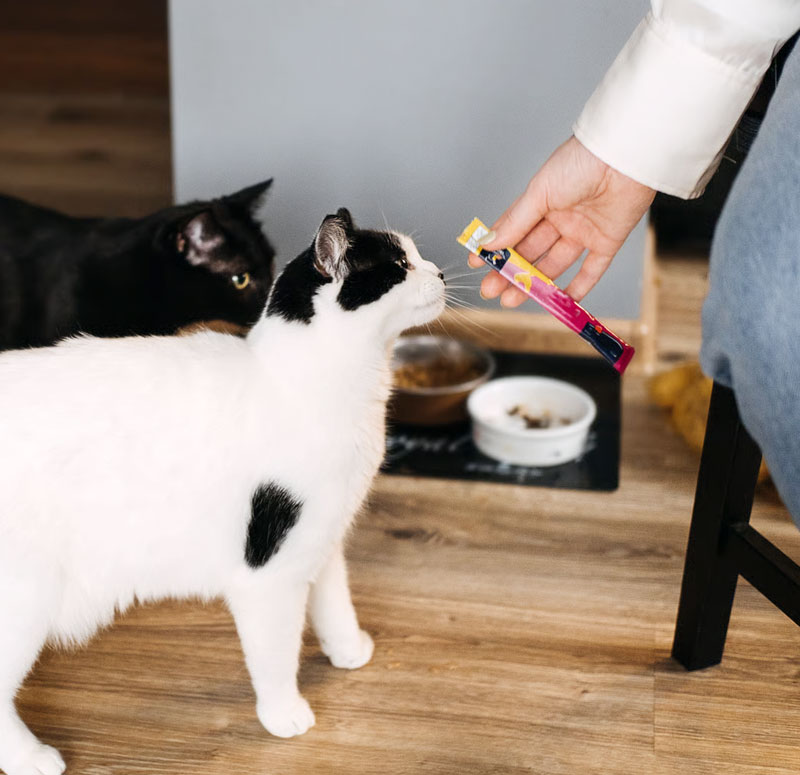
Functional nutrients should be reviewed as part of the complete lickable cat treat ingredients specification rather than as isolated marketing points.
PetProOEM’s current Cat Strips page states that taurine and multivitamins can be added and also describes staple-food positioning.
Those are significant nutritional statements. For private label buyers, they should trigger a deeper review.
Ask for:
- the exact taurine level or target;
- which vitamins are added;
- whether minerals are also included;
- the nutritional adequacy basis;
- the intended life stage;
- the final guaranteed or analytical values.
A lickable texture alone does not determine whether the food is complete. The formula and supporting nutritional framework do.
Complete Food, Complementary Food, and Treat Are Not Interchangeable
The nutritional role is a separate decision from the physical format when reviewing lickable cat treat ingredients.
This is one of the most important parts of reviewing lickable cat treat ingredients.
Many market lickable products are explicitly labeled for intermittent or supplemental feeding only. Current lickable treat feeding statements illustrate this common product role.
PetProOEM’s Cat Strips page also states that nutritional formulas can be customized and describes staple-food use for selected formulas. Buyers should therefore identify the exact nutritional role before packaging is designed.
Ask:
- Is the SKU a treat?
- Is it complementary food?
- Is it a complete food?
- Which life stage is supported?
- What feeding instructions apply?
- What nutritional adequacy evidence supports the label?
Do not turn every lickable product into a “complete meal” because one customizable formula can be designed that way.
High Moisture Is a Composition Feature, Not Automatically a Health Claim
Moisture is an important analytical part of lickable cat treat ingredients, but it should not be converted into a therapeutic claim without evidence.
Lickable products are usually high in moisture, which is one reason they have a smooth puree texture.
Current commercial examples commonly declare moisture around 90%, as shown in published guaranteed analysis information.
However, “high moisture” and “treats urinary problems” are not the same type of statement.
For lickable cat treat ingredients, buyers can accurately communicate moisture content when supported by analysis. Stronger urinary-health or disease-related claims require appropriate evidence and market-specific regulatory review.
The U.S. FDA provides general pet-food information and guidance on animal food claims. Buyers developing U.S.-market products can review the FDA pet food resources.
Flavor Names Should Match the Formula
Flavor naming should be checked against the full lickable cat treat ingredients list so the front panel does not imply a narrower protein profile than the formula actually uses.
Flavor naming can become complicated when multiple animal ingredients are used.
A “salmon” product may also contain fish broth or another fish species. A “chicken and tuna” product may use chicken broth, chicken meat, and tuna. Current market examples illustrate how the flavor name can represent a combination while the full formula is broader, as shown in a published chicken-and-tuna lickable formula.
For private label buyers, the lickable cat treat ingredients list should be reviewed alongside the front-of-pack product name.
If a formula uses two animal proteins, the package should not imply a stricter single-protein formulation unless the final ingredient list supports it.
Preservatives and Shelf-Life Systems Need Review
Shelf-life control is part of evaluating lickable cat treat ingredients because preservation can depend on both formulation and processing.
High-moisture foods require robust processing and packaging controls because water supports microbial growth.
Depending on the product, stability may rely on thermal processing, sterile or retort packaging, preservatives, pH control, oxygen management, or other validated methods.
For lickable cat treat ingredients, buyers should ask whether any preservative is part of the formula and how shelf life is supported.
Do not assume “no preservative” simply because the ingredient list looks short. If the supplier claims no added preservatives, request the processing and shelf-life basis that supports the finished product.
Texture Should Be Approved After Processing
The final processed sample is the best point to judge whether the selected lickable cat treat ingredients create the intended flow and smoothness.
The pre-processing mixture may not behave exactly like the final packaged product.
Heat treatment can change protein structure, starch gelatinization, gum hydration, viscosity, color, and flavor.
For private label lickable treats, approve the final processed sample rather than a kitchen-scale prototype whenever possible.
Record:
- flow from the tube;
- smoothness;
- separation;
- visible particles;
- color;
- aroma;
- residue inside the tube;
- ease of feeding.
Package Size Should Match Feeding Role
PetProOEM’s Cat Strips page currently lists recommended 10–15 g single-serve formats and mentions boxed or barreled configurations.
That makes sense for a hand-fed lickable format, but buyers should still confirm the exact net weight for the selected formula and package.
For lickable cat treat ingredients, package size also affects feeding frequency and calorie exposure. A treat used several times per day should have appropriate feeding guidance.
Do not treat the 10–15 g range as a universal production capability for every customized formula unless confirmed.
Use a Formula Review Sheet Before Artwork Approval
A structured sheet helps buyers review lickable cat treat ingredients consistently across flavors and sample versions.
| Review Area | Buyer Should Confirm |
|---|---|
| Animal proteins | Main and secondary species, broth species |
| Texture system | Starch, gum, fiber, protein structure, other stabilizers |
| Functional ingredients | Taurine, vitamins, oils, fibers, supplements |
| Preservation | Preservatives or processing method |
| Nutritional role | Treat, complementary, or complete |
| Analysis | Protein, fat, fibre, moisture, ash, other relevant nutrients |
| Claims | Single protein, no starch, high moisture, functional claims |
| Package | Net weight, tube material, carton configuration |
Sample Version and Formula Version Must Match
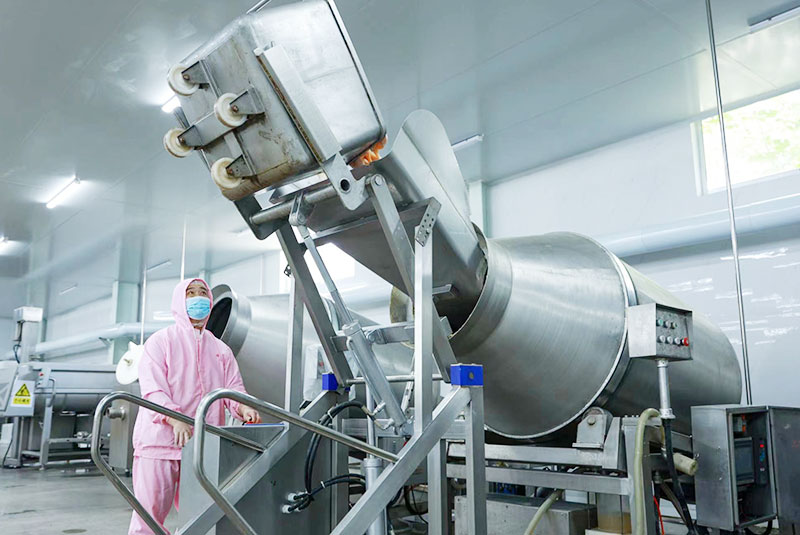
A common private label problem is approving a physical sample while the technical team is still changing the formula.
For lickable cat treat ingredients, every sample should have a formula version or code.
If the supplier changes the thickener, protein source, broth, oil, vitamin premix, preservative, or other ingredient, the ingredient list and claims should be reviewed again.
Do not approve artwork using an ingredient statement from an earlier sample version.
Claims Should Be Built From Evidence, Not From Ingredient Presence Alone
An ingredient can support a product story without automatically proving a health outcome.
Examples:
- taurine present does not automatically prove a complete-food formulation;
- pumpkin present does not automatically prove digestive-health efficacy;
- fish oil present does not automatically justify a skin-and-coat claim;
- high moisture does not automatically prove urinary-health benefits;
- salmon present does not automatically make a product single protein.
For private label lickable cat treat ingredients, the claim should match the ingredient level, analytical result, formulation purpose, and applicable market rules.
Compare Flavor Variants on the Same Formula Basis
When a private label range includes chicken, tuna, salmon, pigeon, or mixed flavors, buyers should compare the lickable cat treat ingredients using the same review structure. A flavor change can alter more than the first ingredient. Broth source, oil, thickener, color, vitamin premix, palatant, and analytical values may also change.
Create one comparison table for every flavor and list the complete ingredient statement, animal-protein sources, texture system, moisture, key analytical values, nutritional role, and intended claims. This makes it easier to identify whether the range is truly built on one base formula with flavor variations or several technically different formulas.
This step is especially important when artwork uses shared claims across all flavors. A statement that is correct for the chicken version may not automatically apply to salmon or mixed-protein variants. Shared packaging claims should only be used when every included SKU supports them.
Private Label Buyer Questions for Lickable Cat Treat Ingredients
- What is the full ingredient list for this exact SKU?
- What are the primary and secondary animal proteins?
- What broth is used?
- Are starches used?
- Are gums or hydrocolloids used?
- Are vegetable fibers or prebiotic ingredients used?
- Are oils added?
- Is taurine added?
- Which vitamins and minerals are added?
- Are preservatives used?
- What is the intended nutritional role?
- What life stage is supported?
- What analytical values apply?
- What package weight and format are available?
- Which claims are supported by documentation?
Buyers can review PetProOEM’s Cat Strip product and request the current formula and customization options for the exact flavor, texture, package, and nutritional role required.
Common Lickable Cat Treat Ingredient Mistakes
The first mistake is using the flavor name as the full ingredient list.
The second is assuming “no starch” also means “no gum.”
The third is assuming every lickable tube is a treat rather than checking whether it is complementary or complete.
The fourth is turning taurine or vitamins into unsupported health claims.
The fifth is approving packaging before the final formula version is locked.
The sixth is assuming one category-level website statement applies to every SKU and flavor.
The seventh is using “high moisture” as a medical claim rather than a compositional fact.
Conclusion
The most useful way to evaluate lickable cat treat ingredients is to move beyond the flavor name and review the entire formulation. Protein sources, broth, starches, gums, fibers, oils, vitamins, minerals, preservatives, and processing all influence the final product.
PetProOEM currently confirms a fluid meat-puree or mousse-style Cat Strips format, recommended 10–15 g single-serve specifications, multiple flavor directions, and customizable nutritional formulas and packaging. However, the public product page does not provide one complete ingredient list for every SKU. Buyers should therefore request the signed formula for the exact product before approving ingredient or nutrition claims.
A controlled formula review, coded sample, and version-matched artwork file give private label buyers a much stronger basis for launching lickable cat treats with accurate positioning.
FAQ
What ingredients are commonly used in lickable cat treats?
Common ingredients include animal proteins, broth, starches, gums, fibers, oils, vitamins, minerals, flavoring ingredients, and other functional components. The exact formula varies by product.
Do lickable cat treats always contain starch?
No. Some formulas use starch, some use gums or other hydrocolloids, and others may use different texture systems. Buyers should check the exact formula instead of assuming one standard recipe.
Are lickable cat treats complete cat food?
Not always. Many commercial lickable treats are intended for intermittent or supplemental feeding. A complete-food claim requires a formula and nutritional adequacy basis that supports complete feeding.
Does taurine make a lickable cat treat nutritionally complete?
No. Taurine is important for cats, but nutritional completeness depends on the entire nutrient profile and the applicable adequacy standard, not one added nutrient.
What should private label buyers request before approving a lickable cat treat?
Request the full ingredient list, formula version, animal-protein sources, texture system, analytical values, nutritional role, package specification, shelf-life basis, sample code, and documentation supporting any intended claims.