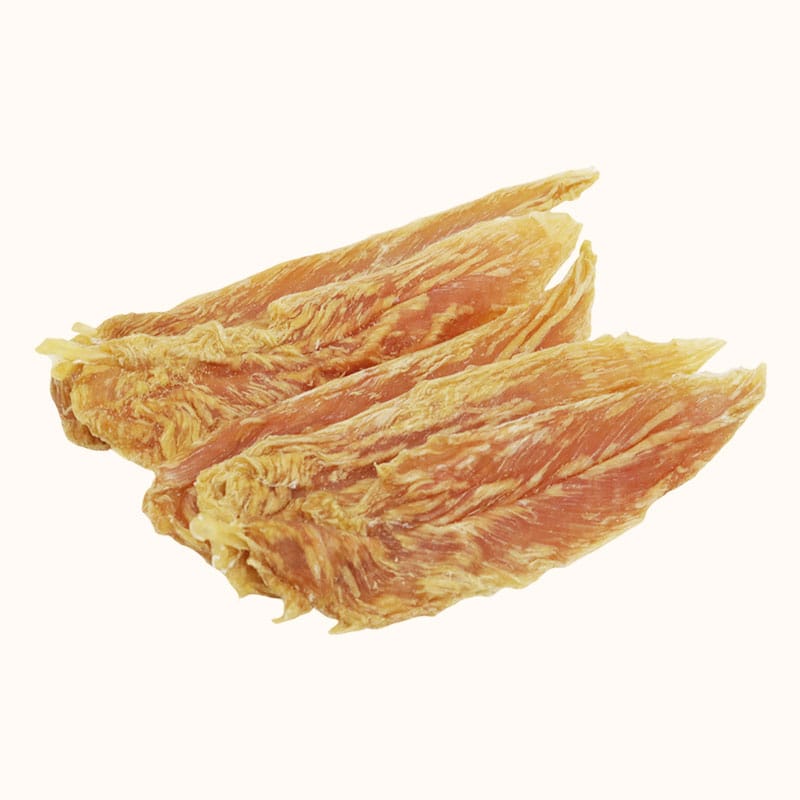
Single ingredient dog treats are attractive to private label buyers because the concept is easy to understand: one ingredient, one clear product story, and a simple ingredient panel. But the claim is only useful when it is literally true for the finished SKU.
A product can look like plain dried chicken, duck, beef, fish, or another animal protein while still containing binders, humectants, starches, salts, preservatives, flavorings, or processing aids. That means buyers should never treat a meat-led product name as proof that a product qualifies as single ingredient dog treats.
This guide explains how brand owners, importers, wholesalers, and retailers can verify a one-ingredient claim before approving private label packaging. It also shows how to distinguish product names from ingredient statements, how to review processing and additives, what documents to request, and how to prevent a simple marketing claim from becoming a labeling problem.
Table of Contents
What Single Ingredient Dog Treats Really Mean
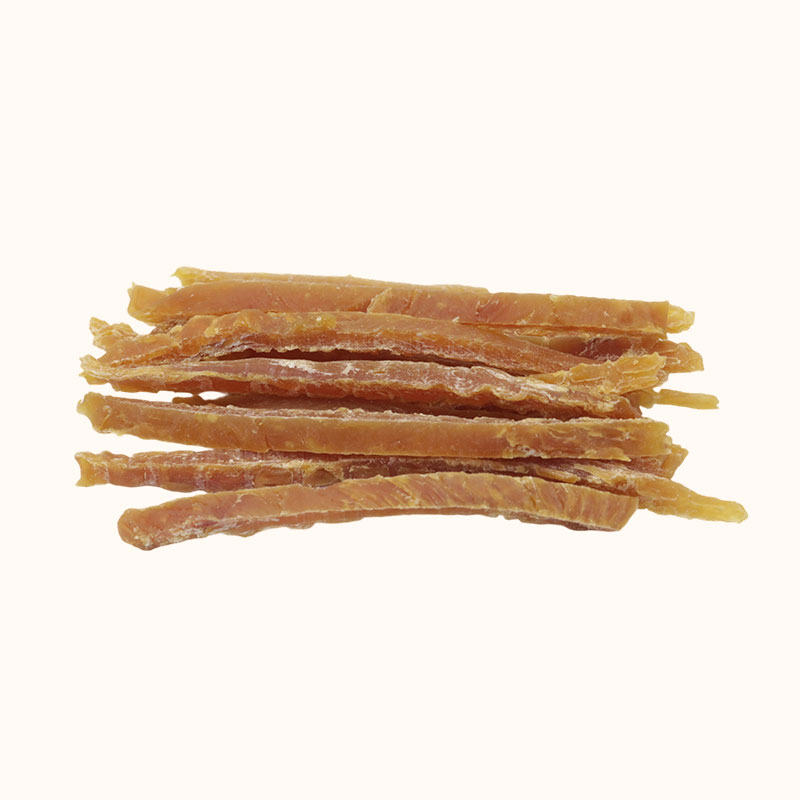
At the most basic level, single ingredient dog treats should contain one declared ingredient. If the ingredient list contains chicken plus glycerin, salt, starch, preservatives, flavor, or any other separately declared ingredient, the finished product is no longer a one-ingredient treat.
This sounds straightforward, but sourcing creates several grey areas. Buyers may hear terms such as “single protein,” “100% meat,” “meat-based,” “natural,” “pure,” or “simple recipe.” None of these phrases should automatically be treated as equivalent to single ingredient.
A single-protein recipe may still contain multiple non-protein ingredients. A meat-based product may still contain starch or glycerin. A simple recipe may contain three or four ingredients. A product described as “chicken jerky” may contain chicken plus processing ingredients.
For single ingredient dog treats, the cleanest verification point is the ingredient statement for the exact finished SKU that will be sold.
Why the Ingredient Statement Matters More Than the Product Name
Private label buyers often start with catalog names such as Chicken Jerky, Duck Jerky, Beef Strip, Fish Skin, Rabbit Ear, or Chicken Breast. These names are useful for product identification, but they do not reveal the full formula.
PetProOEM’s current Ayam Dendeng Utuh is a clear example. The published ingredient list is:
- Chicken
- Soy Protein
- Corn Starch
- Glycerin
- Salt
- Potassium Sorbate
That product may still be a useful chicken jerky SKU, but the published reference formula does not qualify as single ingredient dog treats. It contains several declared ingredients in addition to chicken.
This is exactly why product naming and formula verification should be separate steps. A buyer can use a meat-led title for merchandising while still ensuring that the back-of-pack ingredient statement accurately lists every required ingredient.
Single Ingredient Is Not the Same as Single Protein
The distinction between single ingredient dog treats and single-protein dog treats is especially important for product development.
A single-protein product may use one animal protein source but still include functional ingredients. For example, a chicken-based treat might use chicken as the only animal protein while also containing soy protein, starch, glycerin, salt, and preservative. That could be discussed as a chicken-focused or single-animal-protein concept depending on the exact formula and labeling rules, but it would not be a single-ingredient product.
For buyers targeting simplified labels, this distinction should be written into the RFQ:
| Claim | What It Should Mean in Procurement | What to Verify |
|---|---|---|
| Single ingredient | One declared ingredient in the finished product | Final ingredient statement |
| Single protein | One animal protein source, possibly with other ingredients | Full formula and protein sources |
| High meat | Meaning depends on formulation and market rules | Actual inclusion level and claim basis |
| Meat based | Meat is a major part of the recipe, but other ingredients may be present | Ingredient order and formula |
Check Humectants, Starches, Binders, and Preservatives
Many semi-moist and jerky-style products use ingredients that affect texture, moisture management, binding, processing, or shelf stability. These ingredients can be completely legitimate, but their presence changes whether a product can be sold as single ingredient dog treats.
Common categories that buyers should look for include:
- glycerin or other humectants;
- corn, potato, tapioca, or other starches;
- soy or other plant proteins;
- salt;
- preservatives such as potassium sorbate;
- flavoring ingredients;
- colors;
- sugars or sweeteners;
- oils;
- vitamins or minerals;
- processing aids where declaration is required.
The presence of these ingredients does not automatically make the treat poor quality. It simply means the product should not be represented as single ingredient dog treats if more than one declared ingredient remains in the final product.
Why “100% Chicken” Needs Careful Review
Claims such as “100% chicken” can appear simple, but they may be interpreted differently depending on the formulation and target market. For a private label buyer, the safest approach is to verify what the phrase is intended to mean before putting it on the package.
If a treat contains chicken plus glycerin, starch, salt, or preservative, describing the finished product as 100% chicken could mislead a consumer into believing that chicken is the only ingredient. In that case, the claim should be reconsidered.
For genuine single ingredient dog treats, a factual ingredient statement such as “Ingredients: Chicken Breast” can often communicate the product more clearly than a broad front-of-pack claim.
In the United States, FDA requires animal food ingredients to be listed by common or usual name in descending order of predominance by weight. Buyers developing U.S.-market products can review the FDA’s animal food labeling and pet food claims guidance.
Single Ingredient Does Not Automatically Mean Grain Free
True single ingredient dog treats made entirely from one meat or animal ingredient may also happen to contain no grain ingredients, but “single ingredient” and “grain free” are still different claims.
A multi-ingredient dog treat can be grain free. A chicken treat containing chicken, glycerin, tapioca starch, and salt may contain no grain while still not being single ingredient.
Likewise, a chicken jerky formula containing corn starch is not suitable for a grain-free claim unless the formula is changed. The current PetProOEM Chicken Jerky Whole reference includes corn starch, so buyers should not apply a grain-free statement to that published formula.
For private label sourcing, verify each claim independently instead of assuming that one claim proves another.
Single Ingredient Does Not Automatically Mean Preservative Free
The same logic applies to preservatives. If a finished product contains a declared preservative, it cannot accurately be described as preservative free.
PetProOEM’s current Chicken Jerky Whole lists potassium sorbate. Therefore, that published reference formula should not be described as preservative free without a formulation change and new supporting documentation.
For single ingredient dog treats, preservation may instead rely on moisture reduction, water-activity control, packaging barrier, oxygen management, heat treatment, freeze-drying, or another process. But buyers should not assume that a dried-looking product is stable without preservatives simply because it appears dry.
Ask the supplier how shelf life is supported and whether the product uses any ingredients whose function is preservation, moisture management, or oxidation control.
Processing Method Does Not Change the Ingredient Count

Dehydrated, air-dried, freeze-dried, baked, smoked, and other processing terms describe how a product is made. They do not by themselves prove that a product is one ingredient.
A freeze-dried product can contain several ingredients. A dehydrated product can contain one ingredient. A baked jerky can contain one ingredient or many ingredients.
When sourcing single ingredient dog treats, ask two separate questions:
- What exactly is in the formula?
- How is the product processed?
Keeping these questions separate prevents attractive process language from distracting from the ingredient statement.
Use the Formula Version, Not an Old Catalog Sheet
Private label projects often change during sampling. A buyer may request softer texture, different moisture, altered size, new packaging, or a different preservation approach. Any formula change can affect the ingredient list.
For single ingredient dog treats, the final ingredient statement must correspond to the final approved sample and production formula.
Do not rely on an old catalog PDF or website description after the sample has been modified. Ask the supplier to identify the formula version and sample code, then keep the final ingredient statement with the approved sample records.
This becomes especially important when multiple versions are being evaluated at the same time.
Verify Analytical Values Without Confusing Them With Meat Percentage
Analytical values can support product evaluation, but they do not prove that a product is single ingredient.
PetProOEM’s current Chicken Jerky Whole lists crude protein ≥55%, crude fat ≥1%, crude fibre ≤4%, moisture ≤16%, and crude ash ≤5.5%. These numbers describe analytical limits for that product. They do not mean that the product contains 55% chicken.
| Published Value | Ayam Dendeng Utuh | What It Does Not Prove |
|---|---|---|
| Crude Protein | ≥55% | It does not mean 55% chicken inclusion |
| Crude Fat | ≥1% | It does not by itself support a low-fat claim |
| Crude Fibre | ≤4% | It does not identify ingredient sources |
| Moisture | ≤16% | It does not prove shelf stability on its own |
| Crude Ash | ≤5.5% | It does not establish a one-ingredient formula |
Buyers looking for single ingredient dog treats should use the ingredient list to verify ingredient count and use analytical values for their separate nutritional and quality purposes.
Do Not Turn Single Ingredient Into a Health Claim
Single ingredient is fundamentally a composition claim. It should not automatically become a medical or health claim.
A one-ingredient treat is not automatically hypoallergenic, allergy safe, easier to digest, healthier, or suitable for every sensitive dog. Dogs can react to individual proteins, and dietary suitability depends on the animal.
Likewise, a duck-only, rabbit-only, or fish-only treat should not automatically be marketed as hypoallergenic simply because the protein is less common in some diets.
FDA notes that expressed or implied claims to cure, treat, prevent, or mitigate disease can change the regulatory status of an animal product. For single ingredient dog treats, keep composition claims separate from unsupported therapeutic claims.
Check Whether “Natural” Adds a Different Requirement
Brands often want to combine single ingredient dog treats with words such as natural, minimally processed, clean label, or pure.
These terms should be reviewed independently. A one-ingredient product may be easy to describe factually, but the legal or industry meaning of “natural” can vary by market and labeling framework.
Instead of stacking several vague claims, private label buyers can often use precise language: one declared ingredient, named protein source, no added color if true, no added preservative if true, and a clearly stated processing method if documented.
Specific factual language is easier to verify than broad wellness-oriented wording.
Request Traceability for the Ingredient
If a brand is built around single ingredient dog treats, the identity of that one ingredient becomes central to the product promise.
Ask how the raw material is identified and traced. Relevant questions may include:
- What is the exact ingredient name?
- What animal species and cut or part is used?
- How is the raw material received and identified?
- How are production lots recorded?
- Can the finished batch be traced back to raw-material lots?
- Are species-specific or origin documents available where required?
If the product is marketed as chicken breast, beef liver, duck neck, fish skin, or another specific ingredient, the supply chain should be able to support that description.
Species Naming Must Be Accurate
Fish and mixed animal products deserve extra attention because common names can be inconsistent. A buyer should not approve packaging using one fish species if the supplier documentation uses another description.
For single ingredient dog treats, the ingredient identity should be consistent across the product specification, ingredient statement, laboratory documents where relevant, carton labels, and retail packaging.
If a supplier uses a broad term such as “fish,” ask whether the exact species is required or commercially important for the target market. If the front label names salmon, cod, pollock, tuna, or another species, the documentation should support that name.
Sample Approval Should Include the Ingredient Statement
Private label buyers often approve samples for appearance, texture, breakability, odor, and size while forgetting to approve the corresponding ingredient statement.
For single ingredient dog treats, the ingredient statement should be part of the sample approval checklist.
Record:
- sample code;
- ingredient name;
- formula version;
- processing method;
- piece dimensions;
- moisture or other agreed analytical values;
- packaging used for the sample;
- any claims intended for the final label.
If the supplier later adds glycerin, salt, antioxidant, preservative, or another ingredient to solve a processing or shelf-life problem, the one-ingredient claim must be reviewed again.
Packaging Should Not Overstate the Formula
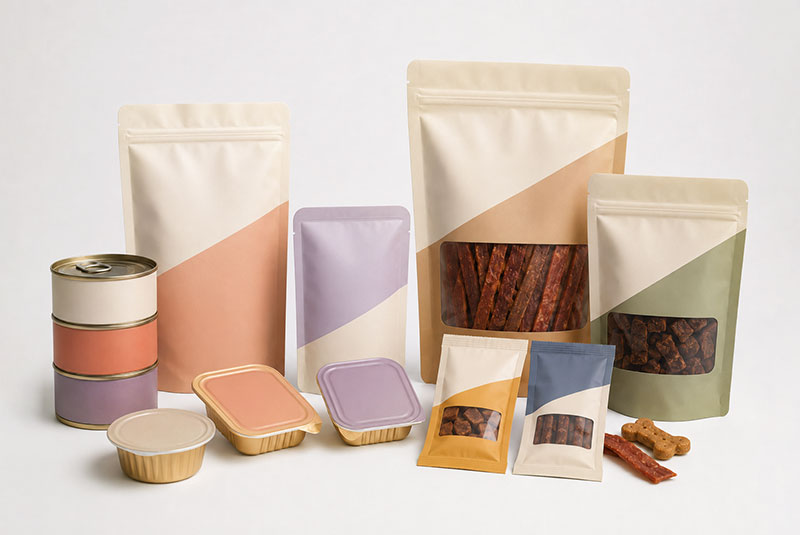
Front-of-pack design is where single ingredient dog treats can easily become overclaimed.
Large statements such as “100% chicken,” “pure meat,” “only chicken,” “no additives,” and “preservative free” should only appear when each statement matches the approved formula and applicable labeling rules.
The back panel should also remain consistent. If the front says one ingredient but the ingredient list contains six items, the package creates an obvious contradiction.
PetProOEM’s OEM and ODM services include formula, specification, packaging, label, and private label customization. For a simplified-label project, buyers should approve the formula before the marketing team locks the artwork.
Quality Control for Single Ingredient Dog Treats
A simple ingredient list does not eliminate the need for quality control. In fact, when a brand promises single ingredient dog treats, consistency of the core ingredient becomes even more important.
Quality checkpoints may include:
- raw-material identity;
- species verification where appropriate;
- foreign-material control;
- piece size and thickness;
- moisture or water activity where relevant;
- color and appearance range;
- breakage;
- microbiological testing where required;
- packaging seal integrity;
- lot coding and traceability.
Testing should be based on the actual product, processing method, destination market, importer requirements, and retailer standards.
Private Label Single Ingredient Dog Treats Verification Checklist
Before approving a one-ingredient claim, use the following checklist:
| Verification Point | Buyer Question |
|---|---|
| Ingredient count | Does the final declared ingredient statement contain exactly one ingredient? |
| Protein identity | Is the animal species and part accurately described? |
| Processing additives | Are glycerin, starches, salts, preservatives, colors, flavors, or other ingredients used? |
| Formula version | Does the ingredient statement match the approved sample? |
| Claims | Are single ingredient, grain free, preservative free, or other claims individually supported? |
| Traceability | Can the raw material and production batch be traced? |
| Analysis | Are analytical values current for the approved SKU? |
| Packaging | Does front-of-pack language match the ingredient statement? |
| Testing | Are required product and market tests defined? |
This checklist can be used for chicken, duck, beef, rabbit, fish, or other single ingredient dog treats, provided the exact product actually contains one declared ingredient.
When a Multi-Ingredient Treat Is the Better Product
Not every private label dog treat needs to become single ingredient. Multi-ingredient formulations can support specific textures, shapes, processing requirements, palatability, moisture control, stability, or commercial positioning.
A product containing chicken, soy protein, corn starch, glycerin, salt, and potassium sorbate may fit a brand’s range perfectly if it is labeled accurately and performs as intended.
The sourcing goal should not be to force every SKU into the single ingredient dog treats category. The goal is to match the formula to the brand promise.
If one ingredient is essential to the brand strategy, request a formula designed around that constraint from the beginning. If texture, softness, shelf stability, shape, or other characteristics are more important, a multi-ingredient product may be the more realistic development route.
Conclusion
The most reliable way to verify single ingredient dog treats is to read the final ingredient statement for the exact approved SKU. Product names, photographs, high meat content, drying methods, and protein values do not prove that a product contains only one ingredient.
PetProOEM’s current Chicken Jerky Whole demonstrates why this distinction matters: despite the chicken-led product name, its published formula includes chicken, soy protein, corn starch, glycerin, salt, and potassium sorbate. It should therefore not be marketed as single ingredient in its current published form.
Private label buyers should verify the formula version, ingredient declaration, process, claims, sample, traceability, packaging, and market requirements together. If you want to develop a simplified dog treat formula, review PetProOEM’s dog treats range and send your product brief with your target ingredient, process, size, packaging, and claim requirements.
FAQ
What qualifies as single ingredient dog treats?
Single ingredient dog treats should contain one declared ingredient in the finished product. If the ingredient list includes glycerin, starch, salt, preservatives, flavorings, or other separately declared ingredients, the product is not truly single ingredient.
Are single ingredient dog treats the same as single protein treats?
No. A single-protein treat can use one animal protein source while still containing other ingredients such as starch, glycerin, salt, or preservatives. Single ingredient means the finished ingredient list contains only one ingredient.
Does high crude protein mean a treat is made mostly from meat?
Not necessarily. Crude protein is an analytical value and is not the same as meat inclusion percentage. Buyers should review the formula or ingredient specification to understand actual composition.
Can chicken jerky automatically be marketed as single ingredient?
No. The complete ingredient statement must be checked. Chicken jerky may contain binders, humectants, starches, salts, preservatives, or other ingredients depending on the formula.
What should private label buyers request before approving a single ingredient claim?
Request the final ingredient statement, formula or SKU version, approved sample code, processing information, relevant analytical data, traceability records, claim support, and the final label artwork that will be used for production.