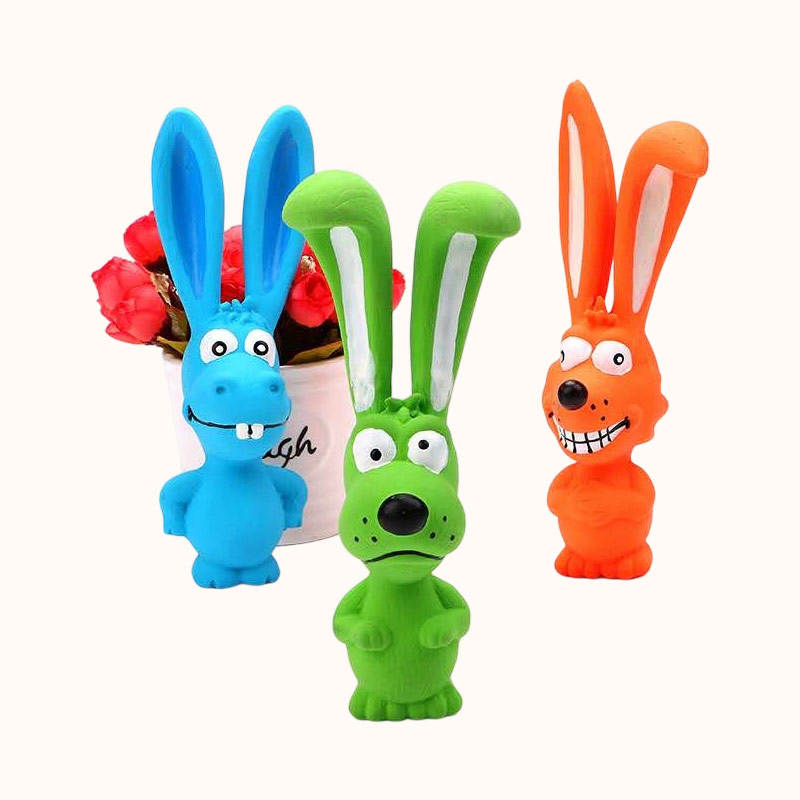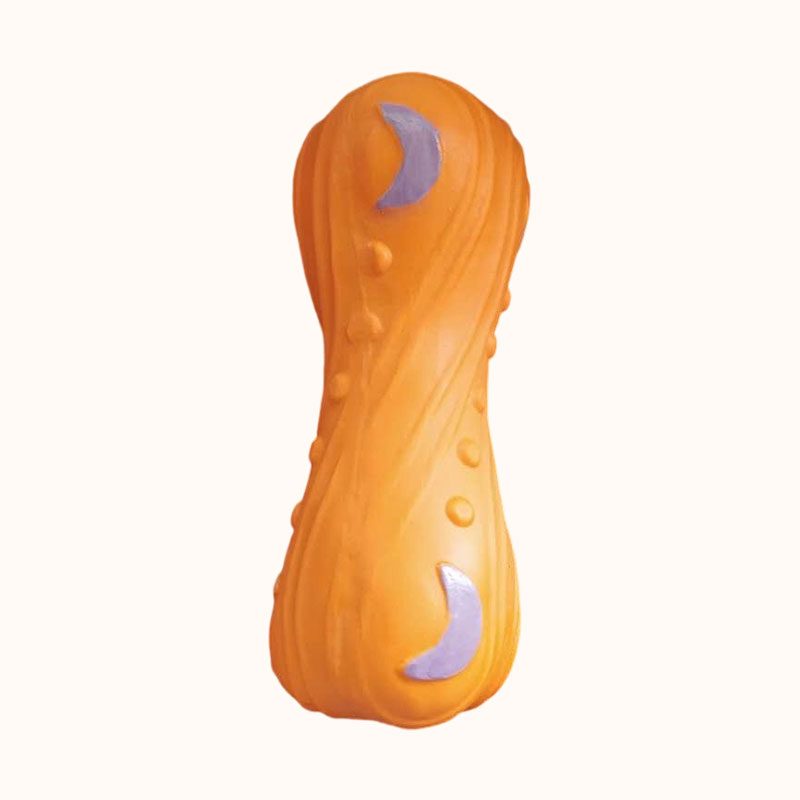
A structured dog toy sample evaluation should answer one central question: can this exact sample become a reliable reference for private label production? A toy can look attractive in a photo and still create problems with size consistency, material identity, molded details, internal components, packaging, or test-document traceability.
For wholesale buyers, importers, retailers, and pet brands, sample approval is not the same as simply deciding whether the toy “looks good.” The sample should connect the product brief, material specification, dimensions, color, intended use, packaging, testing requirements, and final production standard.
This guide explains how to run a practical dog toy sample evaluation before a bulk order. It focuses on molded dog toys because PetProOEM currently presents natural latex and TPR directions, including balls, rings, dumbbells, textured chew shapes, animal characters, sport shapes, and other molded forms. The same principle applies throughout the process: observe the product carefully, record what you can measure, and do not treat informal use observations as a substitute for laboratory testing.
Table of Contents
Start Dog Toy Sample Evaluation With a Traceable Sample ID
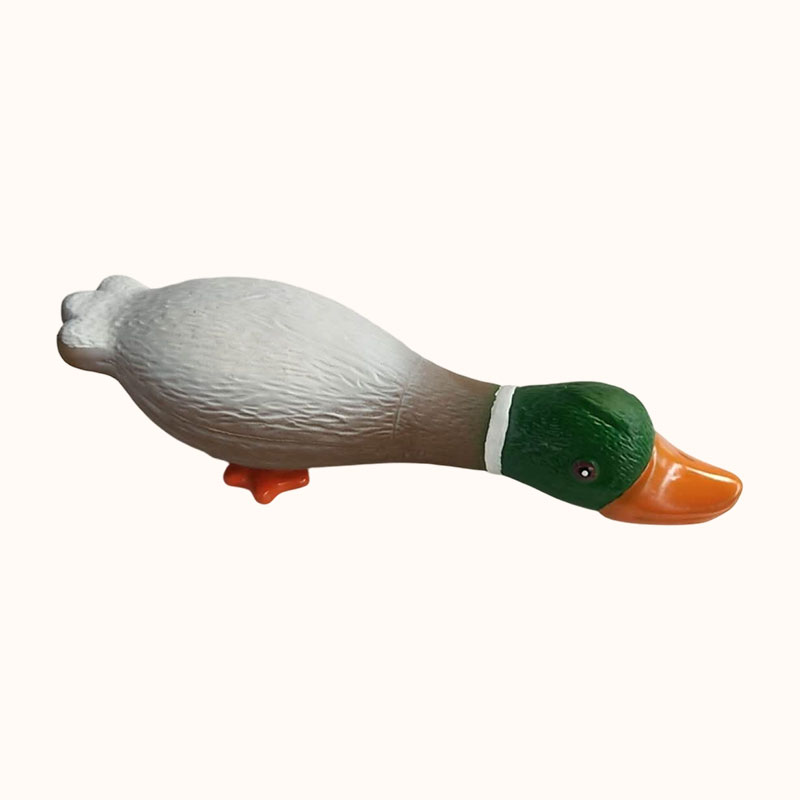
The first step in dog toy sample evaluation is to make sure every sample can be identified later.
Do not approve “the yellow ball” or “the second duck sample.” Assign or request a code that links the sample to the product version, material, color, size, construction, and packaging.
A useful sample record can include:
- sample code;
- product name or model;
- date received;
- supplier;
- material declaration;
- color reference;
- dimensions;
- weight;
- internal component information;
- packaging version;
- requested revisions;
- approval status.
PetProOEM’s current sample and order process describes requirement confirmation, sample making, quotation, production, inspection, packaging, and shipment. A coded sample gives each of those later stages a clear physical reference.
Confirm Whether the Sample Is Concept, Revised, or Pre-Production
Not every sample represents the same stage.
A concept sample may only demonstrate shape or appearance. A revised sample may incorporate buyer feedback but still use temporary packaging or non-final color. A pre-production sample should be much closer to the actual material, dimensions, color, construction, components, and package intended for mass production.
In a dog toy sample evaluation, record which stage the sample represents. Otherwise, a buyer may approve a concept prototype and later assume that every material or construction detail was already final.
| Sample Stage | Main Purpose | Buyer Should Not Assume |
|---|---|---|
| Concept sample | Shape, idea, basic proportions | Final material, color, function, packaging |
| Revised sample | Check requested changes | All production details are locked |
| Pre-production sample | Final approval reference | Mass production can deviate without approval |
Measure Dimensions Instead of Approving by Eye
Dimensions are one of the easiest parts of dog toy sample evaluation to control objectively.
Use a ruler, caliper, or other appropriate measuring tool and record:
- overall length;
- overall width;
- overall height;
- diameter where relevant;
- ring opening;
- narrowest section;
- protruding features;
- critical wall thickness where it can be confirmed.
For a ball, diameter may be the primary dimension. For a ring, both outer size and inner opening matter. For a dumbbell, total length plus center and end dimensions are useful. For an animal-shaped toy, ears, legs, necks, tails, horns, or other projecting features may need separate attention.
Do not infer dimensions from website photography. PetProOEM’s current pet toy category confirms multiple shapes, but buyers should request the specification for the exact SKU.
Record Weight Across More Than One Sample
Weight can reveal product variation that visual inspection misses.
During dog toy sample evaluation, weigh several samples from the same SKU where available. Record the individual values and compare them with the supplier’s target and tolerance.
Unexpected weight variation can indicate differences in:
- wall thickness;
- material quantity;
- internal components;
- molding consistency;
- trapped air or voids;
- unfinished trimming.
Do not invent a universal acceptable percentage. The tolerance should be agreed for the specific product and manufacturing process.
Verify the Material With Documents, Not Touch Alone
Material feel is useful, but it is not enough to identify a polymer or elastomer.
PetProOEM’s current toy category states that its main dog chew range uses imported natural latex and also lists a separate TPR material direction. For a private label dog toy sample evaluation, the buyer should request the material declaration for the selected model rather than assuming every toy uses the same compound.
Ask for:
- material family;
- supplier or internal material grade where available;
- hardness range if relevant;
- color formulation reference;
- internal components;
- test-report reference.
Words such as “rubber,” “soft rubber,” “latex-like,” or “eco material” are too broad to function as complete purchasing specifications.
Check Hardness and Flexibility Against Intended Use
The same toy shape can perform differently when hardness changes.
For dog toy sample evaluation, compare how the product compresses, bends, rebounds, and returns to shape. If the supplier provides a Shore hardness or another measured value, record it with the sample.
Do not treat harder as automatically better. Chew suitability depends on the material, construction, wall thickness, dog size, and intended use. Very hard products can create a different dental-risk profile from flexible toys.
The sample review should answer whether the physical feel matches the approved product brief, not whether it is simply “hard” or “soft.”
Inspect Surface Finish and Molding Quality
Surface inspection is a major part of dog toy sample evaluation because molding defects can affect appearance, handling, durability, and consumer perception.
Inspect:
- mold parting lines;
- flash or excess material;
- incomplete molded details;
- sharp edges;
- surface pits;
- air bubbles;
- color streaks;
- uneven texture;
- dirty or embedded particles;
- deformed areas.
Textured products need extra attention because deep grooves, raised nubs, ridges, and patterned surfaces can hide incomplete molding or sharp points.
Review Thin Sections and High-Stress Geometry
A toy can look robust overall while containing a small section that is much weaker than the rest.
During dog toy sample evaluation, examine:
- ears;
- tails;
- legs;
- horns;
- thin necks;
- ring transitions;
- narrow dumbbell centers;
- squeaker openings;
- plugs;
- thin-wall areas.
These features deserve attention because mechanical stress tends to concentrate around narrow geometry and abrupt thickness changes.
A subjective hand pull can help reveal obvious weaknesses, but it should not replace a defined tensile, tear, compression, or other mechanical test when performance evidence is required.
Check Internal Components and Squeakers Separately
Some dog toys include an internal squeaker or other component. The outer body and internal part should be reviewed separately.
For dog toy sample evaluation, confirm:
- whether a sound component is present;
- its material;
- its location;
- how it is retained;
- whether the opening is secure;
- whether the component becomes accessible after deformation;
- whether it is included in the relevant test report.
Do not assume every hollow or character toy contains a squeaker. Function should be confirmed SKU by SKU.
Test the Intended Function Without Creating Unsupported Claims
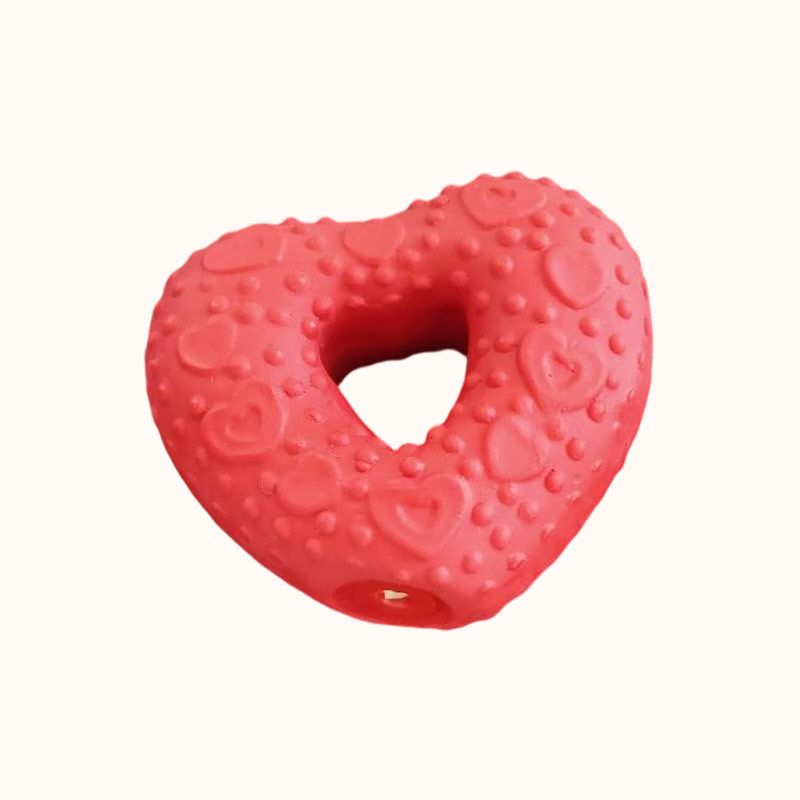
Functional observation is useful when it is tied to the intended use.
A ball can be rolled and dropped. A ring can be gripped. A chew-shaped toy can be compressed and flexed. A squeaky toy can be checked for sound consistency.
However, dog toy sample evaluation should not turn informal observations into formal claims. A ball that floats once in a sink is not automatically validated as a floating water toy. A ring that survives several manual pulls is not automatically proven for high-load tugging. A toy that survives one dog’s chewing session is not “indestructible.”
Use observations to identify what should be tested more formally.
Record Color With a Defined Reference
Color approval can become subjective if buyers use words such as red, light blue, or bright yellow without a defined reference.
For a private label dog toy sample evaluation, record:
- approved color code where used;
- sample photo under controlled lighting;
- acceptable variation;
- whether different toy parts use different colors;
- whether custom pigments change test coverage.
Color changes can affect chemical-test relevance because the pigment system may change.
Smell Is an Observation, Not a Chemical Safety Test
Buyers often smell rubber-like or latex samples when they arrive. This can be useful for spotting unusual or inconsistent odor, but it cannot determine chemical safety.
A strong odor may justify further investigation into material, storage, packaging, or processing. A weak odor does not prove the absence of restricted substances.
In dog toy sample evaluation, record odor as one observation and review chemical evidence separately.
Use a Written Appearance and Workmanship Standard
“Looks good” is not a repeatable quality criterion.
Create a workmanship checklist that defines what production should match.
| Workmanship Area | Example Approval Point |
|---|---|
| Shape | No obvious deformation from approved sample |
| Surface | No sharp flash, major pits, contamination, or incomplete texture |
| Color | Matches approved reference within agreed tolerance |
| Opening | Clean and structurally consistent |
| Component | Squeaker or insert retained as specified |
| Marking | Logo or molded detail positioned correctly |
This gives the supplier and inspector a clearer standard during mass production.
Compare Several Samples, Not Only the Best-Looking One
A single good sample cannot show production consistency.
Where practical, dog toy sample evaluation should include multiple units of the same SKU. Compare dimensions, weight, color, surface finish, function, and packaging.
If one unit is perfect but the others vary significantly, that is useful information before the buyer approves production.
Do not impose an arbitrary number of samples or a universal variance limit. The correct sampling quantity and tolerance depend on the development stage, product complexity, and production method.
Packaging Should Be Evaluated With the Actual Toy
Packaging should be part of dog toy sample evaluation, especially for private label and retail programs.
Check whether:
- the toy fits without excessive compression;
- the package shows the product clearly;
- hang holes or cards support the filled weight;
- labels stay attached;
- barcodes remain flat and scannable;
- warnings and size guidance are readable;
- the pack protects protruding features;
- carton packing does not deform the toy.
PetProOEM’s Services page confirms support for labels, packaging, barcodes, multilingual labels, and cartons. Buyers should still approve the exact packaging configuration for the selected toy.
Barcode and Artwork Need Their Own Approval Check
A visually correct toy can still fail a retail launch if the barcode, product name, material statement, or warning is wrong.
GS1 provides global guidance for product identification and GTIN use. Buyers can review GS1 GTIN guidance when assigning retail product identifiers.
During dog toy sample evaluation, verify:
- product name;
- SKU code;
- barcode;
- brand logo;
- material statement;
- size guidance;
- intended-use wording;
- supervision or replacement guidance where appropriate;
- importer/distributor information;
- artwork version.
Separate Sample Observation From Mechanical Testing
This distinction is critical.
A buyer can squeeze, twist, pull, drop, flex, and inspect a sample. These actions are useful for screening and comparison. They do not automatically produce a standardized durability result.
Formal mechanical testing requires defined equipment, loads, cycles, speeds, fixtures, sample preparation, and acceptance criteria.
For dog toy sample evaluation, use informal observation to identify likely failure modes and then decide whether laboratory or controlled internal testing is necessary.
Separate Material Documents From Chemical Test Reports
A material declaration and a chemical test report answer different questions.
The material declaration tells the buyer what the supplier says the toy is made from. A chemical report shows what was tested under a specific method for a specific sample.
PetProOEM’s current pet-toy page states that the range complies with EN 71 and ASTM F963 and is free from several restricted substances. Buyers should request the actual report applicable to the exact product rather than assuming a category-level statement covers every future private label variation.
For EU-market projects, buyers can review the European Chemicals Agency’s REACH information where relevant to the materials and substances in the toy.
ASTM F963 and EN 71 Need Scope Review
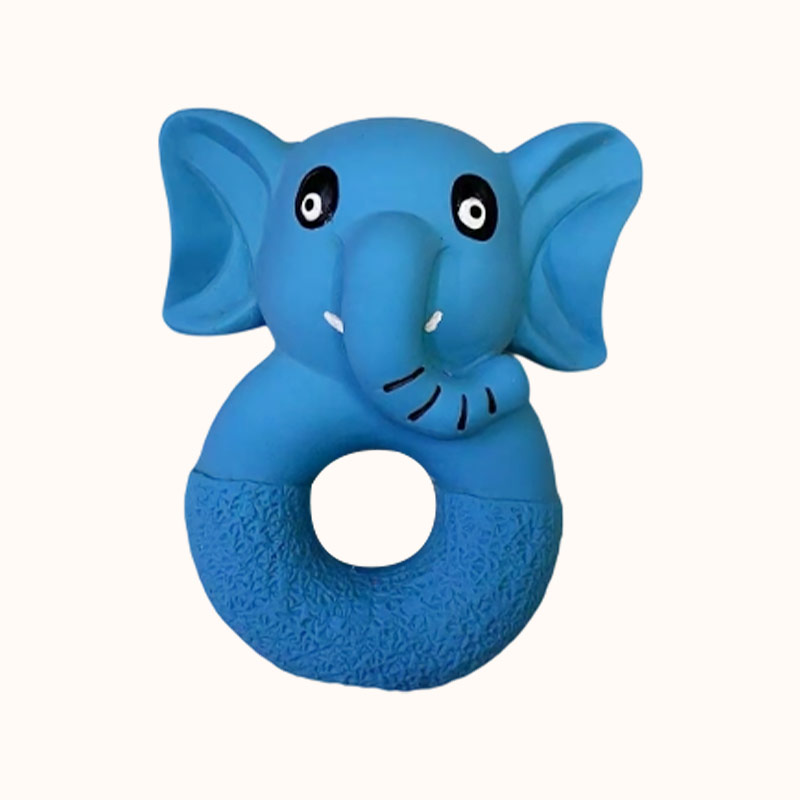
ASTM F963 and EN 71 are children’s toy safety frameworks. They should not automatically be described as universal pet-toy certifications.
The U.S. Consumer Product Safety Commission explains that ASTM F963 applies to children’s toys and that different sections apply to different toy types. Buyers can review the official CPSC Toy Safety guidance.
During dog toy sample evaluation, ask:
- which standard was used;
- which section was used;
- which exact sample was tested;
- which material and color were tested;
- what the report result actually means;
- whether customization changes the test coverage.
Use a Sample Evaluation Scorecard
A structured scorecard makes it easier to compare multiple suppliers or design versions.
| Evaluation Area | Record |
|---|---|
| Identity | SKU, sample code, version |
| Dimensions | Measured length, width, height, diameter, openings |
| Weight | Individual sample weights and target |
| Material | Declared material and documentation |
| Hardness / feel | Measured value where available plus observation |
| Workmanship | Surface, molding, color, deformation |
| Components | Squeaker, plug, insert, opening |
| Function | Observed intended function only |
| Packaging | Fit, artwork, barcode, warnings, carton |
| Testing | Reports required and coverage gaps |
A dog toy sample evaluation scorecard should record facts and observations rather than assigning arbitrary “safe” or “unsafe” conclusions outside the agreed test framework.
Document Every Requested Revision
Sample development often involves several changes.
A buyer may request:
- new dimensions;
- different hardness;
- changed color;
- thicker wall;
- removed protrusion;
- new squeaker;
- different logo placement;
- new packaging.
After each revision, issue a new sample version and update the specification.
This is one of the most important controls in dog toy sample evaluation because an older sample should not remain the production reference after the product has materially changed.
Complete a Pre-Production Approval Package
Before mass production, combine the approved physical sample with the written records.
A strong approval package can include:
- approved sample code;
- product specification;
- material declaration;
- dimensions and tolerances;
- weight target and tolerance;
- color reference;
- component list;
- artwork version;
- packaging specification;
- test-report references;
- quality-inspection criteria;
- buyer approval record.
PetProOEM’s current Services page states that production is arranged after sample confirmation and according to the confirmed specification. That makes the pre-production approval package the natural bridge between dog toy sample evaluation and bulk production.
Dog Toy Sample Evaluation Checklist for Wholesale Buyers
- Sample ID: code, version, date.
- Product type: ball, ring, dumbbell, animal, chew shape, other.
- Intended use: supervised chewing, fetch, interactive play, or another confirmed use.
- Material: natural latex, TPR, or other confirmed material.
- Dimensions: overall size, openings, narrow points, critical sections.
- Weight: measured across available samples.
- Hardness: measured range if provided.
- Color: approved reference.
- Surface: flash, pits, sharp areas, incomplete molding, contamination.
- Components: squeaker, insert, plug, other internal part.
- Function: observation only unless a formal test supports a performance claim.
- Packaging: fit, artwork, barcode, warnings, carton.
- Documents: material declaration, applicable test reports, specification.
- Revision status: approved, revise, or reject.
Buyers can review PetProOEM’s current dog toy range and request samples with the intended shape, material, dimensions, color, packaging, and target-market testing requirements.
Common Dog Toy Sample Evaluation Mistakes
The first mistake is approving a toy based only on appearance.
The second is failing to assign a sample code.
The third is assuming the material from touch or product photography.
The fourth is checking only overall dimensions and ignoring thin or high-stress sections.
The fifth is treating manual pulling or chewing observation as formal durability testing.
The sixth is ignoring internal components.
The seventh is approving packaging separately from the actual toy.
The eighth is relying on a test report that cannot be traced to the sample.
Conclusion
A useful dog toy sample evaluation converts a physical sample into a controlled production reference. Buyers should measure dimensions and weight, confirm the material, inspect molding and weak points, check internal components, record intended function, review packaging, and connect the sample to the correct test documents.
PetProOEM currently confirms natural-latex and TPR material directions and lists multiple molded toy shapes, but dimensions, hardness, functions, colors, and test coverage still need SKU-level verification. That makes a documented sample process especially important for private label buyers.
The strongest sample approval is not “we like this toy.” It is a coded sample plus a written specification, packaging version, document file, and clear list of what mass production must match.
FAQ
What should buyers check during dog toy sample evaluation?
Check sample identity, dimensions, weight, material documentation, hardness, surface finish, construction, weak points, internal components, color, function, packaging, and the test reports that apply to the exact SKU.
Can manual play testing replace laboratory testing?
No. Manual squeezing, pulling, dropping, or supervised play can reveal possible issues, but standardized mechanical or chemical testing requires defined methods, equipment, conditions, and acceptance criteria.
How many dog toy samples should a buyer evaluate?
There is no universal number. Where practical, compare multiple units so you can observe consistency in weight, dimensions, color, workmanship, and function. The appropriate sample quantity depends on product complexity and development stage.
Should a test report match the exact dog toy sample?
Yes. Buyers should confirm that the report can be traced to the relevant product, material, color, size, or construction and should review whether later customization changes the test coverage.
What should be approved before dog toy mass production?
Approve the coded physical sample, written specification, material declaration, dimensions, weight, color, components, packaging, artwork, test-report references, inspection criteria, and any requested revisions.