Building a successful private label dog treats line starts long before the final pouch design. The first order should establish what the product is, how it will be described, which ingredients and analytical values apply, how the sample will be evaluated, what packaging is required, and which documents must support the claims on the label.
This matters because dog treats can look simple while still having many variables. Protein source, secondary ingredients, humectants, starches, preservatives, piece size, thickness, texture, moisture, analytical values, drying or cooking method, package format, label claims, and target market can all affect the final specification.
For importers, distributors, retailers, and pet brands, the best way to source private label dog treats is to turn every important commercial idea into a written requirement. This checklist focuses on practical first-order decisions: product format, ingredients, guaranteed analysis, claims, physical specification, samples, packaging, quality control, documentation, and RFQ structure.
Table of Contents
Start With the Product Role, Not Just the Meat Source
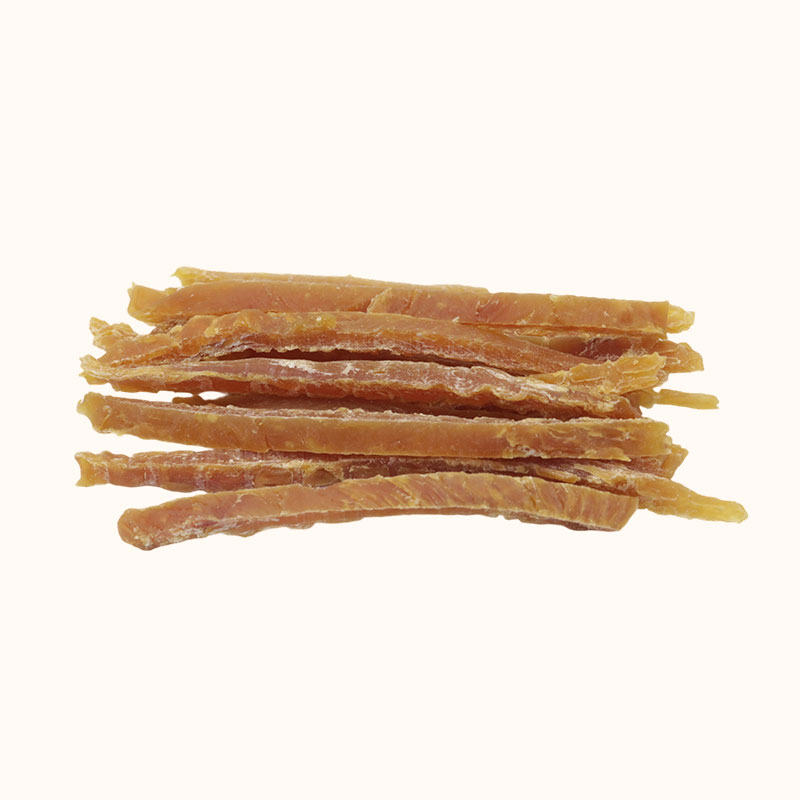
The first step in a private label dog treats project is deciding what the treat is supposed to do in the range. A clear private label dog treats positioning brief also makes supplier recommendations more relevant. A small training reward, a soft everyday snack, a jerky strip, a larger chew, and a mixed-protein novelty treat are not interchangeable products.
Define the intended use before discussing ingredients. Is the product designed as a small reward for frequent use? A premium jerky snack? A longer-lasting chew? A trial-size item? A topper-style treat? The answer affects piece size, texture, package weight, consumer expectations, and how the product should be marketed.
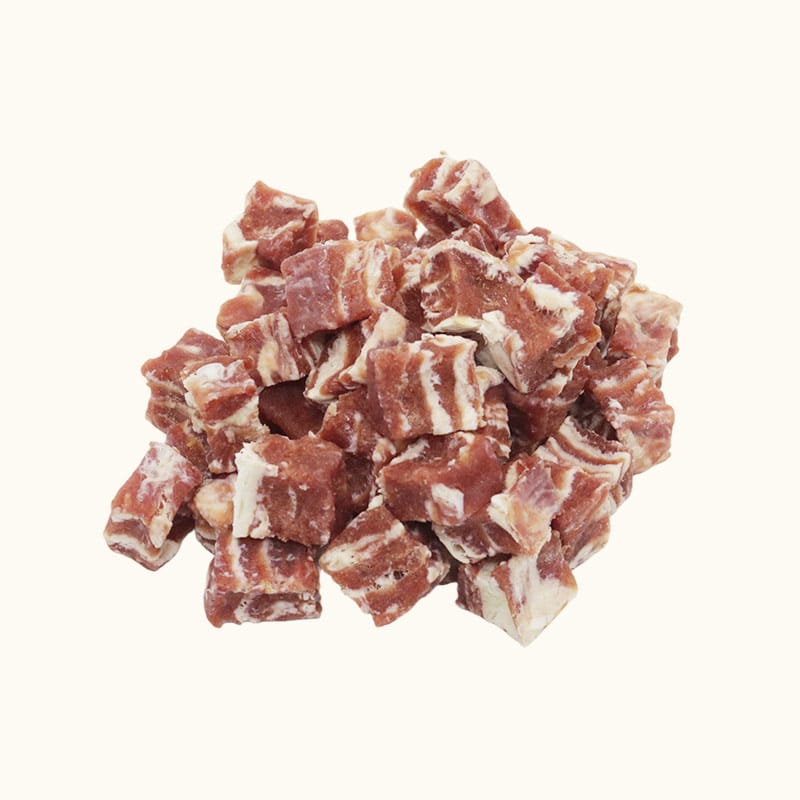
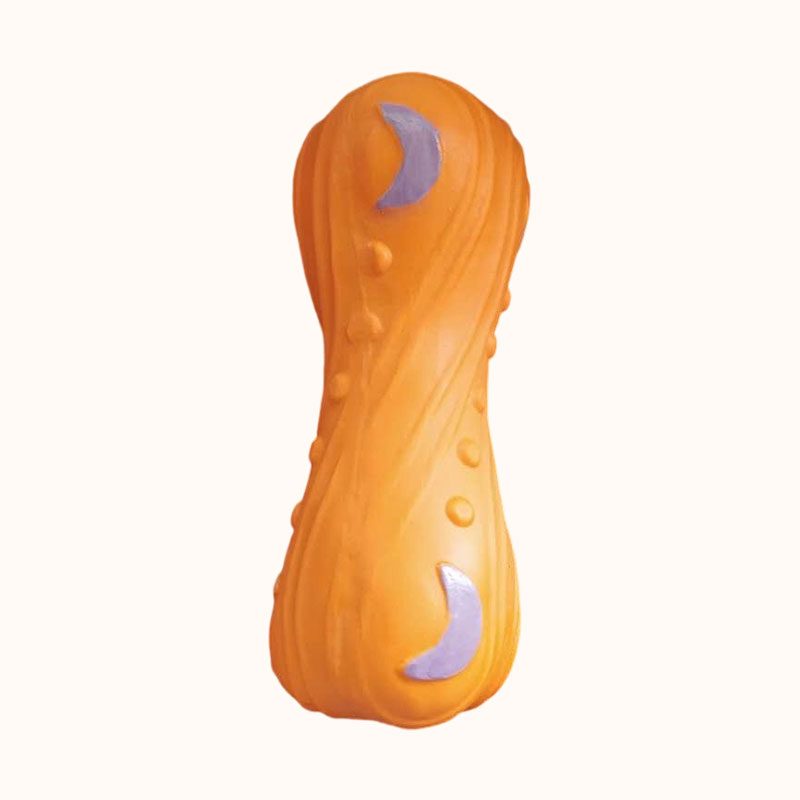
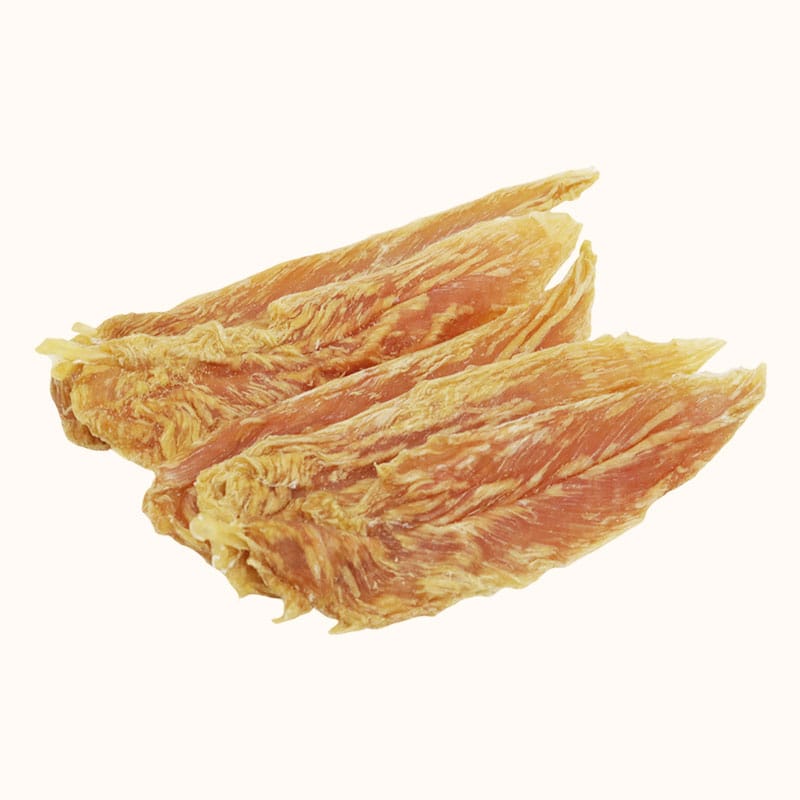
PetProOEM currently presents multiple dog treat formats, including chicken, duck, fish-related combinations, wrapped chews, and other shapes. Buyers should use these as starting points for discussion rather than assuming every product format has the same formula, texture, processing method, or customization scope.
Choose a Product Format That Fits the Sales Channel
A private label dog treats line should be planned around how the product will be sold and used. The sales channel should therefore be part of the private label dog treats specification from the beginning. Retail shelf products may need stronger visual differentiation and clear front-of-pack positioning. E-commerce products may need packaging that performs well in parcel shipping. Distributor programs may prioritize consistent case packing and repeatable SKU specifications.
Jerky strips are often easy to understand visually and can support protein-led positioning. Smaller strips or bites may be better suited to training or everyday reward positioning. Wrapped chews may emphasize a more substantial chewing experience, but the core material and wrapped ingredient must be identified accurately. Mixed or novelty formats may create visual differentiation but often require more careful ingredient and claim review.
Before requesting samples, write down the intended format in measurable terms. A request such as “chicken treat” is too vague. A better request would specify the approximate shape, dimensions, texture, target piece weight, package weight, and whether the product should be soft, chewy, firm, or more rigid.
Review the Full Ingredient List Before Writing Marketing Claims
One of the most important sourcing rules for private label dog treats is simple: the product name is not the ingredient list.
For example, PetProOEM’s current Kycklingremsa page lists the following ingredients: chicken, soy protein, corn starch, glycerin, salt, and potassium sorbate. That means the current published reference formula should not be described as a single-ingredient chicken treat, a preservative-free treat, or a grain-free formula without further formulation changes and supporting evidence.
The same logic applies to every SKU. If the product title includes chicken, duck, beef, fish, rabbit, or another animal protein, the buyer should still review all secondary ingredients. Binders, humectants, starches, salts, preservatives, flavoring ingredients, and other components can affect the claim strategy.
For private label dog treats, ask for the actual ingredient list before approving the packaging. If customization is requested, the buyer should receive a revised ingredient statement for the approved formula rather than assuming that the original label still applies.
Understand Guaranteed Analysis Before Comparing Products
Guaranteed analysis is often misunderstood in dog treat sourcing. Buyers sometimes interpret crude protein as the percentage of meat in the product, but those are not the same thing.
PetProOEM’s current Chicken Strip page lists crude protein at ≥50%, crude fat at ≥1%, crude fibre at ≤4%, moisture at ≤18%, and crude ash at ≤7%. These values describe analytical limits for the published product; they do not mean that the product contains exactly 50% chicken or that the remaining percentage is represented by a single ingredient.
| Published Item | Current Chicken Strip Value | What Buyers Should Understand |
|---|---|---|
| Crude Protein | ≥50% | Analytical protein minimum; not the same as chicken inclusion rate |
| Crude Fat | ≥1% | Minimum analytical value; does not by itself define “low fat” positioning |
| Crude Fibre | ≤4% | Maximum analytical value |
| Moisture | ≤18% | Maximum moisture value for the published reference product |
| Crude Ash | ≤7% | Maximum mineral residue value under the stated analysis |
When comparing private label dog treats, make sure the analytical basis is comparable. A minimum value should not be compared directly with an average laboratory result as if the numbers mean the same thing. The product specification should state whether a value is a guaranteed minimum, guaranteed maximum, target, or test result.
Separate Product Facts From Claims Such as Single Ingredient or Grain Free
Claims can improve product positioning, but unsupported claims can create regulatory and commercial risk. For private label dog treats, the claim review should happen after the formula is approved, not before.
Single ingredient should only be used when the finished product truly contains one ingredient and the labeling rules in the target market support that presentation.
Grain free requires ingredient-level verification. If a reference formula contains corn starch, a grain-free claim should not be used for that formula.
Preservative free requires review of the complete formula. A product containing potassium sorbate should not be described as preservative free.
Hypoallergenic should not be inferred from using duck, rabbit, fish, or another protein. Individual dogs can react differently, and health-related claims may require a higher level of evidence and regulatory review.
For U.S.-market projects, buyers can review the U.S. Food and Drug Administration’s pet food information when evaluating labeling and animal food requirements. Market-specific professional review may still be needed for the final label.
Define Piece Size, Shape, Thickness, and Texture
Physical specification is easy to overlook when sourcing private label dog treats. Natural meat-based products can vary, but the acceptable variation still needs to be defined.
Ask the supplier how dimensions and piece weight are controlled. For strip products, useful measurements may include length, width, thickness, and approximate weight per piece. For wrapped chews, the core material, overall length, wrapped meat coverage, and acceptable variation may matter. For smaller training treats, piece count or approximate weight range may be more relevant.
Texture should also be described carefully. Words such as “soft,” “chewy,” and “firm” are useful for communication but are not precise production standards by themselves. Use an approved sample as the physical reference and support it with written criteria wherever possible.
For a first private label dog treats order, record the sample code, date, formula version, size specification, and packaging version together. This reduces confusion when several rounds of samples are reviewed.
Use Samples to Approve the Product, Not Just the Appearance
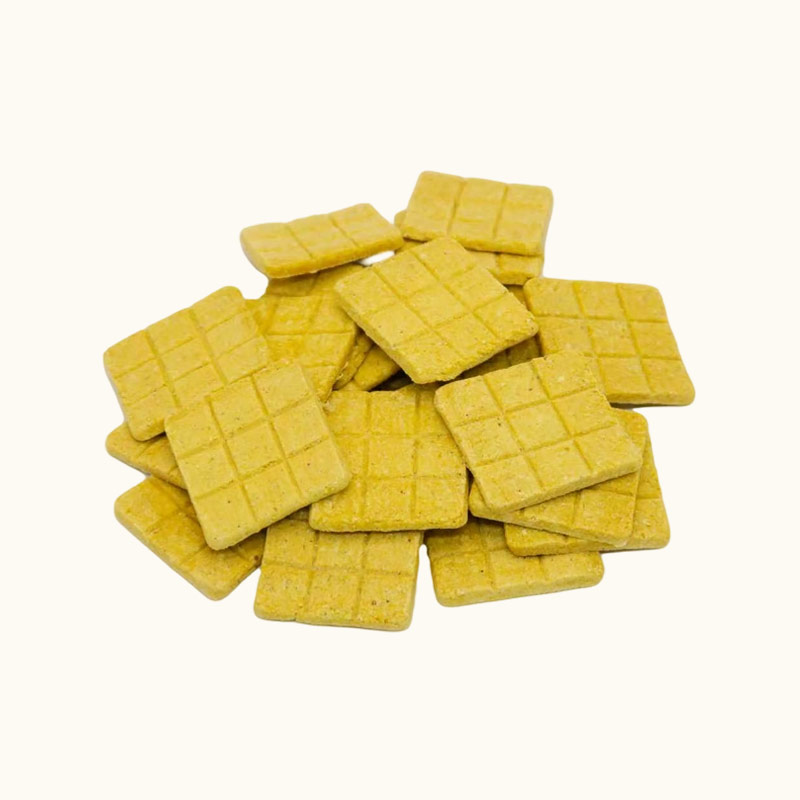
A sample should answer technical and commercial questions. For private label dog treats, buyers should review more than color and shape.
Start with packaging condition and label identity. Then review odor, surface appearance, breakage, texture, dimensions, piece variability, moisture feel, residue, and whether the product matches the written specification. For products containing natural ingredients, some visual variation may be normal, but the acceptable range should still be discussed.
If the project involves a customized formula, confirm that the sample ingredient list and analytical information correspond to the same sample version. It is risky to approve a physical sample while reviewing documentation from an older formula.
A good sample approval record includes photographs, sample code, date received, specification version, observations, requested changes, and final approval status.
Decide Packaging Before Finalizing the Commercial Specification
Packaging affects shelf presentation, product protection, label space, carton packing, and shipping. For private label dog treats, packaging decisions should be finalized alongside the product specification. It should be part of the private label dog treats specification rather than treated as a separate design task.
Common decisions include retail pouch style, net weight, clear window or opaque structure, zipper or other reclosure feature, print format, label language, barcode, tear notch, oxygen or moisture management where applicable, case quantity, and carton markings.
PetProOEM’s current service information describes customization options including product specifications, packaging, labels, and outer cartons. Buyers should confirm which packaging formats are available for the selected dog treat and whether customized packaging requires different production planning.
Before approving artwork, verify the exact product name, ingredient list, guaranteed analysis, net content, feeding statement if required, storage instructions, importer or distributor information, barcode, and any market-specific label elements.
Build an Artwork and Label Approval Workflow
For private label dog treats, artwork approval should be controlled by version number. A common sourcing error occurs when the visual design is approved but the ingredient panel, analysis, claim, barcode, or importer information is still changing.
Separate the artwork into review areas:
- Brand identity and visual design.
- Product name and flavor or protein description.
- Ingredient statement.
- Guaranteed analysis or required analytical declaration.
- Net content and package information.
- Feeding, storage, and warning information where applicable.
- Country or importer information where required.
- Barcode and retailer-specific data.
- Marketing claims and supporting evidence.
The final approved artwork file should be tied to the same product specification and sample version. If the formula changes after artwork approval, the label should be reviewed again.
Define Food Safety and Quality Responsibilities Early
Quality control for private label dog treats should be based on the actual product and process. Each private label dog treats SKU should have its own defined checkpoints rather than relying on a generic QC statement. Generic statements such as “strict QC” are not enough for a commercial buying specification.
Ask which facility produces the selected SKU, what incoming raw-material controls apply, which production records are maintained, what finished-product checks are performed, how lots are identified, and what retained samples or batch documentation are available.
Depending on the project and destination market, buyers may also need microbiological, chemical, compositional, or other testing. The exact test scope should be agreed based on product risk, ingredient profile, retailer requirements, import requirements, and regulatory obligations.
Do not request a generic “certificate” without identifying what it needs to prove. A laboratory report should identify the sample, test method, result, and relevant date. A facility certification and a finished-product test report answer different questions.
Confirm Shelf Life and Storage With Product-Specific Evidence
Shelf life is another area where private label dog treats should not rely on category-wide assumptions. Moisture level, water activity, processing, packaging barrier, preservatives, oxygen exposure, storage temperature, and formulation can all influence product stability.
Ask what shelf-life basis supports the selected SKU. Is it based on an established production history, stability study, laboratory testing, packaging validation, or another documented method? If the formula or packaging changes, confirm whether the existing shelf-life basis still applies.
Storage instructions should also match the product and package. Buyers should not automatically copy storage language from a different treat format.
Make Destination Market and Documentation Part of the RFQ
For private label dog treats, destination market can affect labeling, import procedures, facility requirements, documentation, and testing expectations. Tell the supplier where the product will be sold before asking for a final commercial proposal.
Depending on the project, buyers may need ingredient and analytical documentation, health or veterinary documents, facility information, certificates of analysis, microbiological results, shipping documents, packaging declarations, or retailer-specific documents.
Rather than asking whether a supplier is “export certified,” provide the actual list required by your importer, customs broker, retailer, marketplace, or competent authority. The supplier can then confirm which documents are available, which are issued by batch, and which require additional work.
Compare Supplier Quotations on the Same Basis

A private label dog treats quotation should only be compared with another quotation if both suppliers are quoting the same specification. This is essential when comparing private label dog treats across different formulas, formats, and packaging options.
Normalize the project before comparison. Use the same protein source, formula assumptions, dimensions, texture, package weight, pouch format, artwork requirement, case pack, quantity, destination, testing scope, and documentation requirement.
If one supplier quotes an existing standard product and another quotes a newly developed formula, the projects are not equivalent. If one quotation includes printed packaging and another assumes buyer-supplied bags, the final numbers are not directly comparable.
Ask suppliers to state exclusions and assumptions in writing. This prevents a low initial quotation from becoming a different project after sampling.
Private Label Dog Treats First Order RFQ Checklist
The following structure can be used when contacting a supplier:
| RFQ Item | What to Provide |
|---|---|
| Target market | Country or region where the treats will be sold |
| Sales channel | Distributor, pet store, supermarket, e-commerce, specialty retail, or other |
| Treat format | Jerky strip, bite, wrapped chew, stick, novelty shape, or reference sample |
| Protein source | Chicken, duck, fish, beef, rabbit, or another confirmed direction |
| Ingredient requirements | Required ingredients, ingredients to avoid, proposed claims |
| Physical specification | Length, width, thickness, piece weight, texture, acceptable variation |
| Analytical requirements | Requested protein, fat, fibre, moisture, ash, or other agreed values |
| Retail packaging | Net weight, pouch style, printing, zipper, label language, barcode |
| Outer packing | Units per carton, carton marks, pallet or shipping requirements |
| Sample needs | Stock sample, customized sample, number of versions, approval criteria |
| Testing and documents | Market, retailer, importer, laboratory, or inspection requirements |
| Order planning | Expected first-order quantity and forecast range |
| Destination | Port, city, or delivery basis for logistics discussion |
This gives a supplier enough information to determine whether an existing product, modified product, or new development route is appropriate for your private label dog treats project.
Buyers interested in the current Chicken Strip reference can review the published Chicken Strip specification and then send a product brief with any requested changes.
Common Mistakes in Private Label Dog Treat Sourcing
The first mistake is assuming that the product title fully describes the formula. Always review the complete ingredient statement.
The second is interpreting crude protein as meat inclusion percentage. Analytical protein and meat percentage are different concepts.
The third is writing claims before the formula is finalized. Terms such as single ingredient, grain free, preservative free, natural, dental, or hypoallergenic should be supported by the actual product and the applicable market requirements.
The fourth is approving only the appearance of a sample. Texture, dimensions, ingredient documentation, analysis, packaging, and version identity also matter.
The fifth is comparing quotations with different specifications. A cheaper quotation may simply cover less customization, different packaging, fewer tests, or a different formula.
The sixth is waiting until production to discuss documentation. Import, retailer, and marketplace requirements should be identified early.
Conclusion
A strong private label dog treats program is built on specification control. Define the treat role, product format, complete ingredient list, analytical values, dimensions, texture, packaging, artwork, quality checks, documents, and sample approval method before mass production.
For products such as Chicken Strip, published ingredient and guaranteed-analysis information should be treated as SKU-specific evidence. Do not expand those facts into unsupported claims about single ingredients, grain-free status, preservative-free status, meat percentage, or health effects.
If you are developing a dog treat range, review PetProOEM’s dog treats category and send your sourcing brief with your target market, product format, ingredient requirements, package size, expected quantity, and sample criteria.
FAQ
What should I include in a private label dog treats RFQ?
Include the target market, treat format, protein source, full ingredient requirements, size and texture, analytical targets, retail packaging, expected quantity, destination, sample requirements, and any testing or documentation needs.
Does “chicken treat” mean the product is made only from chicken?
No. The product name does not prove a single-ingredient formula. Review the complete ingredient list for the exact SKU. PetProOEM’s current Chicken Strip reference, for example, also lists soy protein, corn starch, glycerin, salt, and potassium sorbate.
Does 50% crude protein mean a dog treat contains 50% chicken?
No. Crude protein is an analytical value, not a direct statement of meat inclusion percentage. Meat content must be confirmed from the formulation or ingredient specification.
Can private label dog treats be customized?
Depending on the product and project, customization may include formula, size, shape, packaging, labels, and branding. The exact scope should be confirmed for the selected SKU before sampling and quotation approval.
Should I request testing before placing a dog treat order?
Testing should be based on the product, ingredients, target market, importer requirements, retailer requirements, and agreed quality plan. Define the exact tests and acceptance criteria rather than asking for a generic certificate.