Choosing the right pet product supplier requires more than browsing product photos and requesting a quotation. For importers, distributors, retailers, and private label brands, the real sourcing decision depends on whether the supplier can define the product accurately, provide traceable samples, explain the manufacturing relationship, manage documents, control quality, communicate changes, and support the target market after the first order.
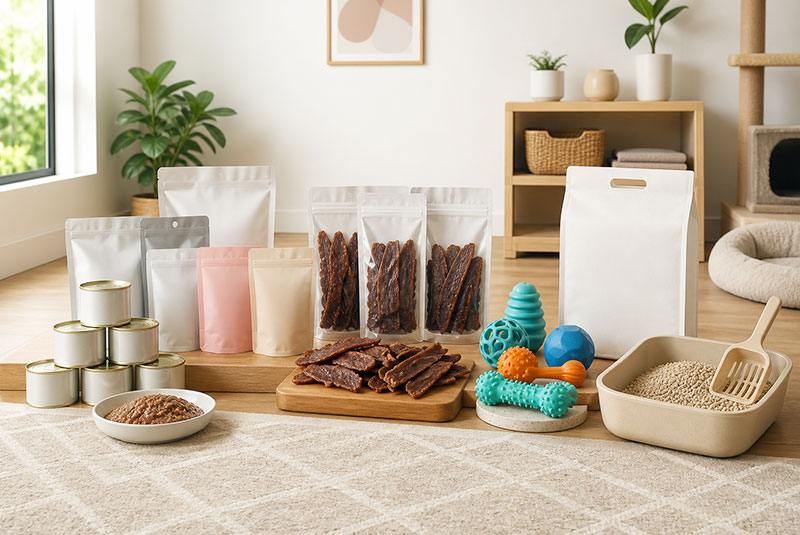
This matters even more when one pet product supplier covers several categories. Wet cat food, dog treats, cat litter, and pet toys do not use the same production systems, testing methods, materials, or compliance documents. A supplier may coordinate several manufacturing resources across different categories, so buyers should understand who is responsible for development, production, quality control, export documentation, and corrective action for each SKU.
This guide explains how to choose a pet product supplier beyond a product catalog. It provides a practical B2B checklist for legal-entity verification, manufacturing relationships, product specialization, sampling, specifications, quality control, test reports, change management, communication, export support, and repeat-order reliability.
Table of Contents
Verify the Pet Product Supplier’s Legal Entity First
Before evaluating samples, buyers should know which legal entity will sign the contract, issue the commercial invoice, receive payment, and coordinate shipment.
A professional pet product supplier should be able to provide its registered company name, business registration information, address, and the legal entity that appears on contracts and export documents.
This is particularly important when website pages use different English company names or transliterations. PetProOEM’s current homepage and services page identify Liaocheng Birch Forest E-Commerce Co., Ltd., while the current About Us page uses Liaocheng Baihualin E-Commerce Co., Ltd. Buyers should therefore request confirmation of the exact contracting entity before placing an order rather than assuming that two website names are automatically interchangeable.
The objective is not to treat a naming inconsistency as proof of a problem. The objective is to remove ambiguity before commercial documents are issued.
Understand the Actual Manufacturing Relationship
A pet product supplier does not necessarily need to own every production site to provide useful sourcing support. Many export companies, OEM coordinators, and product-development businesses work with contract manufacturers or specialized partner factories.
What matters is transparency.
Ask:
- Is this SKU manufactured directly or through a contract manufacturer?
- Which production site handles the product?
- Who owns the formula, mold, or technical specification?
- Who performs in-process quality control?
- Who approves raw materials?
- Who handles corrective actions if a batch fails?
- Can the buyer inspect or audit the relevant production site when necessary?
PetProOEM’s current About Us page describes the company as integrating product development, customization, contract manufacturing, and international trade. That wording suggests buyers should evaluate the actual production relationship by product category rather than assuming one factory makes wet food, litter, treats, and toys.
Do Not Judge Factory Capability From Website Photos Alone
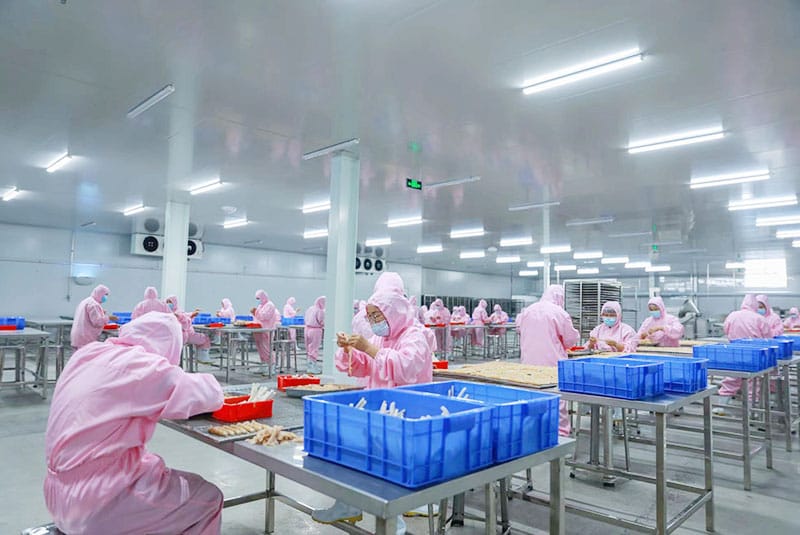
Factory images can help buyers understand the supplier’s presentation, but they are not enough to verify manufacturing ownership or capability.
A website photo may show a production line, warehouse, laboratory, drying room, packing area, or partner facility. Without supporting documentation, the image does not establish who owns the factory, which SKU is produced there, or whether the equipment shown is relevant to the buyer’s product.
When evaluating a pet product supplier, request evidence that connects the product to the production site. Useful evidence may include:
- factory registration or license information where applicable;
- facility certificates relevant to the product;
- production-site address;
- product-specific audit information;
- video walkthroughs tied to the project;
- batch records or production photos linked to the SKU;
- third-party inspection reports where needed.
This approach is more reliable than concluding “factory owned” or “factory direct” from marketing imagery.
Check Whether the Supplier Specializes in Your Product Category
A strong pet product supplier should understand the technical variables that actually control the selected product.
| Category | Supplier Should Understand |
|---|---|
| Wet cat food | Formula, nutritional role, texture, retort process, packaging, labeling, shelf life |
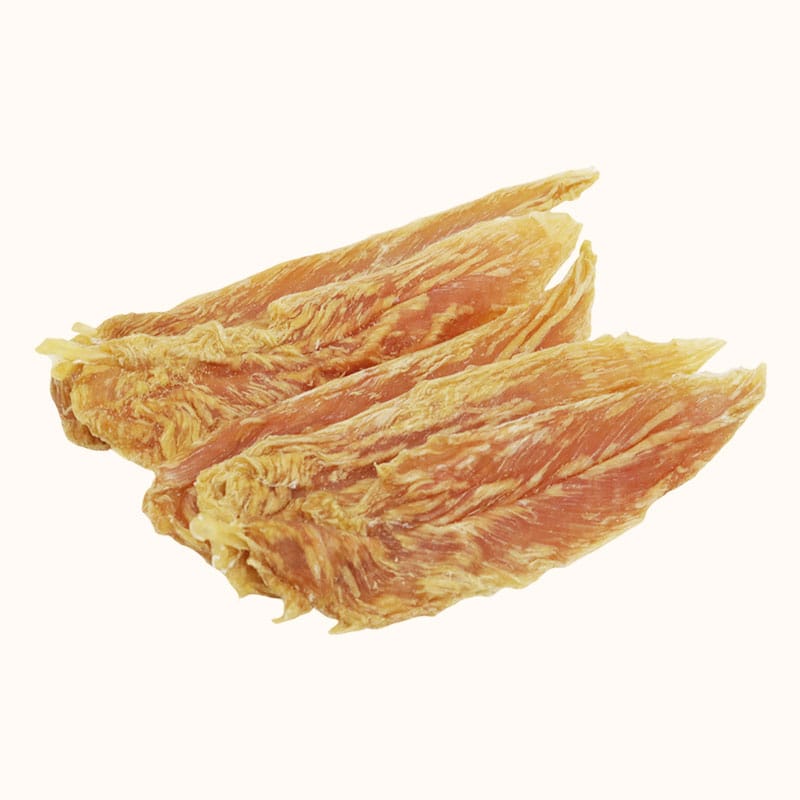
| Dog treats | Ingredients, analysis, texture, moisture, drying/baking, chew structure, labeling |
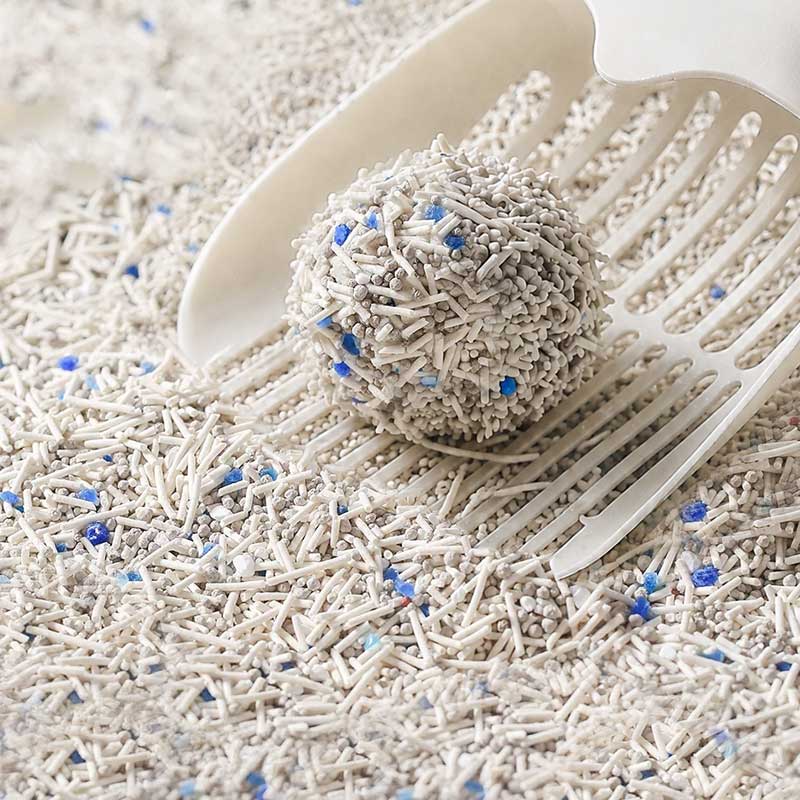
| Cat litter | Material system, particle size, clumping, dust, tracking, fragrance, bag performance |
| Pet toys | Material, hardness, dimensions, construction, mechanical risks, chemical testing |
If the pet product supplier gives only generic sales answers and cannot explain the product-specific variables, buyers may have difficulty controlling later revisions.
Evaluate the Supplier’s OEM and ODM Scope by SKU
The words OEM, ODM, customization, and private label can mean different things across suppliers.
PetProOEM’s current services page describes formula customization, packaging development, labels, cartons, flavors, scents, materials, product specifications, product combinations, sampling, inspection, and export support.
That provides a useful service framework, but buyers should still ask what applies to the exact SKU.
For example:
- Can the wet cat food formula be changed or only the flavor?
- Can the tofu-bentonite ratio be adjusted in mixed litter?
- Can the dog treat ingredient list be modified?
- Can a toy use a different material or only a different color?
- Does a new toy shape require a new mold?
- Does customized packaging require a different production minimum?
A reliable pet product supplier should separate confirmed capabilities from options that still require technical evaluation.
Use Sampling to Test the Supplier’s Process, Not Just the Product
A sample tells buyers more than whether they like the product. It also reveals how the pet product supplier handles specifications, version control, communication, and revisions.
During sampling, evaluate whether the supplier:
- assigns a sample code;
- confirms the formula or material version;
- records requested changes;
- explains which requests are feasible;
- updates the specification after revisions;
- keeps packaging and product versions aligned;
- provides the supporting documents promised.
A good sample without a controlled specification can still create problems during mass production.
Ask for a Written Product Specification Before Ordering
A product specification is one of the most important documents in any private label project.
The exact fields depend on the category, but the specification should define what mass production is expected to match.
For a pet product supplier, the specification also provides evidence of technical discipline. A supplier that can clearly document ingredients, materials, dimensions, analysis, packaging, test requirements, and quality criteria is easier to manage than one that relies only on chat messages and photos.
The buyer should approve the specification and sample together.
Review Quality Control Before the Purchase Order
“Strict quality control” is not a useful sourcing standard unless the buyer knows what is actually checked.
Ask the pet product supplier to explain the QC process for the selected SKU:
- incoming material checks;
- in-process checks;
- critical production parameters;
- finished-product inspection;
- packaging inspection;
- lot coding;
- retained samples;
- non-conformance handling;
- corrective action process.
PetProOEM currently describes requirement confirmation, sample making, quotation and production, inspection and packaging, then shipment. Buyers should add category-specific acceptance criteria to that process.
Ask Which Tests Apply to the Exact SKU
A good pet product supplier should not respond to every testing question with one generic certificate.
Different products require different evidence.
For U.S.-market pet food, buyers can review the U.S. Food and Drug Administration’s pet food information. For consumer-product testing questions relevant to toys, the U.S. Consumer Product Safety Commission provides business guidance. For chemical restrictions relevant to EU-market materials, buyers can consult the European Chemicals Agency’s REACH information.
The key question is: does the report match the exact product, material, formula, color, size, and market?
Learn to Read a Test Report Instead of Collecting Certificates
A test report should be reviewed, not merely filed.
| Report Field | Buyer Check |
|---|---|
| Sample identity | Does it match the SKU being purchased? |
| Sample photo | Does it visually match the product? |
| Material/formula | Does the tested composition match production? |
| Method | What exactly was tested? |
| Date | Is the report relevant to the current product version? |
| Result | What was measured and what acceptance basis was used? |
| Laboratory | Is the laboratory appropriate for the method? |
A professional pet product supplier should be able to explain the relationship between the report and the production SKU.
Evaluate Ingredient and Material Transparency
Transparency is especially important because product names can hide technical complexity.
A chicken jerky may contain chicken plus soy protein, starch, glycerin, salt, and preservative. A mixed cat litter may contain tofu and bentonite at a project-specific ratio. A dog toy described as rubber may actually be natural latex or TPR.
Ask the pet product supplier for the current ingredient statement or material declaration rather than relying on the catalog name.
This also protects the brand from making unsupported claims such as single ingredient, grain free, preservative free, fully plant based, dental, indestructible, or universally non-toxic.
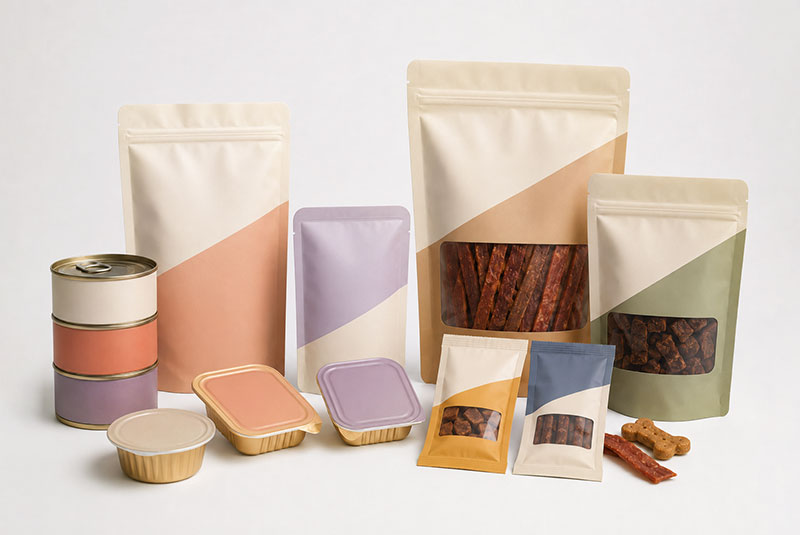
Check Packaging Capability Separately From Product Capability
A supplier may be able to make the product but still depend on different packaging partners, print minimums, lead times, or material constraints.
Ask:
- Which packaging formats are available?
- Which are stock and which are custom?
- What creates the packaging minimum?
- Can labels be used for smaller trials?
- Who checks barcode and artwork versions?
- How are multilingual labels controlled?
- How is outer-carton artwork approved?
PetProOEM’s services page currently describes pouches, bags, jars, boxes, color labels, barcodes, multilingual labels, and carton design. Buyers should confirm the options available for the selected SKU.
Review Communication Quality During the Sampling Stage
Communication is a practical indicator of how manageable the pet product supplier may be after the order is placed.
Strong communication means more than replying quickly. Look for:
- specific answers to technical questions;
- clear separation between confirmed facts and pending checks;
- written summaries after revisions;
- consistent version numbers;
- early warning when a request is not feasible;
- clear ownership of next steps.
A fast but vague reply can be less useful than a slightly slower response that answers the actual question accurately.
Ask How the Supplier Handles Product Changes
Change control becomes critical after the first order.
A responsible pet product supplier should have a process for notifying buyers before making changes that could affect the product.
Relevant changes may include:
- formula;
- ingredient source;
- material grade;
- color formulation;
- factory or production site;
- mold;
- package material;
- net weight;
- test method;
- label content.
Buyers should define which changes require approval before the next production run.
Evaluate Export Support by Destination Market
Export support should be evaluated by what the buyer actually needs.
PetProOEM’s current homepage and services page describe quality inspection, documentation, shipment coordination, and full-container export support.
For sourcing, ask which documents are available for the exact destination and product. Separate:
- commercial invoice and packing list;
- certificate of origin where applicable;
- product or batch documents;
- health or veterinary documents where applicable;
- testing reports;
- packaging declarations;
- retailer or marketplace documents.
A strong pet product supplier should clarify which documents are standard, which are batch-specific, and which require additional testing or third-party work.
Do Not Compare Suppliers Only by MOQ
MOQ can be important, especially for new brands, but one number can hide several different constraints.
The minimum may be created by:
- formula batching;
- printed packaging;
- cartons;
- molds;
- colors;
- fragrance;
- production-line setup.
Ask the pet product supplier which component creates the minimum. That information can help buyers decide whether to start with stock packaging, labels, an existing mold, or a standard formula before moving into deeper customization.
Lead Time Should Be Broken Into Stages
One headline lead time is rarely enough.
Ask the supplier to separate:
- sample-development time;
- sample-shipping time;
- artwork approval;
- packaging production;
- product production;
- testing;
- inspection;
- shipment preparation.
This helps buyers understand where delays are likely to occur and whether the launch schedule is realistic.
Look for Evidence of Repeat-Order Consistency
A first sample can be excellent while repeat orders vary.
Ask the pet product supplier how repeat orders are controlled against the original approval.
Useful controls include:
- retained samples;
- approved formula or material code;
- artwork version control;
- production specifications;
- batch records;
- incoming-material controls;
- final inspection records.
The stronger the repeat-order reference system, the easier it is to detect unwanted changes.
Use a Supplier Scorecard Instead of a Single Overall Impression
A scorecard helps buyers compare each pet product supplier on the same factors.
| Evaluation Area | What to Verify |
|---|---|
| Legal identity | Contract entity and registration are clear |
| Manufacturing relationship | Production responsibility is transparent |
| Product expertise | Supplier understands the selected category |
| Sample control | Samples are coded and traceable |
| Specification | Written technical specification is available |
| Quality control | Inspection points and corrective actions are defined |
| Testing | Reports match the exact SKU |
| Packaging | Options and minimums are clear |
| Communication | Responses are specific and documented |
| Change control | Buyer approval is required for critical changes |
| Export support | Required destination documents are understood |
Red Flags Buyers Should Investigate Further
A red flag does not always mean the supplier should be rejected, but it means the buyer needs more evidence.
Examples include:
- different company names across contracts and invoices without explanation;
- factory claims that cannot be linked to a product or address;
- test reports with no traceable SKU;
- very broad claims such as “all certificates available”;
- refusal to provide ingredient or material specifications;
- sample changes without version numbers;
- unexplained changes to packaging or formula;
- absolute claims such as “100% safe” or “indestructible” without evidence;
- quotations that omit major assumptions.
The purpose of due diligence is to resolve these points before production.
Pet Product Supplier Due Diligence Checklist
Before approving the supplier, confirm:
- Legal entity: registered company name and contracting party.
- Production: actual manufacturing relationship for the SKU.
- Specialization: category-specific technical knowledge.
- Customization: what can and cannot be changed.
- Sample: approved sample code and version.
- Specification: written product requirements.
- Testing: reports linked to the exact product.
- QC: incoming, in-process, and finished-product controls.
- Packaging: format, artwork, barcode, carton, minimums.
- Documents: product, batch, market, and shipping records.
- Communication: clear written responses and ownership.
- Change control: critical changes require notification or approval.
- Export support: destination requirements are understood.
Buyers can review PetProOEM’s current product categories, OEM/ODM services, and contact the team with a sourcing brief that includes the target product, market, specification, packaging, quantity, and required evidence.
Conclusion
The best way to choose a pet product supplier is to look beyond the catalog. Product photos, broad OEM claims, factory images, and fast quotations can start a conversation, but they do not replace legal-entity verification, manufacturing transparency, controlled samples, written specifications, test-report review, quality systems, change control, and export documentation.
For PetProOEM specifically, the website presents the business as an export-oriented OEM/ODM partner working across wet cat food, cat litter, dog treats, and pet toys, with product development, contract manufacturing, inspection, packaging, and shipment support. Because current pages use both Birch Forest and Baihualin in the English company name, buyers should confirm the exact contracting entity as part of normal due diligence.
A supplier that can answer detailed questions accurately, document the approved product, and maintain control after the first order is more useful than one that simply has the largest catalog.
FAQ
What should I check before choosing a pet product supplier?
Verify the legal entity, manufacturing relationship, product expertise, sample process, written specification, quality controls, test reports, packaging capability, change-control process, and export documents relevant to your target market.
Does a supplier need to own every factory?
No. Contract manufacturing can be a legitimate sourcing model. What matters is that the supplier clearly explains who manufactures the product, who controls quality, and which production site and documents apply to the SKU.
Can factory photos prove that a supplier owns the factory?
No. Photos alone do not establish factory ownership or product-specific manufacturing capability. Buyers should request business, production-site, audit, or other evidence that connects the SKU to the facility.
How should I compare pet product suppliers?
Use the same RFQ and supplier scorecard. Compare specification fit, sample quality, testing, quality control, packaging, documentation, communication, change management, and commercial scope rather than relying only on the lowest quote.
What is the most important document after sample approval?
A version-controlled product specification is one of the most important documents because it connects the approved sample to production, inspection, packaging, repeat orders, and change control.