
Cat litter packaging has to do more than carry a brand logo. It must contain a dense or bulky product, resist handling during warehousing and transport, protect the litter from moisture and contamination, support retail display, communicate product information clearly, and remain practical for consumers to lift, pour, open, and store.
For private label buyers, packaging decisions should therefore be made together with the litter formula and sales channel. A lightweight tofu litter may need a different bag structure and carry solution from a dense bentonite product. A compact retail pouch for e-commerce may need different drop and seal performance from a large value pack intended for wholesalers or warehouse clubs.
This guide explains how to evaluate cat litter packaging for retail and export. It covers bag formats, material and barrier requirements, seals, handles, net weight, shelf display, artwork, barcodes, outer packing, pallets, transport testing, sample approval, and environmental claims. It also distinguishes what PetProOEM currently confirms publicly from packaging features that still need project-specific verification.
Table of Contents
Start Cat Litter Packaging With the Product, Not the Bag Design
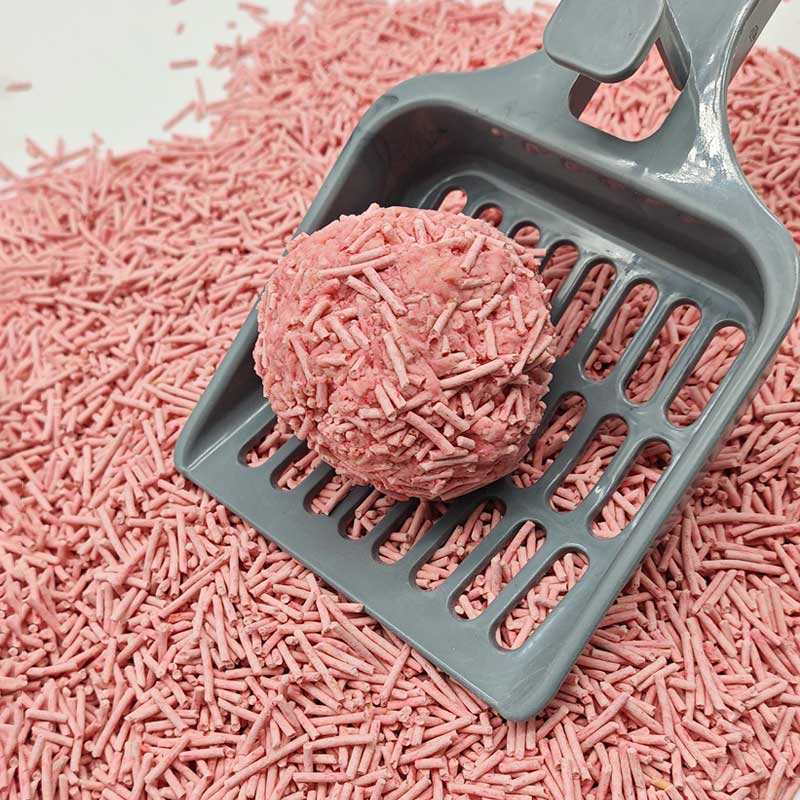
The best cat litter packaging format depends on the litter inside it.
Tofu litter is relatively lightweight and can be sensitive to moisture and pellet breakage. Bentonite is denser and can place greater mechanical stress on the bag and handle. Mixed litter combines materials with different particle sizes and densities, which can affect settling and movement during transport.
Before selecting a bag, buyers should confirm:
- litter type;
- product density;
- target net weight;
- particle or pellet size;
- moisture sensitivity;
- fragrance requirements;
- dust or fines behavior;
- target market;
- retail channel;
- export route.
PetProOEM’s current cat litter category confirms tofu and mixed litter directions and states that bag design, package size, labels, and outer cartons can be customized. It does not publish one universal bag construction for every SKU, so the packaging structure should be confirmed against the selected product.
Common Cat Litter Packaging Formats
Several package formats are widely used in the cat litter market, but the right choice depends on weight, retail positioning, filling equipment, and consumer use.
| Packaging Format | Typical Advantage | Main Buyer Check |
|---|---|---|
| Stand-up pouch | Strong shelf visibility and broad printable area | Bottom stability, seal strength, zipper or handle options |
| Flat-bottom pouch | Premium shelf presentation and multiple print panels | Filled-bag stability, gusset strength, carrying method |
| Side-gusset / quad-seal bag | Useful capacity for larger fills | Side-seam and bottom-seam performance |
| Pillow / back-seal bag | Simple flexible-pack format | Handling, display, closure, lift points |
| Woven or reinforced sack | Useful direction for heavier wholesale packs | Inner liner, stitching, moisture protection, print method |
| Rigid carton or box | Structured display and controlled shape | Inner liner, handle, pour opening, stacking strength |
These formats are market references, not a statement that PetProOEM currently offers every one. Buyers should request the available cat litter packaging options for the exact product, filling line, and order configuration.
Material Structure Should Match Moisture and Load Requirements
A packaging material must protect the product while surviving filling, stacking, warehousing, container loading, unloading, and consumer handling.
For cat litter packaging, buyers should ask what material structure is proposed and why. Flexible packaging may use multiple polymer layers or laminations to provide printability, strength, sealing, puncture resistance, and moisture barrier. Reinforced woven formats may use a separate inner liner to improve moisture protection.
Do not assume that a material structure used for pet food is automatically correct for cat litter. The product load, dust, granules, sharp particles, and moisture sensitivity can create different requirements.
PetProOEM’s current OEM and ODM services state that packaging formats and materials can be customized according to brand and shipping needs. Buyers should still request the exact proposed structure and validation method for the selected litter.
Moisture Barrier Matters for Tofu and Mixed Cat Litter
Tofu litter and other plant-based components can change when exposed to humidity. Moisture can affect pellet hardness, breakage, clumping, storage stability, and odor.
A cat litter packaging project using tofu or mixed litter should therefore consider moisture barrier as a technical requirement, not just a marketing feature.
Buyers can ask:
- What water-vapor barrier does the proposed material provide?
- Has the bag been evaluated under humid storage conditions?
- Does the seal remain stable after handling?
- Is an inner liner required?
- Does the package maintain the approved product condition through the intended shelf life?
Do not publish a moisture-protection claim unless the package structure and evidence support it.
Seal Strength Is a Critical Cat Litter Packaging Requirement
Cat litter is heavy relative to many lightweight consumer products. A weak seal can fail during lifting, pallet movement, drops, or container handling.
For cat litter packaging, seal performance should be checked at the top, bottom, side seams, gussets, handle area, and any zipper or closure interface.
The supplier should define:
- sealing method;
- seal width;
- critical seam locations;
- finished-bag inspection;
- filled-bag test method;
- acceptable leakage or burst criteria.
A visually attractive pouch is not suitable if the filled package cannot survive normal distribution handling.
Handles Should Be Designed Around the Filled Bag
Handles can improve consumer convenience, especially for larger or denser packs, but they also create a concentrated stress point.
Common market directions include die-cut handles, reinforced side handles, top handles, heat-sealed handles, and rigid carton handles. The best option depends on product weight and bag structure.
For private label cat litter packaging, handle approval should use a filled bag, not an empty prototype.
Ask:
- What filled weight was the handle tested with?
- How many lift cycles were used?
- Does the handle deform the seal area?
- Can consumers carry the bag comfortably?
- Does the handle interfere with stacking or display?
PetProOEM does not currently publish a standard handle type or load rating for its cat litter range, so these details should be verified project by project.
Resealable Zippers Can Improve Consumer Convenience
A zipper can help users close the pack after opening, particularly for smaller and medium retail bags.
However, a zipper should not be treated as a universal requirement. Very large or heavy packs may rely on a different closure system, and some buyers may prefer a simpler heat-sealed bag for cost or filling-line reasons.
For cat litter packaging with a zipper, evaluate:
- ease of opening;
- reclosure after litter dust reaches the zipper;
- seal integrity above the zipper before first opening;
- consumer access to the full bag;
- whether the zipper stays aligned after repeated use.
Net Weight Should Be Chosen With Density in Mind
Cat litter is sold by weight, volume, or a combination of both depending on market practice. A bag designed for one litter type may not suit another because density can differ substantially.
For example, a dense bentonite product can create a compact but heavy pack, while tofu litter may occupy more volume at the same weight.
In a cat litter packaging project, confirm:
- target net weight;
- filled volume;
- headspace;
- bag dimensions;
- filled-bag shape;
- carton or pallet fit.
Do not select a bag only from an empty sample. Approve it using the actual litter formula and intended fill.
Retail Shelf Display Changes the Best Package Format
A package designed for pet specialty retail may have different priorities from a package intended for supermarket shelves, warehouse clubs, or e-commerce.
Retail buyers may prioritize:
- stable upright display;
- large front branding panel;
- side-panel information;
- handle visibility;
- clear product type;
- easy barcode scanning;
- efficient shelf footprint.
For premium private label cat litter packaging, flat-bottom or structured stand-up formats can offer broad print areas and strong shelf presentation. For larger value packs, handling and mechanical strength may be more important than premium shelf geometry.
E-Commerce Packaging Needs Extra Handling Consideration
E-commerce distribution exposes packages to parcel handling, conveyors, repeated drops, and contact with other goods.
A cat litter packaging design that performs well on a pallet may still fail when shipped individually.
For e-commerce projects, buyers should review:
- drop resistance;
- puncture resistance;
- seal strength;
- secondary carton requirements;
- leakage of dust or granules;
- handle protection;
- label abrasion.
The transport test should reflect the actual fulfillment route rather than a generic packaging claim.
Export Packaging Should Be Evaluated as a System
For export shipments, the retail bag is only one layer of the packaging system.
The complete system may include:
- primary retail bag;
- outer carton or woven master bag;
- pallet;
- stretch wrap;
- corner protection;
- container loading pattern.
PetProOEM’s Services page confirms customization of outer cartons and shipment coordination. Buyers should define how the retail cat litter packaging will be protected from factory to destination warehouse.
Use Transport Testing That Matches the Distribution Route
Transit testing can help identify weak seals, punctures, handle failures, bag abrasion, and carton collapse before a full shipment is exposed to those risks.
The International Safe Transit Association develops packaged-product test procedures used to simulate transport hazards such as shock, vibration, compression, and handling. Buyers can review ISTA test procedures when planning an appropriate packaging validation program.
For cat litter packaging, do not simply request “ISTA testing” without identifying the distribution environment and package type. The test series should reflect the actual route and packaging system.
Artwork Should Be Built Around Real Product Information
Packaging design should begin after the core product specification is known.
For cat litter, the artwork may need to communicate:
- litter material;
- net weight or volume;
- fragrance;
- usage directions;
- disposal instructions;
- performance claims;
- barcode;
- importer or distributor information;
- country-specific statements.
The final cat litter packaging artwork should not claim low dust, flushability, biodegradability, compostability, or other performance without supporting evidence for the actual SKU.
Barcode and Retail Data Need Early Approval
Barcode errors can delay listings, create warehouse problems, or force expensive reprints.
Private label buyers should assign the correct product identifier to each SKU and package level before mass printing. GS1 provides global identification standards and guidance for barcodes and trade items; buyers can review GS1 GTIN information when setting up retail identifiers.
For cat litter packaging, verify:
- retail-unit barcode;
- case-level identification if required;
- barcode size and quiet zones;
- print contrast;
- location away from folds or highly curved surfaces;
- artwork version.
Multi-Language Packaging Needs Version Control
Export programs often require several languages on one bag or multiple regional artwork versions.
PetProOEM’s Services page currently mentions multilingual labels and carton design. For buyers, the key control is version management.
Every language version should match the same product specification. If a claim, fragrance name, material statement, or disposal instruction changes, all relevant artwork versions should be updated together.
A cat litter packaging project should therefore use file names, version numbers, and written approval records rather than approving “the latest PDF.”
Environmental Packaging Claims Need Evidence
Words such as recyclable, compostable, biodegradable, eco friendly, mono-material, reduced plastic, and recycled content can create strong commercial appeal, but they should be used carefully.
The U.S. Federal Trade Commission’s Green Guides explain that broad environmental claims should be substantiated and qualified. The guidance also distinguishes recyclable, compostable, recycled-content, and other claims.
For cat litter packaging, do not describe a bag as recyclable simply because one layer is polyethylene, and do not call a laminate compostable because it contains paper or plant-derived content. Ask the packaging supplier for the actual structure and evidence.
Do Not Confuse Product Sustainability With Packaging Sustainability
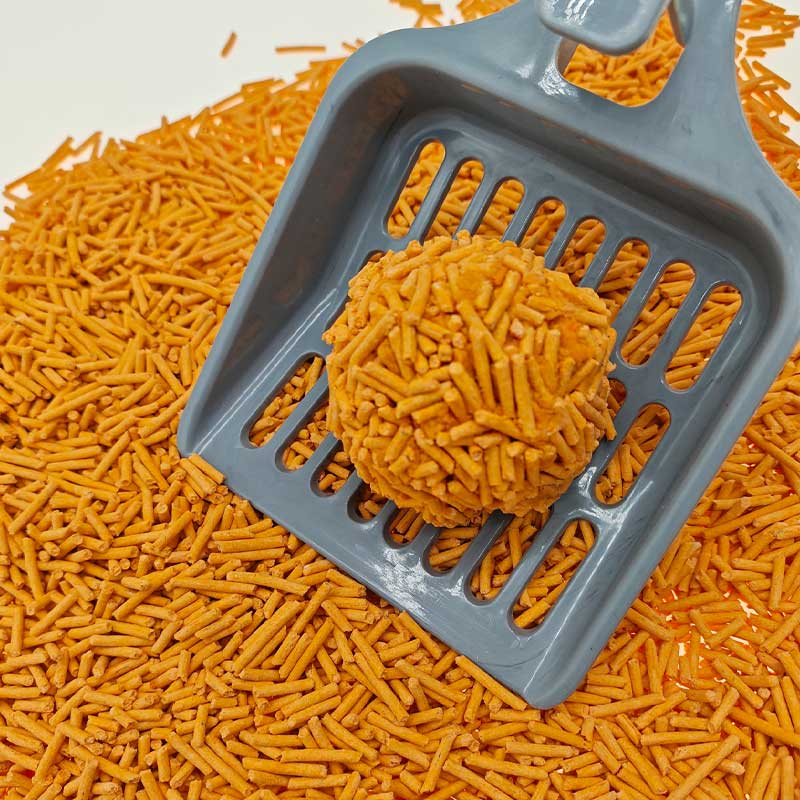
Tofu litter may contain plant-derived ingredients, but that does not automatically make the package environmentally preferable. Likewise, recyclable packaging does not make the litter itself biodegradable.
Private label buyers should separate:
- litter-material claims;
- bag-material claims;
- recycled-content claims;
- recyclability claims;
- compostability claims;
- source-reduction claims.
This makes cat litter packaging marketing more accurate and avoids combining unrelated environmental attributes into one vague “eco” statement.
Packaging Samples Should Be Tested Filled, Not Empty
An empty bag mock-up is useful for checking color, print, layout, and dimensions. It cannot prove that the package works with the actual product.
Before final approval, buyers should request a filled sample or pilot pack when feasible and check:
- bag shape;
- shelf stability;
- seal quality;
- handle comfort;
- zipper function;
- pouring behavior;
- dust leakage;
- print distortion;
- carton fit;
- stacking behavior.
For cat litter packaging, this step is particularly important because product weight and density can significantly change how the bag behaves.
Approve Packaging and Product Specifications Together
The final product file should link the packaging specification to the litter specification.
| Product Field | Packaging Field |
|---|---|
| Litter type | Bag format |
| Formula / blend | Material structure |
| Particle specification | Bag dimensions |
| Fragrance | Barrier and seal |
| Net weight | Handle / closure |
| Performance claims | Artwork version |
| Target market | Languages / barcode / importer data |
This makes repeat orders easier to control and reduces the risk that the correct litter is packed into the wrong artwork or bag structure.
Cat Litter Packaging RFQ Checklist
Before requesting a packaging proposal, provide:
- Litter type: tofu, bentonite, mixed, or other.
- Product density: supplier-confirmed or measured value where useful.
- Net weight: target fill per retail unit.
- Sales channel: pet retail, supermarket, e-commerce, distributor, club, or other.
- Bag format: stand-up, flat-bottom, side-gusset, woven, carton, or supplier recommendation.
- Material requirement: barrier, puncture, or sustainability target to confirm.
- Closure: heat seal, zipper, reclosure, or other option.
- Handle: required or not required.
- Artwork: logo, colors, languages, claims, barcode.
- Outer packing: carton, master bag, pallet, stretch wrap.
- Transport route: palletized export, e-commerce, warehouse distribution, or mixed route.
- Testing: filled-bag drop, vibration, compression, or other agreed checks.
- Sample requirement: empty mock-up, filled sample, or pre-production sample.
Buyers can review PetProOEM’s ขยะแมวเต้าหู้ผสมเบนโทไนท์ as one product reference and send a cat litter packaging brief with the target litter, net weight, retail channel, bag format, artwork, and transport requirements.
Common Cat Litter Packaging Mistakes
The first mistake is choosing the bag before confirming the litter density and net weight.
The second is approving a handle on an empty bag instead of a filled package.
The third is assuming a zipper automatically works well in a dusty product environment.
The fourth is copying a competitor’s film structure without validating it for the selected litter.
The fifth is focusing on retail appearance while ignoring export handling.
The sixth is using environmental claims without verifying the full package structure.
The seventh is approving artwork before claims and barcode data are final.
The eighth is using one packaging specification across tofu, bentonite, and mixed litter without confirming product-specific performance.
Conclusion
A reliable cat litter packaging system should be developed around the product, channel, and transport route. Bag style, material structure, seal, handle, closure, net weight, artwork, outer packing, and transport validation all need to work together.
PetProOEM currently confirms flexible customization of cat litter bag designs, package sizes, labels, and outer cartons, but it does not publicly publish one fixed bag structure, handle design, load rating, or transport-test result for the entire range. Buyers should therefore request product-specific packaging proposals and approve filled samples before mass production.
For private label brands, the strongest packaging is not simply the most attractive pouch. It is the package that protects the litter, survives the distribution route, communicates the product accurately, and remains convenient for the final consumer.
FAQ
What packaging is commonly used for cat litter?
Common market formats include stand-up pouches, flat-bottom bags, side-gusset bags, pillow bags, woven sacks, and rigid cartons. The right format depends on litter density, net weight, retail channel, and transport needs.
Does tofu cat litter need moisture-resistant packaging?
Moisture protection can be important because humidity may affect plant-based pellets and product performance. Buyers should confirm the required barrier using the exact tofu or mixed litter formula.
Should cat litter bags have a handle?
A handle can improve convenience for heavier packs, but it should be tested with the filled bag. The appropriate handle type depends on net weight, bag construction, seal design, and consumer use.
Can cat litter packaging be recyclable?
Potentially, depending on the complete material structure and local recycling infrastructure. Buyers should verify the full package composition and applicable claim requirements before using recyclable or eco-friendly wording.
What should private label buyers test before approving cat litter packaging?
Test the filled package for seal integrity, lifting, closure function, shelf stability, leakage, puncture resistance, printing, carton fit, and transport conditions relevant to the intended distribution route.