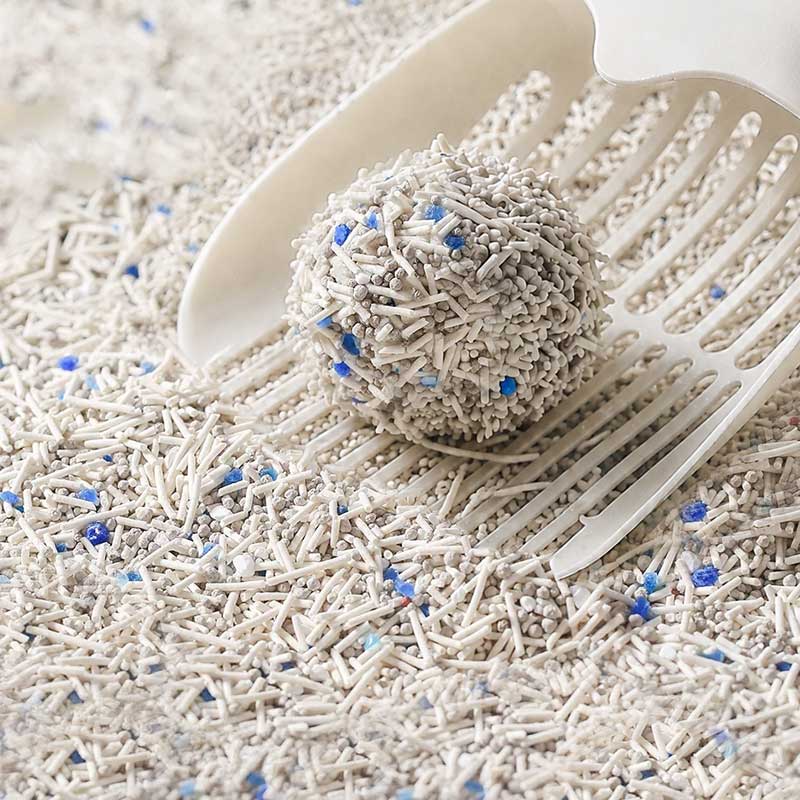
Comparing tofu cat litter vs bentonite starts with a practical question: what should your customer notice when opening the bag, filling the tray, and removing the first clump? A material name alone cannot answer it.
For private label brands, the useful comparison connects composition with clumping, dust, tracking, packaging, and disposal instructions. This guide explains how to evaluate those differences without mistaking a supplier demonstration for proven performance across production batches.
Table of Contents
Tofu Cat Litter vs Bentonite at a Glance
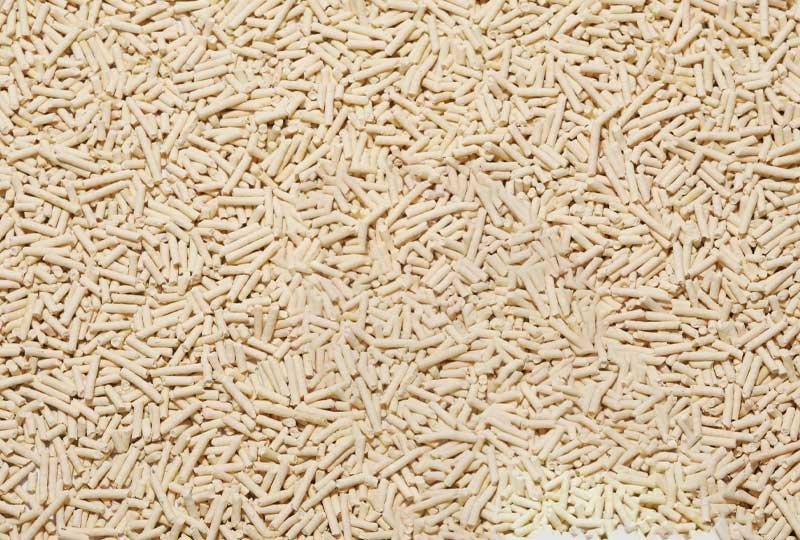
Start with tofu when a plant-based formulation is central to your range. Start with bentonite when you want to evaluate mineral-based clumping litter. Consider a blend when neither candidate meets your complete brief. These are starting points for sampling, not an automatic ranking of quality.
The table frames tofu cat litter vs bentonite around decisions a buyer can verify. It does not assign universal performance scores to either material.
| Decision point | Tofu-based litter | Bentonite litter |
|---|---|---|
| Material identity | Confirm plant fibers, starches, binders, and any mineral additions. | Confirm the clay grade, treatment, and additives. |
| Clumping | Evaluate how the finished formulation binds after wetting. | Evaluate the finished granules, not the raw clay’s swelling claim. |
| Dust and tracking | Test the selected pellets before and after handling. | Test the selected granules under the same conditions. |
| Bag handling | Measure mass at a defined usable volume. | Use the same volume and filling method. |
| Disposal wording | Do not infer compostability or flushability from plant content. | Do not infer a disposal route from absorbency or clumping. |
Understand What Is Actually in the Bag
Tofu Is a Product Category, Not a Complete Formula
A reliable tofu cat litter vs bentonite comparison begins with ingredient disclosure. PetProOEM’s plant-fiber tofu litter product page, for example, describes corn starch, pea and soybean fibers, additional plant-fiber options, and guar gum. It also lists a size range of 1.5–2.0mm.
That description is not evidence that every tofu product has the same recipe. Ask which ingredients belong to the selected version and whether the size refers to diameter or another measurement. Keep the approved formulation and particle specification together.
Bentonite Grades Also Differ
The Wyoming State Geological Survey’s bentonite overview distinguishes high-swelling sodium bentonite from lower-swelling calcium varieties and identifies cat litter as an application.
Use that distinction to ask better questions, not to copy raw-mineral absorption figures onto a finished-product label. Request the actual grade, processing information, and product test results. In tofu cat litter vs bentonite sourcing, a precise specification is more useful than an impressive material description.
Judge Clumps by Clean Removal, Not Just Speed
The important clumping question in tofu cat litter vs bentonite is not simply which sample forms a visible lump first. It is whether that lump can be removed without breaking apart, leaving wet fragments, or requiring the user to scrape the tray.
For a practical screening exercise, use identical trays, equal starting depths, the same test liquid, and the same dosing method. Choose the liquid with a testing provider; a water demonstration should not be presented as a complete simulation of urine performance.
Observe an early scoop and a later scoop at predetermined intervals. Record intact removal, fragments left behind, and residue on the tray. Repeat the exercise rather than selecting the best-looking result.
Also weigh the removed clump and any collected fragments. This records disposal mass under the stated conditions, not pure absorbency. A heavy clump may contain more dry litter, more retained liquid, or both. Comparing tofu cat litter vs bentonite requires keeping those interpretations separate.
If a sample lifts cleanly only at the later interval, investigate its setting time before rejecting it as generally weak. If it leaves a solid layer on the tray floor, repeat the test at the proposed usage depth and review liquid penetration. Those observations lead to different improvements: changing the formula, revising instructions, or selecting another product. Avoid combining all three issues into a single “clumping” score.
Separate Low Dust From Low Tracking
Dust concerns small particles released during handling; tracking concerns litter carried or scattered outside the tray. They deserve separate observations in a tofu cat litter vs bentonite assessment. A tidy floor does not establish low airborne dust, and a clear pouring video does not establish low tracking.
For dust screening, standardize the amount poured, drop height, container, airflow, and recording conditions. Use the same method on samples taken before and after a defined handling exercise. For numerical airborne-particle claims, use an appropriate laboratory method rather than judging a video by eye.
For tracking, define a collection area around identical trays and record escaped material consistently. Include normal digging and exit behavior in a supervised use assessment. Do not describe either tofu cat litter vs bentonite candidate as “zero tracking” based on one cat or one afternoon.
Keep retained samples so later complaints can be compared with the version originally approved. Where dust increases after handling, compare the particle distribution as well as the bag condition. This helps distinguish loose fines present at packing from material generated during the selected handling exercise.
Evaluate Odor Control Separately From Fragrance
Smelling a newly opened scented bag tells you about fragrance, not how the litter will manage waste. In tofu cat litter vs bentonite testing, separate initial scent preference from performance after a defined challenge.
A testing provider should specify the challenge material, exposure period, environment, and measurement approach. An ammonia measurement answers a narrower question than an assessment of overall perceived odor. Neither should be casually substituted for the other.
For cat acceptance, the Ohio State University’s litter substrate guidance notes that most cats prefer fine-grained, unscented litter. That does not prove universal rejection of every scented formula, but it makes fragrance an important variable rather than an automatic improvement.
Keep fragrance level consistent when possible. Otherwise, label the difference clearly in your tofu cat litter vs bentonite sample report.
Check Particle Size Against the Intended Litter Box
Do not reduce tofu cat litter vs bentonite selection to “pellets versus sand.” Ask for the full size distribution, including fines and oversized particles, rather than one nominal measurement.
Test the sample with the scoop intended for customer use. Record whether clean particles pass through its openings, whether usable litter is discarded with clumps, and whether wet residue remains on the scoop.
Automatic litter boxes need a separate compatibility check. Review the equipment’s stated litter requirements, then evaluate the actual formulation through normal cleaning cycles. Material identity alone is not evidence of compatibility with every sifting mechanism.
Also separate equipment performance from cat acceptance. Ohio State’s guidance on changing litter recommends offering a new litter beside the familiar option rather than forcing a sudden replacement. Build that choice into supervised trials, and record avoidance as well as successful use. The result is a more useful tofu cat litter vs bentonite comparison than a tabletop demonstration alone.
Compare Weight at Equal Tray Volume
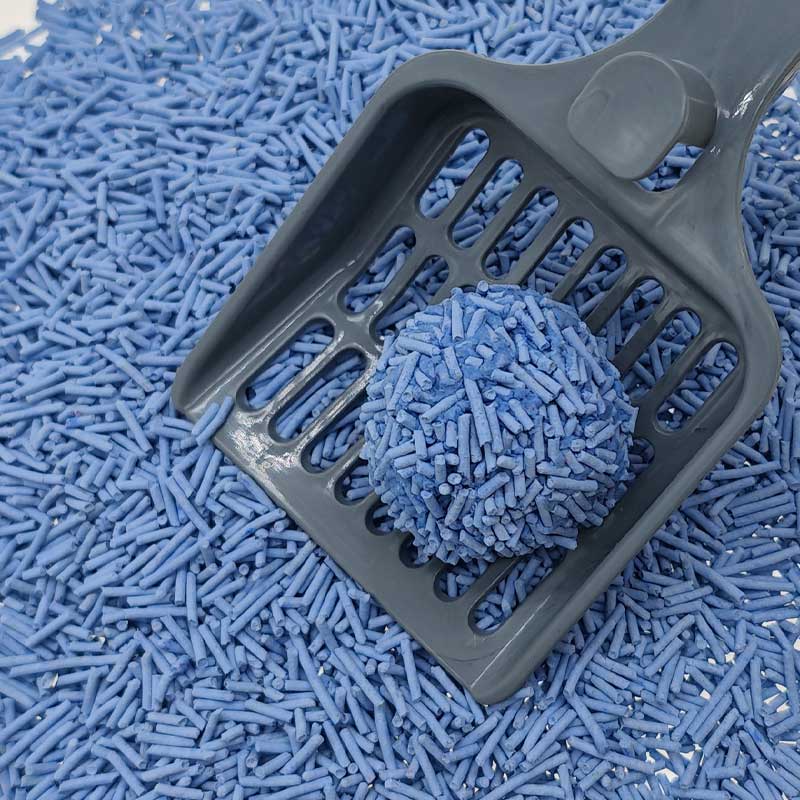
Bag weight and usable volume answer different questions. For tofu cat litter vs bentonite, first compare the mass needed to fill the same tray to the same depth. Then compare how much material must be replenished during a defined use trial.
A straightforward measurement is:
Bulk density = net litter mass ÷ measured bulk volume.
Use the same filling and settling procedure for both samples, and record the units. A compacted sample should not be compared with a loosely poured one without explaining the difference.
Choose the comparison basis to match the question. Equal tray volume is useful for filling and daily use; equal mass may suit a laboratory material-capacity measurement. Neither is inherently wrong, but they are different tests. A supplier should state which basis produced a reported result.
This approach prevents a lightweight-bag claim from becoming an unsupported claim about longer use. Initial fill mass, top-up mass, and discarded mass are separate measures.
For shipping, request filled-bag dimensions, carton dimensions, gross mass, and the pallet arrangement. An equal-volume tofu cat litter vs bentonite comparison is helpful for handling; a complete shipment comparison must also include the actual packaging and loading plan.
Test the Bag and the Litter as One Product
A sample supplied in a rigid container cannot establish how the retail bag will perform. Complete your tofu cat litter vs bentonite evaluation using the intended filled package, closure, shipping carton, and distribution route.
Check seals, corners, opening features, and any handle. After testing, inspect the litter inside as well as the exterior. Record granule breakage, fines, leakage, and changes in pouring behavior.
The International Safe Transit Association’s transport test resources distinguish screening tests from simulations of particular distribution environments. Ask the testing provider to choose a protocol that matches how your product will travel.
Include storage conditions in the specification. Request support for the proposed shelf life in the final packaging, with agreed checks for moisture, appearance, odor, and clumping performance. In tofu cat litter vs bentonite projects, a printed storage period should follow evidence rather than a generic category assumption.
Keep Biodegradable, Compostable, and Flushable Separate
Environmental wording is an area where tofu cat litter vs bentonite comparisons often become too broad. Plant content describes a material source. It does not establish the conditions or time required for a finished product to break down, nor where used litter can be disposed of.
The U.S. Environmental Protection Agency’s home composting guidance lists pet waste and cat litter among materials to avoid in backyard compost piles. Do not turn a claim about unused ingredients into instructions to compost contaminated litter at home.
Flushability is a different question again. The San Francisco Public Utilities Commission’s disposal guidance places kitty litter in the landfill stream and limits flushing to human waste and toilet paper. This illustrates why a product claim cannot replace local wastewater guidance.
For a private label range, request evidence specific to the complete formulation and review destination-market instructions before printing. Do not carry a disposal statement from a pure plant-based formula over to a mineral blend.
When Does a Tofu and Bentonite Blend Make Sense?
A tofu cat litter vs bentonite shortlist does not have to end with a single-material choice. A blend is worth evaluating when your brief combines a plant-based component with particular clumping and handling requirements.
PetProOEM’s bentonite mixed tofu cat litter is explicitly described as a combination of tofu litter and bentonite. Its public page does not provide a confirmed blend percentage or a standardized comparative test dataset.
Ask for the ratio by mass, constituent specifications, and results for the proposed version. Do not assume the blend automatically inherits the strongest characteristic of each component.
As a buyer-designed check, compare samples from different bag positions after transport simulation to see whether their composition and performance remain consistent. Keep the blend in the same tofu cat litter vs bentonite test program rather than evaluating it with a more favorable method.
Build a Sample Scorecard Before Selecting a Winner
The most useful outcome of tofu cat litter vs bentonite research is a repeatable approval process. Give samples neutral identifiers, document their batch references, and decide the acceptance criteria before testing begins.
The following scorecard is a suggested procurement tool, not a certification standard or a claim that PetProOEM products have already achieved these results.
| Evaluation area | Keep consistent | Record for approval |
|---|---|---|
| Clump removal | Tray, depth, liquid dose, scoop, waiting time | Intact lifts, fragments, tray residue, removed mass |
| Dust | Pouring method, environment, measurement approach | Results before and after defined handling |
| Tracking | Tray arrangement, collection area, observation period | Escaped material and observed use conditions |
| Odor | Challenge, duration, environment, assessment method | Fragrance observations separately from odor results |
| Packaging | Filled pack and relevant distribution conditions | Leaks, closure damage, particle changes |
Use two decision stages. First apply non-negotiable requirements, such as accurate composition, acceptable leakage performance, and suitability for the intended equipment. Then compare preferences such as fragrance, pouring feel, or bag appearance. A strong average score should never hide failure on a requirement your customer depends on. Agree in advance how borderline results will be retested and who can approve an exception.
Repeat promising tests with additional representative batches before making broad performance claims. Keep trial records, photographs, and unused reference samples. This makes the tofu cat litter vs bentonite decision traceable when the supplier, formulation, or packaging changes.
Turn Your Comparison Into a Private Label Specification
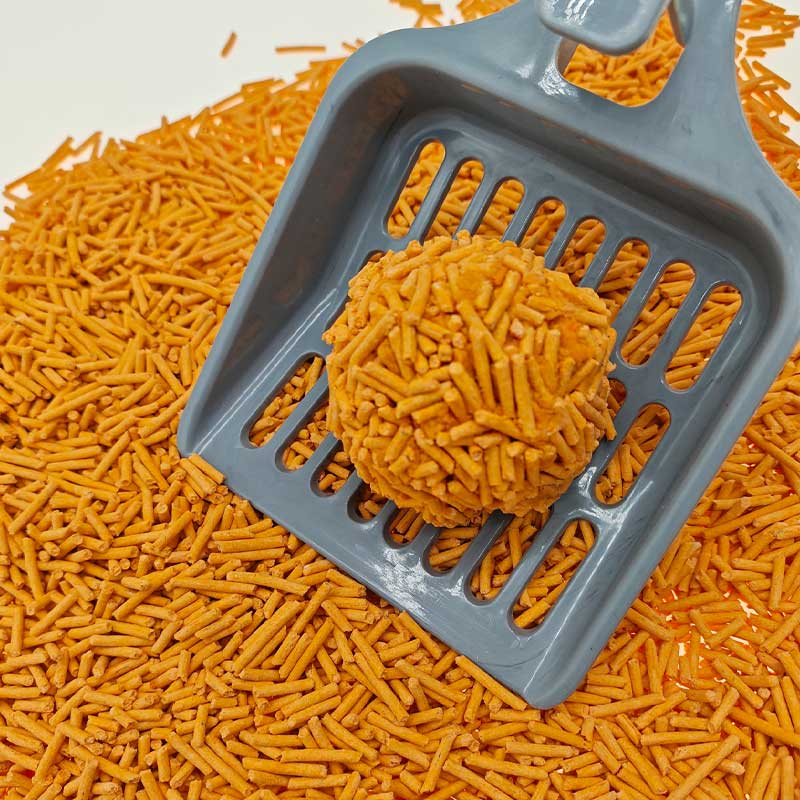
Once tofu cat litter vs bentonite testing identifies a suitable direction, translate the result into a written product brief. State the target market, sales channel, composition requirements, particle range, fragrance preference, net content, packaging format, and priority performance criteria.
PetProOEM’s private label cat litter range describes customization of fragrance, bag design, package size, and product specifications. Confirm the options for your selected product rather than assuming every combination is available.
Before artwork approval, agree on the final specification, supporting documents, batch identification, and how changes will be authorized. Keep the approved sample linked to that revision, and retain the same acceptance methods for incoming shipments. A formula or packaging change should trigger a documented review of affected checks. This closes the gap between a persuasive sample and an order that can be checked on arrival.
Conclusion
The right tofu cat litter vs bentonite choice is the formulation that matches your positioning and performs consistently under relevant conditions. Compare clean clump removal, dust, tracking, odor, cat acceptance, and the filled package—not material names alone.
Bring your target market, packaging requirements, and preferred product direction to PetProOEM. Request suitable cat litter samples and a specification discussion so your next decision is based on a matched comparison.
FAQ
Which is better: tofu cat litter vs bentonite?
Neither is universally better. Tofu is a starting point for a plant-based range; bentonite is a starting point for mineral-based clumping products. Compare specific formulations for removal, dust, tracking, handling, and cat acceptance before choosing.
Does tofu litter always produce less dust?
Do not assume so from the name. Test the selected product using a consistent method, including after handling or transport simulation. A visible pouring demonstration alone cannot support a precise airborne-dust claim.
Can tofu or bentonite litter be flushed?
Do not infer permission from the material. Follow local wastewater guidance and confirmed disposal instructions. A plant-based claim does not establish sewer compatibility, and guidance for one formulation should not be transferred to a blend.
Is a tofu and bentonite blend automatically better?
No. Its performance must be evaluated as a finished formulation. Request the composition and test the actual sample alongside the other candidates, using the same conditions and acceptance criteria.
What should a private label buyer request first?
Start with composition, particle specifications, available fragrance and packaging options, representative samples, and relevant test information. Add your target market and priority requirements so the supplier can propose a comparable, clearly defined product.