A strong cat litter OEM inquiry should do more than ask for a product catalog and a quotation. If buyers want supplier replies that can be compared fairly, the RFQ needs to define the litter type, material system, particle specification, fragrance, packaging, target market, sample requirements, testing expectations, and estimated order volume in the same document.
Without that structure, suppliers may quote completely different products. One may price a standard tofu litter in a stock bag, while another assumes a custom tofu-bentonite blend with printed packaging and additional testing. The final numbers may look comparable, but the scopes are not.
This guide provides a practical cat litter OEM RFQ template for importers, distributors, retailers, and private label brands. It is designed to help buyers collect more consistent replies, reduce assumptions during sampling, and move from initial inquiry to an approved specification more efficiently.
Table of Contents
Why Cat Litter OEM Quotes Often Cannot Be Compared
The biggest problem is usually not the quotation itself. It is the lack of a shared specification.
Current private label cat litter suppliers commonly ask buyers to provide the target market, litter type, packaging size, expected quantity, fragrance, and performance requirements before quoting. Current cat litter OEM sourcing guides also show that material, granule size, fragrance, packaging, target market, and expected quantity are common RFQ fields.
For a cat litter OEM project, buyers should therefore avoid sending a one-line message such as “Please quote tofu cat litter.” That request leaves too many variables open.
A better RFQ creates one version of the project that every shortlisted supplier can answer.
Start With the Target Market and Sales Channel
Before defining the formula, state where the product will be sold.
Target market affects label language, environmental claims, importer information, chemical-document requirements, retailer standards, and sometimes packaging format. Sales channel also affects package size and logistics.
A supermarket SKU, specialty pet-store product, e-commerce bag, and distributor bulk program may all use different retail and export configurations.
For cat litter OEM, include:
- destination country or region;
- sales channel;
- target consumer positioning;
- whether the project is a first launch or repeat program;
- estimated first-order quantity;
- forecast volume if available.
Define the Cat Litter Type Before Asking for a Quote
Cat litter is not one product category from a manufacturing perspective.
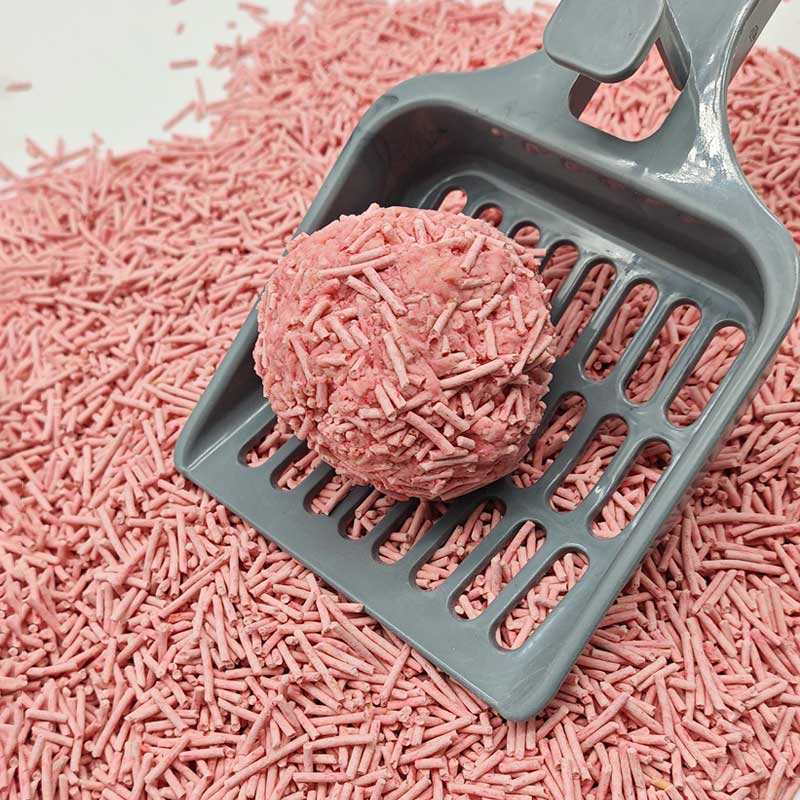
PetProOEM currently presents tofu, mixed, and bentonite cat litter directions. Other suppliers in the market may also offer cassava, mineral, silica, pine, or other materials. Current private-label supplier pages separate tofu, bentonite, mixed, cassava, mineral, and other formulas because specifications and production methods differ. Buyers can see this structure in current private label cat litter sourcing references.
In a cat litter OEM RFQ, identify one of the following:
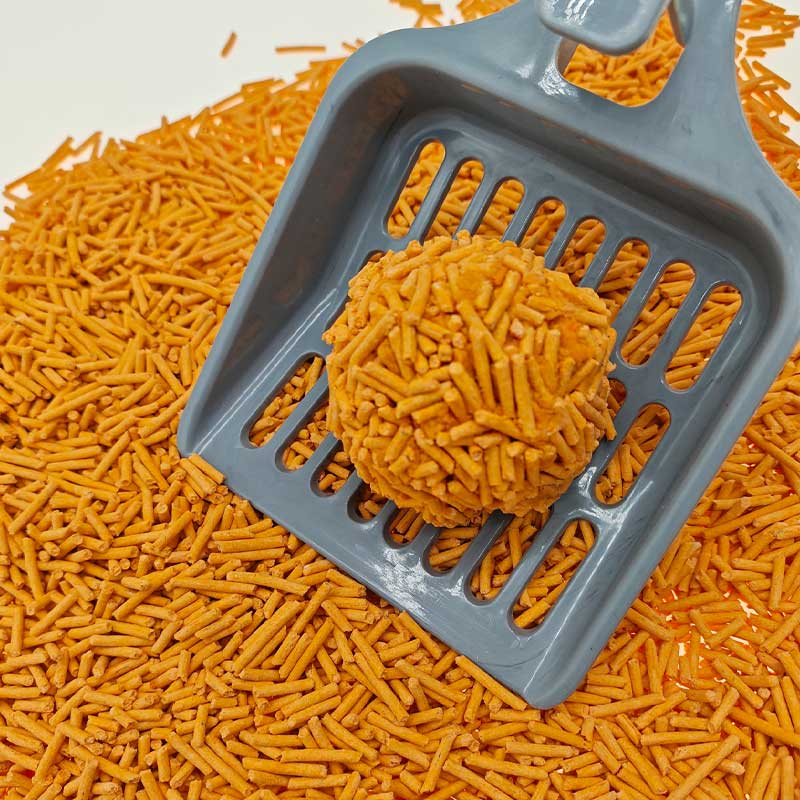
- tofu litter;
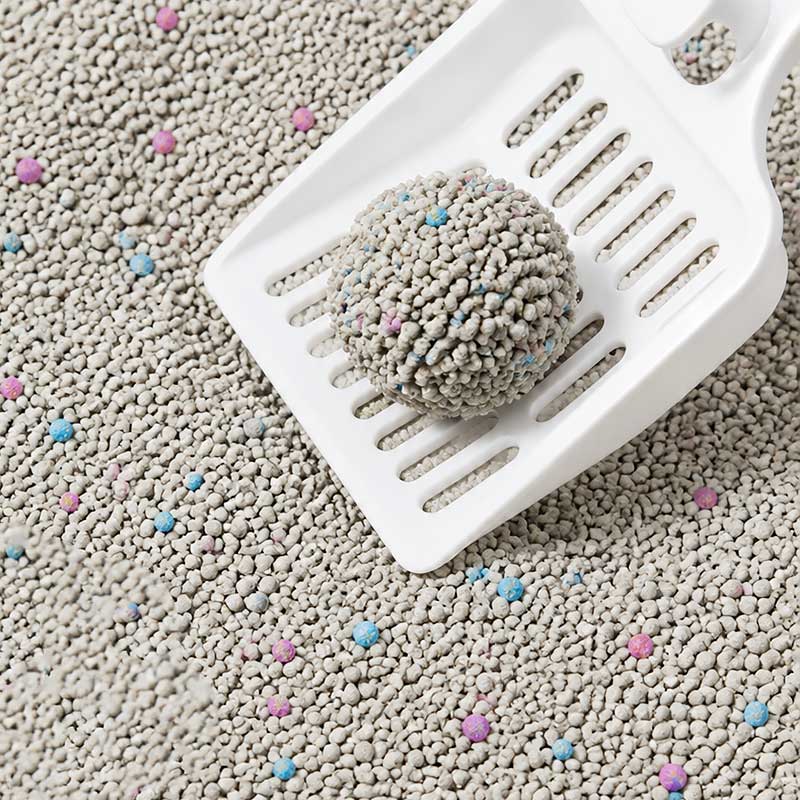
- bentonite litter;
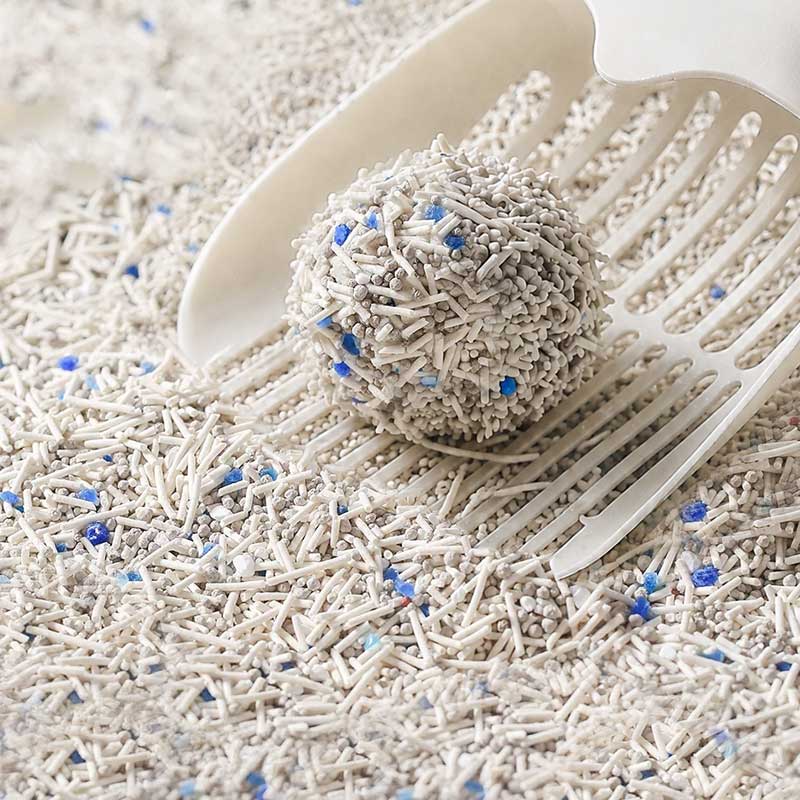
- tofu-bentonite mixed litter;
- another confirmed material system;
- supplier recommendation based on your target performance.
If the buyer is open to several materials, ask suppliers to quote them as separate options rather than blending all possibilities into one proposal.
Specify the Formula or Material System Clearly
The words “tofu,” “bentonite,” and “mixed” are still broad categories.
For tofu litter, buyers may need to confirm plant-fiber sources, starch or binder system, pellet form, moisture, and any deodorizing additives.
For bentonite, buyers may need to define mineral granulation, particle range, fragrance, screening, and dust-control requirements.
For mixed litter, the actual material ratio matters. PetProOEM’s Bentonit-Mischtofu-Katzenstreu confirms a tofu-and-bentonite blend but does not publicly state one fixed ratio. Therefore, buyers should treat the blend as a project-specific specification rather than assuming a standard percentage.
A good cat litter OEM RFQ asks the supplier to identify the exact material composition proposed for the quotation.
Define Particle Size, Shape, and Distribution
Particle specification affects clumping, dust, tracking, pouring, package density, and consumer perception.
Do not write only “fine granules” or “small pellets.” Ask the supplier to state the actual measurement method.
Depending on the product, the relevant value may be:
- pellet diameter;
- pellet length;
- mesh range;
- granule diameter;
- particle distribution;
- acceptable fines percentage under a named sieve method.
For cat litter OEM, make sure every supplier uses the same unit and measurement definition. A “2 mm” value is not useful if one supplier means pellet diameter and another means an approximate overall particle size.
Write Performance Requirements as Testable Questions
Buyers often request “fast clumping,” “low dust,” “low tracking,” and “strong odor control.” Those are useful goals, but they are not yet procurement specifications.
Turn each into a question:
- How is clumping speed tested?
- How is clump strength evaluated?
- How is bottom sticking measured?
- How is dust or fines measured?
- How is tracking compared?
- How is odor performance evaluated?
For cat litter OEM, suppliers should either provide their method or agree to the buyer’s sample-comparison method.
| Performance Area | RFQ Requirement | Buyer Should Request |
|---|---|---|
| Clumping | Fast formation and stable lifting | Test method, waiting time, liquid volume |
| Dust | Low visible dust / controlled fines | Sieve or particulate method |
| Tracking | Reduced particle carry-out | Internal comparison method |
| Odor | Defined odor-control target | Material basis or test method |
| Bottom sticking | Clean removal from tray | Tray, litter depth, liquid amount |
Separate Fragrance From Odor Control
Fragrance is a sensory choice. Odor control is a performance claim. They should not be treated as the same thing.
PetProOEM’s cat litter pages describe multiple fragrance directions and customization. For a cat litter OEM project, buyers should specify whether they want:
- unscented;
- light fragrance;
- specific fragrance direction;
- supplier-standard scent;
- custom fragrance to be confirmed by sample.
If odor-control additives are used, ask what they are and how the related claim is supported.
Be Precise About Environmental and Disposal Claims
Claims such as biodegradable, compostable, flushable, plant based, eco friendly, and natural can create commercial value, but they need accurate scope.
A tofu-bentonite blend, for example, contains both plant-derived material and mineral clay. It should not automatically be described as fully plant based.
Likewise, flushability should not be assumed simply because tofu is present. Local plumbing and wastewater guidance can differ.
For U.S.-market claims, buyers can review the Federal Trade Commission’s Green Guides for principles related to environmental marketing claims.
For cat litter OEM, list the exact claim you intend to use and ask what product-specific evidence supports it.
Define the Retail Package Before Final Quotation
Packaging can materially change the quotation.
Current OEM supplier pages treat bag weight, printed film, handles, resealable strips, boxes, and other packaging formats as separate customization variables. This is also reflected in current cat litter OEM packaging guidance.
A cat litter OEM RFQ should state:
- target net weight;
- bag or box format;
- printed packaging or label-on-stock bag;
- handle requirement;
- closure or reseal requirement;
- number of artwork versions;
- languages;
- barcode;
- outer carton or woven bag requirement;
- pallet requirement if applicable.
Ask Suppliers to Separate Product and Packaging Minimums
One MOQ number often hides several different constraints.
The minimum may be driven by:
- litter production;
- custom formula batch size;
- printed film;
- bag manufacturing;
- cartons;
- fragrance customization;
- special additives.
For cat litter OEM, ask which component creates the minimum. This helps buyers understand whether an initial trial can use stock packaging, labels, or a standard fragrance before moving to full customization.
Do not assume competitor-published MOQs apply to PetProOEM or to another supplier.
Specify the Sample You Want
A supplier cannot know whether the buyer wants a standard sample, custom formula sample, packaging mock-up, or final pre-production sample unless the RFQ says so.
Useful sample stages include:
- stock reference sample;
- custom formula sample;
- fragrance comparison sample;
- packaging mock-up;
- pre-production sample;
- production-retained sample.
Every cat litter OEM sample should have a code or version number. Buyers should record the formula, particle specification, fragrance, bag format, and test results against that code.
Use the Same Sample Test for Every Supplier
If Supplier A uses one liter of liquid and Supplier B uses 50 ml, their clumping results cannot be compared fairly.
Use the same:
- litter weight;
- litter depth;
- tray;
- liquid volume;
- liquid application method;
- waiting time;
- scoop;
- pour-test height;
- dust observation method.
This is one of the most important steps for comparable cat litter OEM supplier quotes because the technical comparison should be as consistent as the commercial comparison.
Define Quality-Control Requirements Before Production
Quality requirements should appear in the RFQ or specification before the purchase order.
Possible checkpoints include:
- raw-material identity;
- formula or blend ratio;
- particle distribution;
- moisture;
- fragrance;
- dust or fines;
- clumping;
- visible contamination;
- bag weight;
- seal integrity;
- print quality;
- barcode;
- lot coding;
- retained samples.
A cat litter OEM quotation should identify whether special testing or third-party inspection is included or quoted separately.
List the Documents Required for the Target Market
Do not ask only for “all certificates.” Ask for documents by purpose.
| Document Category | Examples to Confirm |
|---|---|
| Product | Specification, material declaration, formula summary |
| Quality | Internal QC record, COA where applicable |
| Testing | Dust, chemical, performance, or other agreed report |
| Packaging | Material declaration, artwork approval |
| Shipment | Invoice, packing list, origin documents where applicable |
| Market | Importer, retailer, marketplace, or authority requirements |
For EU-market projects involving chemical restrictions, buyers can review the European Chemicals Agency’s REACH information where relevant.
Ask for Quote Assumptions and Exclusions
A supplier quote is much easier to compare when it states what is not included.
For cat litter OEM, ask suppliers to identify:
- whether the quote uses standard or custom formula;
- whether packaging is stock or custom printed;
- whether sample development is included;
- whether testing is included;
- whether palletization is included;
- whether artwork support is included;
- whether freight is included;
- which Incoterm applies;
- which assumptions are still subject to confirmation.
Ask for Lead-Time Assumptions, Not Just One Delivery Number
A cat litter OEM quotation should explain what the stated lead time actually covers. Product production, custom bag printing, artwork approval, sample development, third-party testing, and export preparation may run on different schedules.
Ask the supplier to separate:
- sample-development time;
- artwork and packaging approval time;
- printed packaging production time;
- cat litter production time;
- inspection and document preparation;
- estimated shipment-readiness date.
This is especially useful when comparing a stock-product private label route with a more customized cat litter OEM program. A shorter headline lead time may simply assume standard formula and stock packaging, while a longer timeline may include custom printed bags or new testing.
Also ask how long the quotation remains valid and which inputs can change the schedule. Formula revisions, artwork changes, new fragrance development, or delayed sample approval can all affect the final production date.
Complete a Pre-Production Confirmation Before Mass Production
Once the buyer selects a supplier, the RFQ should evolve into a controlled production specification. Before the first cat litter OEM run, confirm the exact version of every critical item.
The pre-production confirmation should include the approved litter type, material composition, blend ratio where relevant, particle specification, fragrance, sample code, retail bag, net weight, artwork file, barcode, outer packing, test requirements, quality checkpoints, and required documents.
If one item is still unresolved, mark it clearly instead of allowing production to proceed based on assumption. This final confirmation step is particularly important for repeatability because the same approved specification can then be used as the baseline for future reorders.
Copyable Cat Litter OEM RFQ Template
The following template can be copied into an inquiry form or email:
- Target market: country or region.
- Sales channel: retail, distributor, e-commerce, supermarket, specialty pet.
- Litter type: tofu / bentonite / tofu-bentonite mixed / other.
- Material specification: required composition or supplier proposal.
- Blend ratio: required ratio or supplier recommendation.
- Particle specification: size, shape, mesh, or pellet dimensions.
- Fragrance: unscented / standard scent / custom scent.
- Performance priorities: clumping / dust / tracking / odor / bottom sticking.
- Test method: buyer method or supplier method to be documented.
- Retail package: net weight, bag/box type, handle, closure.
- Artwork: printed bag / label / languages / barcode.
- Outer packing: carton / woven bag / pallet requirement.
- Sample: stock / custom formula / pre-production sample.
- Testing: required product, chemical, or performance reports.
- Documents: product, market, shipment, retailer documents.
- First-order quantity: realistic estimated volume.
- Forecast: monthly, quarterly, or annual estimate if available.
- Destination: port/city and preferred Incoterm.
- Requested response: specification, quotation, assumptions, sample plan, document list.
Buyers can review PetProOEM’s Bentonit-Mischtofu-Katzenstreu as a reference product and then send a structured cat litter OEM brief for project-specific confirmation.
How to Compare the Supplier Replies
Once replies arrive, normalize them before making a decision.
Create a comparison sheet with the following columns:
- formula;
- particle specification;
- fragrance;
- test method;
- sample result;
- packaging;
- quantity basis;
- documents;
- quality controls;
- lead-time assumptions;
- commercial terms;
- exclusions.
The lowest quote is not automatically the best cat litter OEM option if it covers a different formula, weaker packaging, fewer tests, or less documentation.
Common Cat Litter OEM RFQ Mistakes
The first mistake is requesting “tofu cat litter” without a particle or performance specification.
The second is comparing different formulas under one quotation table.
The third is asking for “low dust” without defining a test method.
The fourth is treating fragrance and odor control as the same thing.
The fifth is assuming a mixed litter uses a standard tofu-bentonite ratio.
The sixth is designing packaging before confirming net weight and bag structure.
The seventh is asking for a final quote before defining testing and documentation.
The eighth is copying another supplier’s MOQ or performance values into the RFQ as though they apply universally.
Conclusion
A useful cat litter OEM RFQ creates one clear project that multiple suppliers can quote on the same basis. Define the target market, litter type, material system, particle specification, fragrance, performance requirements, packaging, sample plan, quality checks, documents, quantity, and destination before asking for the final proposal.
The purpose is not to make the inquiry longer for its own sake. It is to reduce hidden assumptions. A structured RFQ makes sample comparisons more meaningful, quotations more transparent, and later production specifications easier to control.
If you are sourcing tofu, bentonite, or mixed litter, use the template above and send PetProOEM the exact product and packaging requirements for confirmation.
FAQ
What should be included in a cat litter OEM RFQ?
Include the target market, litter type, material system, particle specification, fragrance, performance priorities, packaging, sample requirements, testing, documents, quantity, destination, and requested quotation basis.
Should I include a tofu-to-bentonite ratio in the RFQ?
Only if you already have a validated target ratio. Otherwise, ask the supplier to propose and document the blend. Do not assume one market ratio is universally correct.
How can I compare cat litter supplier quotes fairly?
Send the same specification to every supplier, use the same sample test conditions, and compare formula, packaging, testing, documentation, quantity basis, assumptions, and exclusions—not only the final quotation.
Should low dust be written as a numeric requirement?
Only when the test method is also defined. A dust percentage without a sieve, particulate, or other measurement method is difficult to compare.
Can cat litter OEM packaging be customized?
Packaging customization may include bag size, artwork, labels, barcodes, handles, closures, cartons, and other formats depending on the selected product and project feasibility. Confirm the exact options before final quotation.