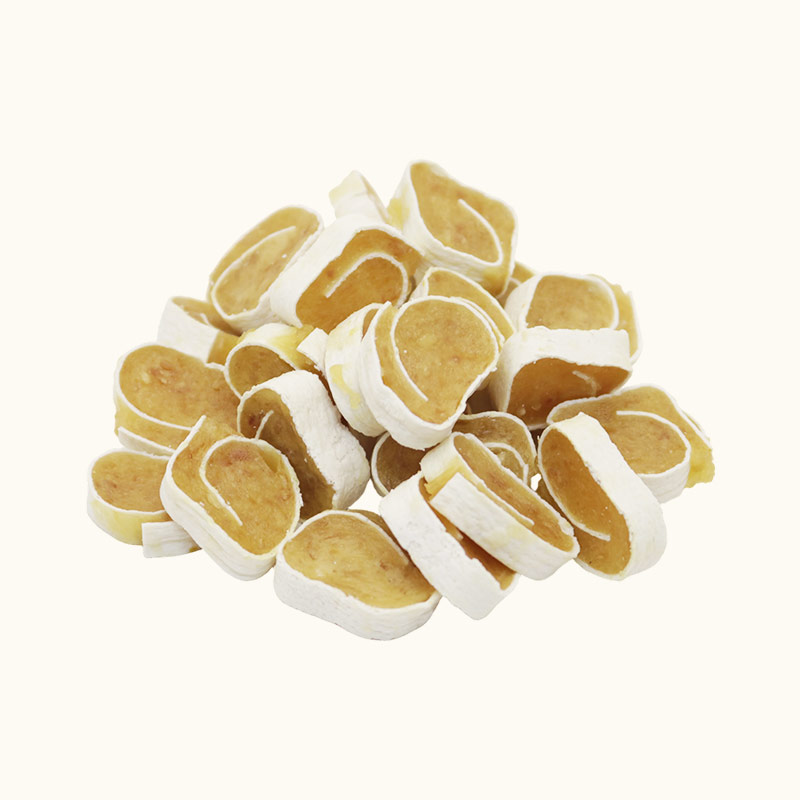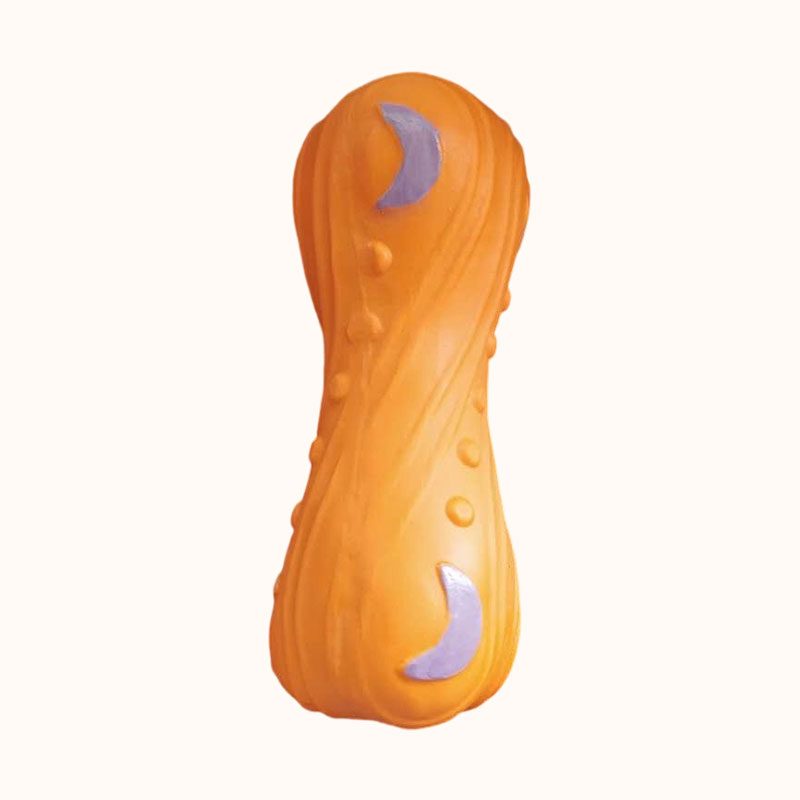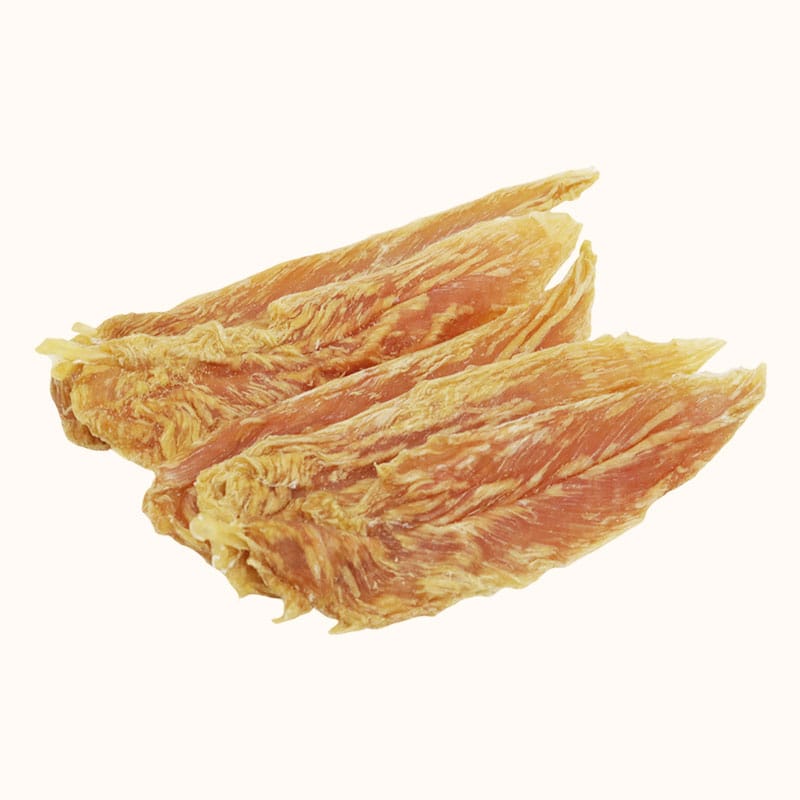
Dog training treats and dog chews serve different purposes, even though both sit within the broader dog treat category. Training rewards are usually designed for frequent, fast delivery during behavior work, while chews are generally intended for longer chewing sessions and slower consumption. For private label buyers, that difference affects size, texture, ingredients, moisture, packaging, feeding guidance, and product positioning.
A product that works well as a chew may interrupt a training session because it takes too long to consume. A tiny reward-sized snack may work well for repeated reinforcement but may not provide the prolonged chewing experience consumers expect from a chew. Building a balanced range therefore requires more than choosing different flavors.
This guide compares dog training treats with chews from a B2B sourcing perspective. It explains how buyers can define intended use, evaluate size and texture, review ingredients and analysis, plan packaging, approve samples, and avoid positioning a rawhide-wrapped chew as though it were an everyday training bite.
Table of Contents
What Makes Dog Training Treats Different From Chews?
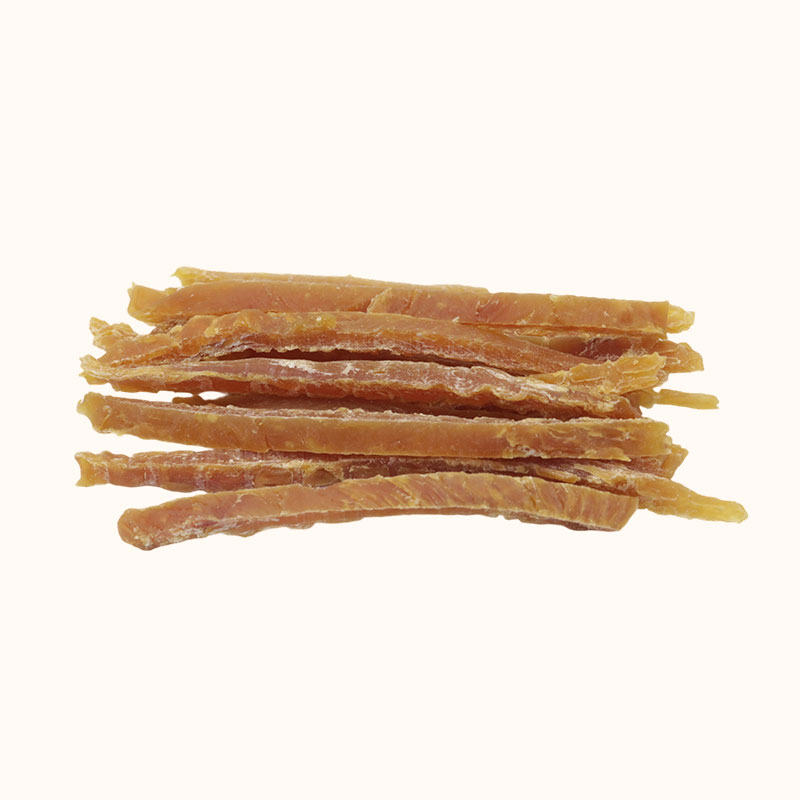
The main difference is the intended feeding interaction.
Dog training treats are usually given repeatedly in small amounts during a training session. The reward should be easy to deliver, quick to consume, and small enough that the dog can return attention to the handler without a long chewing break.
Chews are generally larger, denser, tougher, or structurally designed to extend chewing time. They may include rawhide, collagen, cartilage, bones, harder dried meat structures, or meat wrapped around another chew material.
| Product Type | Primary Use | Buyer Focus |
|---|---|---|
| Training treat | Frequent reward during behavior work | Small size, fast eating, texture, portion control, repeatability |
| Snack treat | Occasional reward or daily treat | Flavor, format, ingredients, serving size |
| Chew | Longer chewing activity | Core material, dimensions, hardness, chew duration, supervision |
Why Size Matters So Much for Dog Training Treats
Size is one of the clearest functional differences between dog training treats and chews.
Training sessions can involve many repetitions. A large piece forces the dog to stop and chew for too long and also increases the total amount of treat consumed. Smaller pieces make reward timing easier and reduce interruption.
The American Kennel Club notes that effective training rewards are often small and easy to eat quickly so the dog can stay engaged with the exercise. Buyers can review the AKC’s guidance on selecting training treats as consumer-side context.
For private label development, buyers should define:
- target piece length and width;
- approximate piece weight;
- acceptable size variation;
- whether the product can be broken easily;
- intended dog-size range;
- recommended reward frequency.
Fast Consumption Is a Functional Requirement
Good dog training treats should support quick reward cycles. This does not mean every training reward must be soft, but it should be easy enough to consume without pulling attention away from the task.
Soft or semi-soft products may be useful because they can be swallowed quickly and can often be divided into smaller pieces. Small dry bites can also work if they do not require prolonged chewing.
By contrast, a chew is often valuable precisely because it slows consumption. That makes the same feature beneficial in one category and undesirable in another.
Chews Should Be Defined by the Core Structure
When sourcing chews, buyers should identify the core material rather than relying on a generic product title.
PetProOEM’s current 5 Rohlederstab mit Ente is described as a durable beefhide roll wrapped in selected duck meat. Its published ingredient list includes duck, rawhide, soy protein, corn starch, glycerin, salt, potassium sorbate, and vitamin C.
This is structurally very different from a small dog training treats product. It is built around a rawhide core and a meat wrap, so its product role is more naturally aligned with chewing than rapid repeated reinforcement.
Private label buyers should confirm the exact core material for every chew, including whether it is rawhide, collagen, cartilage, bone, plant-based material, or another structure.
Do Not Market a Rawhide Stick as a Training Bite
A rawhide-wrapped product can still be used as a reward in a broad sense, but it should not automatically be positioned as one of the brand’s primary dog training treats.
Training rewards should support repetition. A larger rawhide stick is designed around chewing time, not quick consumption. The difference should be clear in product naming, packaging, product-page copy, and assortment architecture.
This is particularly important for wholesale buyers building a range with multiple dog treat formats. Clear separation helps consumers understand which product is intended for active training and which is intended for supervised chewing.
Texture Should Match the Intended Use
Texture affects both palatability and speed of consumption.
For dog training treats, buyers may prefer:
- soft or semi-soft texture;
- small jerky bites;
- thin strips that can be divided;
- small dried meat pieces;
- compact reward bites.
For chews, buyers may instead prioritize:
- firmer texture;
- layered or wrapped construction;
- larger dimensions;
- slower break-down;
- longer chewing behavior.
Neither texture is inherently better. The right choice depends on the product role.
Ingredient Review Still Matters for Training Rewards
Because dog training treats may be given frequently, buyers should review the complete ingredient list carefully.
The product name alone does not tell the buyer whether the formula contains starches, humectants, preservatives, plant proteins, salts, or other ingredients. A chicken-flavored training treat may contain several functional ingredients in addition to chicken.
For private label projects, ask for the exact ingredient statement for the approved sample. If the product is customized for softness or moisture, confirm whether the revised texture requires changes to glycerin, starch, binders, preservatives, or processing conditions.
Chew Ingredients Need the Same Transparency

Chews can also contain more than the visible outer meat layer and inner chew core.
The current PetProOEM duck rawhide stick lists multiple ingredients in addition to duck and rawhide. That means buyers should not market the product as a two-ingredient chew simply because those are the most visually obvious components.
For chews, confirm:
- core material;
- meat wrap;
- binders;
- humectants;
- starches;
- preservatives;
- vitamins or other additives;
- flavoring ingredients.
Guaranteed Analysis Does Not Define Product Role
A training treat and a chew can have overlapping analytical values, but the analysis does not tell buyers how the product should be used.
PetProOEM’s current 5 Rawhide Stick with Duck lists crude protein ≥40%, crude fat ≥1%, crude fibre ≤4%, moisture ≤16%, and crude ash ≤7%. Those values describe the current reference product, but they do not make it a training bite.
| Published Item | Current Duck Rawhide Stick | What It Does Not Prove |
|---|---|---|
| Crude Protein | ≥40% | Does not define meat percentage or training suitability |
| Crude Fat | ≥1% | Does not alone support a low-fat claim |
| Crude Fibre | ≤4% | Does not identify chew structure |
| Moisture | ≤16% | Does not prove shelf life by itself |
| Crude Ash | ≤7% | Does not determine reward frequency |
For dog training treats, buyers should evaluate serving size and repeat feeding separately from the guaranteed analysis.
Reward Frequency Changes Portion Planning
Training can involve many rewards in a short period. This makes portion planning more important for dog training treats than for a product intended as one occasional chew.
Veterinary guidance commonly recommends keeping treats within a limited portion of daily energy intake so the overall diet remains balanced. VCA Animal Hospitals notes that frequent training rewards can add significant calories if portions are not managed. Buyers can review its training-treat nutrition guidance.
For private label packaging, a brand may want to provide practical feeding guidance rather than encouraging unlimited reward use.
Chew Duration Should Be Described Carefully
Chew products are often marketed around long-lasting enjoyment, but chew duration can vary widely by dog size, bite strength, chewing style, product dimensions, and material.
A private label buyer should avoid promising a specific number of minutes or hours unless that duration has been tested under a defined method and is appropriate for the target dog.
For chew products, use factual descriptions such as:
- meat-wrapped rawhide chew;
- firm chewing texture;
- larger chew format;
- designed for supervised chewing.
These are easier to defend than absolute duration promises.
Supervision Is More Important for Chews
Chews can change shape as they are consumed. Pieces can soften, break, or become small enough to swallow. Rawhide and other chew materials therefore require appropriate supervision and product-size selection.
The ASPCA notes that edible chews and chew treats should be selected with the dog’s size and chewing behavior in mind and used appropriately. Buyers can review the ASPCA’s position on dog chews and treats.
For private label packaging, supervision and discard/replacement guidance should match the actual chew structure.
Dog Training Treats Need Strong Palatability at Small Portions
Because dog training treats are small, each piece needs to deliver enough aroma and flavor to function as a meaningful reward.
High palatability can come from protein source, fat, moisture, aroma, texture, processing, and flavor system. Buyers should not assume that stronger smell always means higher quality, but reward products do need enough sensory appeal to motivate the dog.
When comparing samples, evaluate whether the dog responds quickly and whether the treat can be consumed without interrupting the session.
Packaging Should Reflect How the Product Is Used
Dog training treats and chews often need different packaging formats.
Training products benefit from easy repeated access and portion handling. Resealable pouches can be useful because owners may open the package many times.
Chews may be larger and may require packages that protect shape, prevent moisture changes, and present the product clearly. Individually wrapped or count-based formats may also be suitable for certain chew styles.
| Packaging Need | Training Treats | Chews |
|---|---|---|
| Access frequency | High | Lower |
| Piece size | Small | Medium to large |
| Resealability | Often useful | Depends on count and format |
| Product protection | Moisture and texture control | Shape, moisture, and structural protection |
| Front-of-pack focus | Training, reward, bite size | Chew structure, meat wrap, supervision |
Use Clear Product Naming Across the Range
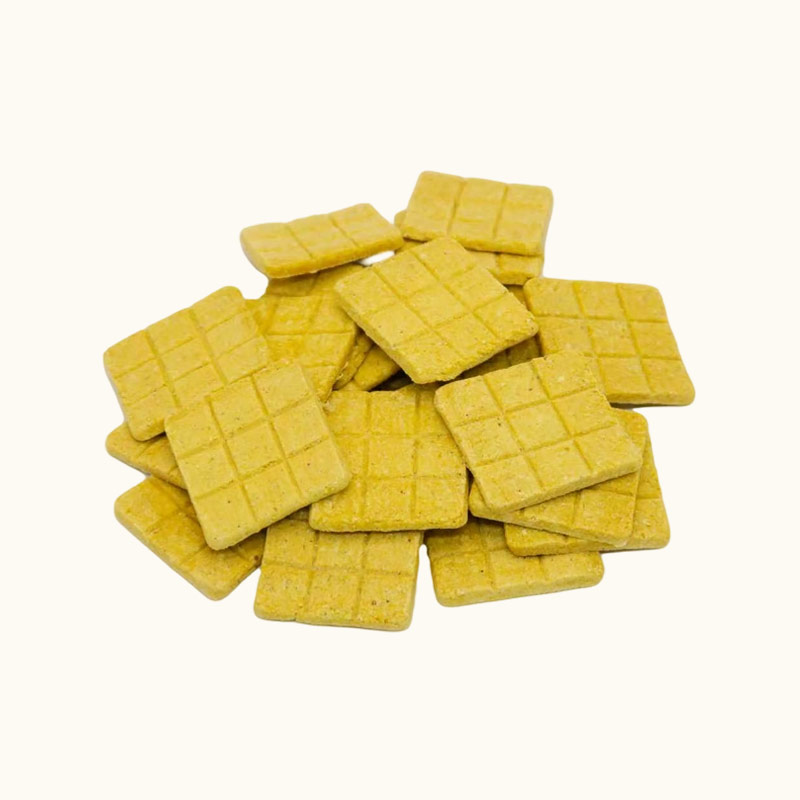
A balanced private label assortment should make the difference between dog training treats, daily snacks, and chews obvious.
Names such as “Training Bites,” “Mini Reward Strips,” or “Soft Training Pieces” communicate a different use from “Rawhide Stick with Duck,” “Meat-Wrapped Chew,” or “Long-Format Chew.”
Clear naming also helps SEO because each product page can target a more specific buying intent instead of competing for the same generic “dog treats” phrase.
Build a Range Around Different Use Cases
A strong product range does not need every SKU to serve every purpose.
A balanced assortment might include:
- small dog training treats for repeated rewards;
- medium jerky pieces for daily snacks;
- larger strips for occasional rewards;
- meat-wrapped chews for extended chewing;
- specialty formats for interactive feeding.
This approach creates clearer merchandising and gives distributors or retailers a reason to carry multiple SKUs.
Sample Testing Should Match the Product Role
Training reward samples and chew samples should not be evaluated with exactly the same checklist.
For dog training treats, record:
- piece size;
- piece weight;
- texture;
- breakability;
- consumption speed;
- aroma;
- ingredient statement;
- analysis;
- package reseal performance.
For chews, also record:
- core material;
- overall dimensions;
- wrap coverage;
- firmness;
- piece integrity;
- supervision requirements;
- how the chew changes during use.
Dog Training Treats vs Chews: Private Label Buyer Checklist
Before adding a product to the range, ask:
- Is this intended for repeated training rewards or extended chewing?
- What is the exact serving or piece size?
- How long does the dog need to consume it?
- What is the full ingredient list?
- What is the exact protein source?
- Does the product contain a chew core?
- What analytical values apply?
- What supervision guidance is needed?
- Which package format best matches the use?
- What sample criteria will be approved?
- Which claims are actually supported?
Buyers can review PetProOEM’s dog treat range and send a product brief with the intended use, protein source, size, texture, package, and target market.
Common Product Positioning Mistakes
The first mistake is calling every dog treat suitable for training.
The second is using a large chew as a repeated reward product.
The third is assuming small size alone makes a product one of the best dog training treats.
The fourth is ignoring total reward frequency when planning portion size.
The fifth is using “long lasting” without a defined chew-duration test.
The sixth is ignoring supervision and size selection for rawhide or other chews.
The seventh is letting flavor names replace full ingredient review.
Conclusion
The difference between dog training treats and chews begins with product purpose. Training rewards should support rapid, repeated reinforcement with small pieces and quick consumption. Chews are more naturally positioned around longer, supervised chewing sessions and require closer attention to core material, dimensions, structure, and supervision.
PetProOEM’s current 5 Rawhide Stick with Duck is a useful example: it uses a beefhide roll wrapped in duck meat and contains multiple additional ingredients. That structure fits a chew role more naturally than a rapid training-reward role.
For private label buyers, the strongest range separates training rewards, daily snacks, and chews clearly. This improves product selection, packaging, search visibility, and consumer understanding while reducing the risk of forcing one SKU into a use it was not designed to serve.
FAQ
What makes good dog training treats?
Dog training treats are usually small, easy to consume quickly, palatable, and practical for repeated rewards. The exact formula and size should fit the intended dog and training frequency.
Can dog chews be used as training rewards?
They can be rewards in a broad sense, but larger chews are usually better suited to longer chewing sessions than repeated training repetitions because they take longer to consume.
Are rawhide sticks suitable as dog training treats?
Rawhide sticks are generally structured as chews. They are usually larger and slower to consume than typical dog training treats, so they should not automatically be positioned as training bites.
Should training treats always be soft?
No. Soft texture can make rewards faster to eat and easier to divide, but small dry or freeze-dried pieces can also work. The key is that the treat is easy to deliver and quick to consume.
What should private label buyers compare when choosing treats and chews?
Compare intended use, size, texture, ingredients, analytical values, chew structure, consumption speed, supervision needs, packaging, and the claims supported by the exact SKU.